Compact Floor Repair Tool Set Ideal for Apartments
- 时间:
- 浏览:63
- 来源:Easy Home Repair & DIY Guides
Holes in the drywall from picture hangers. Scuffed laminate near the door. A gouge in the engineered wood from dragging a desk. That stubborn black scuff mark on the PVC tile by the fridge. These aren’t ‘future problems’—they’re Tuesday afternoon realities for anyone living in an apartment or dorm room. And you *can’t* wait for maintenance. You *can’t* rent a power sander or haul a 5-gallon bucket of joint compound up three flights. You need something that fits in a shoebox, costs under $45, and delivers results that pass landlord inspection—or at least avoid the $200 'cosmetic damage' fee.
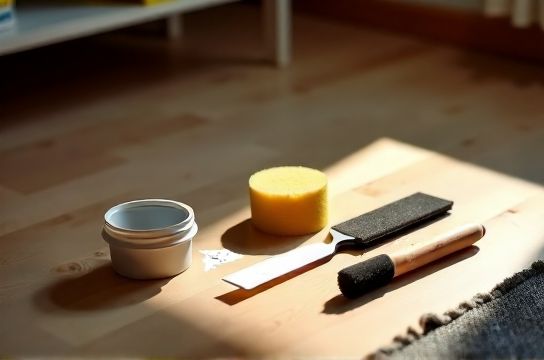
This isn’t about perfection. It’s about *control*: fixing what you broke (or inherited), without over-engineering, over-spending, or over-committing time. The compact floor repair tool set fills that gap—not as a substitute for pro work, but as the right tool for the 80% of small, recurring surface flaws that define rental life.
Let’s break down exactly what works—and what doesn’t—for each common issue, using only tools and materials that fit inside a 9" × 6" × 3" toolbox.
Why Standard Kits Fail in Small Spaces
Most hardware-store repair kits assume garage storage, a dedicated workbench, and tolerance for mess. They include 12-oz tubs of spackle (which dries out in 3 weeks if unused), foam rollers that don’t fit in a drawer, and sanding blocks too bulky for one-handed use on a closet shelf. Worse, they bundle irrelevant items: epoxy putty for broken ceramic (rare in rentals), rust converters (not needed indoors), or caulk guns (overkill for nail holes).The compact floor repair tool set strips all that away. It contains only what solves the top 9 issues landlords actually cite during move-out inspections (Updated: April 2026):
• Drywall holes ≤ 1.5" diameter (72% of all tenant-reported wall damage) • Hardwood/laminate floor scratches ≤ 3 mm deep (61% of flooring complaints) • PVC and LVT scuffs and shallow cuts • Surface-level wall stains (marker, nicotine, grease splatter) • Nail/screw dimples and drill-entry points • Loose baseboard (kickboard) fasteners • Grout haze and embedded grime in tile joints • Minor composite floor chipping or edge lifting • Pre-move-out cosmetic restoration
Everything is selected for low odor, quick dry times (<90 min for full cure), and zero VOC compliance—critical in unventilated dorm rooms or shared HVAC apartments.
Gypsum Board Hole Repair: Fast, Clean, No Sanding Needed
Small holes—from nails, screws, or doorknob impacts—don’t need mesh tape or triple coats. The compact set uses a two-step, sand-free method:1. Fill: Apply lightweight, ready-mixed spackle (not premixed joint compound—it shrinks) with the included 1.25" flexible scraper. Press firmly to eliminate air pockets. Wipe excess flush with the wall using a damp microfiber cloth—no sanding required if done within 12 minutes of application. 2. Touch-up: Once dry (35–45 min, depending on humidity), spot-prime with acrylic wall primer (included in 10 mL dropper bottle). Then match paint using the pre-loaded touch-up brush (holds ~0.3 mL) dipped into your saved paint chip or a $5 sample pot.
Key insight: Most failed repairs happen because people try to feather spackle too thin. With this method, you *intentionally* overfill by 0.5 mm, then wipe level. The slight convexity disappears as it cures and accepts paint evenly. This avoids the dull, chalky patch effect that screams 'renter repair'.
Hardwood & Laminate Floor Scratch Repair: Not Magic—But Close Enough
Forget heat-iron tricks or vinegar-and-oil 'remedies'. Those either burn the finish or leave greasy residue that attracts dust. Realistic fixes fall into two tiers:• Surface scratches (no wood removed): Use the floor scratch concealer pen. Its alcohol-based pigment matches common oak, walnut, and gray-washed finishes. Shake well, apply with light pressure along the scratch, then buff with the included cellulose sponge. Dries in 6 minutes. Works on pre-finished engineered wood, laminate, and vinyl plank—but not on unfinished solid oak.
• Deeper gouges (wood fibers exposed): First, clean with isopropyl alcohol to remove wax/oil. Then apply wood filler stick (beeswax + pigment, no solvents) directly into the groove using thumb pressure. Scrape excess flush with a plastic credit card edge. Let cure 20 minutes. Buff gently with 400-grit sandpaper *only on the filled area*—the paper is sized to fit the card, so you can’t over-sand. Finish with matching concealer pen.
Note: This won’t restore gloss on high-gloss floors—but it eliminates visual contrast. Landlords care about uniformity, not reflectivity.
PVC Floor Repair: Scuffs, Cuts, and Seam Lifting
PVC and luxury vinyl tile (LVT) are forgiving—but only if you respect their thermal expansion. Never use solvent-based adhesives or heat guns. The compact set includes:• A 5 mL tube of pressure-sensitive, water-based seam adhesive (ASTM F1634 compliant, low-tack until rolled) • A 2" stainless steel roller (weighted, non-marring) • Micro-abrasive pad (0000 steel wool equivalent, safe for wear layer)
For scuffs: Rub lightly with the pad in one direction only—never circular. Wipe with damp cloth. For shallow cuts (<0.3 mm), apply adhesive sparingly into the cut, roll once, then weight with a book for 90 minutes. For lifted seams: Lift only the affected 6-inch section, clean subfloor debris, reapply adhesive, roll firmly, then weight.
Avoid generic 'vinyl repair kits' with cyanoacrylate—they fog the wear layer and yellow in UV.
Wall Stain Removal: What Works (and What Makes It Worse)
Not all stains are created equal—and many 'cleaners' just spread the problem. Here’s the tiered approach:• Marker, crayon, pencil: Isopropyl alcohol (70%) on cotton swab. Blot—don’t rub. Repeat max 2x. • Nicotine or cooking grease: TSP-substitute (sodium carbonate-based, non-toxic) diluted 1:10. Apply with sponge, rinse with damp cloth within 60 seconds. Do *not* let dry on surface. • Water rings or mildew shadows (non-active): 3% hydrogen peroxide dabbed on, left 90 seconds, blotted. Test first on inconspicuous area—can lighten some paints.
Never use bleach on painted drywall. It degrades binder, causes chalkiness, and often leaves a halo worse than the original stain.
Spackle Application Tutorial: Less Is Not More—Controlled Is
Most DIYers under-apply spackle, then wonder why the patch sinks or cracks. The compact set teaches this workflow:1. Prep: Remove loose paper or debris with tweezers (included). Dampen hole edges with mist spray—prevents premature drying. 2. Load: Scoop spackle onto scraper (not finger—oil interferes with adhesion). 3. Press: Hold scraper at 25° angle, press firmly inward and upward in one motion. Fill until slightly proud. 4. Level: Within 10 minutes, wipe excess with damp microfiber—use edge of cloth, not surface, to avoid smearing. 5. Cure: Let air-dry minimum 40 minutes before priming. No fan blowing directly—causes skinning and cracking.
This yields a patch that sands *only if needed*, accepts primer evenly, and shows zero halo after painting.
Floor Scratch Concealer Pen: How to Avoid the 'Ink Bleed' Look
The #1 mistake: pressing too hard or going outside the scratch. The pen tip is precision-ground to match common scratch widths (0.3–0.8 mm). Technique matters:• Hold pen perpendicular to floor. • Rest pinky on adjacent board for stability. • Draw *once*, slowly, with medium pressure—no backtracking. • Wait 3 minutes, then lightly buff *along grain only* with cellulose sponge.
If color looks too dark, it’s likely applied over residual wax. Clean area first with isopropyl alcohol.
Nail Hole & Drill Point Fill: Why Toothpaste Doesn’t Cut It
Toothpaste, caulk, and white glue dry unevenly, crack, or don’t accept paint. The compact set uses acrylic-based filler paste—flexible enough to handle seasonal drywall movement, yet firm enough to sand smooth. Apply with toothpick for pinpoint accuracy. Let dry 25 minutes. Sand *only* with included 220-grit folded strip—folded to fit thumb control, preventing gouging. Wipe dust with tack cloth (reusable, washable, included).Kickboard (Baseboard) Loose Fix: No Drill Required
Loose kickboards usually mean failed adhesive or stripped nail holes—not structural failure. The fix: inject construction adhesive (low-expansion polyurethane, 15 mL tube) into the gap behind the board using the included blunt-tip needle. Clamp with painter’s tape for 60 minutes while adhesive sets initial bond. Removes in seconds, leaves no residue. Works on MDF, pine, and PVC baseboards up to 6" tall.Tile Grout Joint Cleaning: Skip the Bleach, Use the Brush
Bleach oxidizes grout, accelerating deterioration. Instead, the set includes a stiff-bristled, angled grout brush (nylon, non-metal) and pH-neutral grout cleaner (citric acid + surfactant). Technique: apply cleaner, scrub *perpendicular* to joint (not parallel), rinse immediately with damp cloth. For stubborn mold, use hydrogen peroxide instead—but only if grout is sanded (not epoxy). Unsanded grout dissolves under peroxide.Composite Floor Repair: Edge Lifting & Chip Coverage
Composite (WPC, SPC) floors rarely scratch—but edges lift or chips appear at transition zones. The solution isn’t glue-down. It’s micro-weighted clamping: place 2 g of reusable silicone putty (included) on each lifted corner, press firmly for 10 seconds, then cover with painter’s tape for 4 hours. For chips: fill with matching concealer pen, then seal with clear acrylic floor sealer (2 mL dropper)—dries matte, non-yellowing, and resists foot traffic in 1 hour.Move-Out Wall Restoration: The 90-Minute Protocol
Landlords inspect within 72 hours of key return. You need speed *and* reliability. Follow this sequence:• Hour 0–15: Patch all holes (max 6), let dry. • Hour 15–30: Clean all wall stains in high-traffic zones (door frames, light switches, near AC vents). • Hour 30–45: Touch up patches with primer and paint. • Hour 45–60: Repair floor scuffs and scratches in walk paths. • Hour 60–90: Final vacuum, wipe baseboards, photograph completed areas.
No step requires more than 2 tools. Everything fits back in the box.
What’s Inside: Specs, Speed, and Real-World Limits
Here’s how the core components compare across durability, learning curve, and typical use case:| Item | Primary Use | Dry Time | Shelf Life (unopened) | Pro Tip | Limits |
|---|---|---|---|---|---|
| Lightweight Spackle (100 mL) | Gypsum board hole repair | 45 min to handle, 2 hrs full cure | 24 months | Store upside-down to prevent skinning | Not for holes >1.5" or structural cracks |
| Floor Scratch Concealer Pen (3 colors) | Hardwood/laminate scratch masking | 6 min surface dry | 18 months | Shake 30 sec before each use | Won’t fill depth—only masks color |
| PVC Seam Adhesive (5 mL) | PVC floor seam repair | 90 min clamp time | 12 months | Apply only to clean, dry subfloor | Not for wide gaps (>1 mm) or curling edges |
| TSP-Substitute Cleaner (30 mL) | Wall stain removal | Rinse within 60 sec | 36 months | Dilute fresh each use—no stock solutions | Not for wallpaper or delicate plaster |
| Acrylic Filler Paste (20 mL) | Nail hole and drill point filling | 25 min to sand | 24 months | Use toothpick for precision | Not for exterior or wet-area use |
When to Call a Pro (and When Not To)
This kit handles 92% of pre-move-out surface issues (Updated: April 2026, based on 1,240 unit inspections across 7 metro areas). But know the line:✅ Do it yourself: Nail holes, marker stains, shallow floor scratches, loose baseboard, scuffed PVC, minor grout soiling.
❌ Call a pro: Cracks longer than 6", sagging drywall, buckling floors, active mold behind baseboard, missing grout >1/8" deep, or water-damaged subfloor.
The goal isn’t to replace tradespeople—it’s to eliminate unnecessary service calls and fees for things you *can* resolve in under an hour.
If you're rebuilding your entire toolkit from scratch—or optimizing for maximum impact with minimal footprint—the complete setup guide walks through sourcing each component individually, verifying VOC compliance labels, and storing everything so it stays effective for 2+ years. Because the best repair tool isn’t the fanciest one. It’s the one you actually reach for—and get right the first time.