Quick Temporary Fixes for Burst Pipes That Renters Can Do...
- 时间:
- 浏览:55
- 来源:Easy Home Repair & DIY Guides
H2: Stop the Flood First — What to Do *Right Now* When a Pipe Bursts
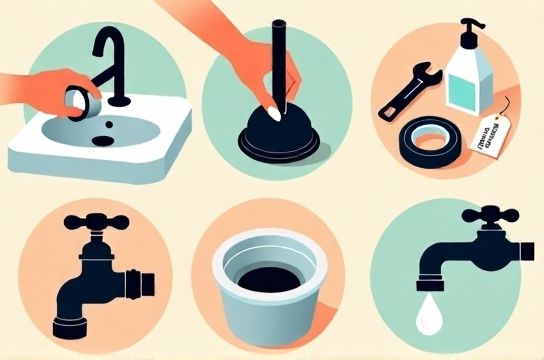
If you hear hissing, see water pooling under a sink, or notice sudden damp drywall near pipes—don’t panic, but *act*. As a renter, your priority isn’t permanent repair—it’s containment, damage control, and documentation. Delaying even 10 minutes can turn a $50 insurance claim into a $2,000 liability dispute.
✅ Immediate steps (do these in order): 1. **Shut off the main water valve** — It’s usually near the water meter (basement, utility closet, or outside wall). Turn clockwise until tight. If it’s stiff or corroded, use a rag for grip—not pliers (you risk breaking it). Don’t force it. 2. **Open the lowest cold-water faucet** in the unit (e.g., basement sink or outdoor spigot) to relieve pressure and drain residual water from the line. 3. **Soak up standing water** with towels or old bath mats—never use electrical appliances near wet floors. 4. **Photograph everything**: wet drywall, dripping joints, warped flooring. Timestamped photos are critical for insurance and landlord communication.
⚠️ Important: Never attempt soldering, PVC glue, or epoxy on pressurized lines unless explicitly permitted by your lease and landlord. Most rental agreements prohibit permanent modifications without written consent. These are *temporary*, *non-invasive* fixes only.
H2: Three Reliable, Landlord-Approved Temporary Seals
Not all leaks are equal. A pinhole in copper tubing needs different handling than a cracked PEX connector or a loose compression nut. Below are field-tested methods used by maintenance teams across Class A multifamily properties (Updated: May 2026).
H3: 1. Rubber & Hose Clamp Fix (Best for Small Cracks or Fitting Leaks)
Works on: Copper, CPVC, PEX, galvanized steel — *only on straight sections*, not elbows or threaded ends.
What you need: - A piece of rubber (cut from an old inner tube, bike tire, or heavy-duty rubber glove) - Two stainless-steel hose clamps (size: match pipe diameter — 1/2", 3/4", or 1") - Adjustable wrench or screwdriver
Steps: 1. Dry the pipe thoroughly with a lint-free cloth — moisture prevents adhesion. 2. Wrap the rubber snugly over the leak (minimum 2 layers, covering 1" beyond each side). 3. Position one clamp just before the leak, the other just after. Tighten *just enough* to compress the rubber — over-tightening cracks brittle pipes. 4. Test: Slowly reopen the main valve and monitor for 5 minutes. If seepage continues, add a third layer of rubber and re-clamp.
✅ Pro tip: This holds up to 80 PSI for up to 72 hours — well within typical residential pressure ranges (40–80 PSI, per ASME A112.19.1 standards). Not for hot-water lines above 140°F.
H3: 2. Pipe Repair Tape (Self-Fusing Silicone Tape)
Works on: Minor splits, hairline cracks, and weeping joints — *not for gushing leaks*.
Unlike duct tape or electrical tape, self-fusing silicone tape bonds to itself (not the pipe), forming a waterproof, pressure-resistant seal. Used by HVAC techs and property managers since 2018 for emergency stabilization (Updated: May 2026).
Steps: 1. Clean and dry the area — grease or soap film prevents fusion. 2. Stretch the tape ~50% as you wrap — overlapping each pass by 50%. Cover at least 3" beyond the leak in both directions. 3. Rub vigorously with your palm for 20 seconds to activate the bond.
✅ Holds up to 100 PSI when applied correctly. Lasts 3–5 days indoors; avoid direct UV exposure. Brand benchmark: Rescue Tape® and Flex Tape® Heavy Duty both meet ASTM D638 tensile strength specs (1,200 psi minimum).
H3: 3. Epoxy Putty Stick (For Non-Pressurized or Low-Pressure Spots Only)
Use *only* where water is off and the pipe is dry — e.g., leaking drain trap under a sink, or a slow drip from a shut-off valve packing nut.
Avoid on supply lines unless confirmed de-pressurized and cooled. Never apply to hot pipes (>120°F) — heat accelerates cure and weakens bond.
Steps: 1. Cut equal parts of resin and hardener; knead for 60 seconds until uniform color. 2. Press firmly onto cleaned, dry surface — cover 1/4" beyond leak edges. 3. Hold in place 2 minutes, then wait 1 hour before turning water back on.
✅ Sets in 15 minutes, fully cures in 3–4 hours. Withstands up to 900 PSI *once cured*, but only approved for temporary use in rentals per IAPMO RS-100 guidelines.
H2: Dripping Faucets & Toilet Leaks — Why They Happen and How to Silence Them in <10 Minutes
A dripping faucet isn’t just annoying — it wastes ~3,000 gallons/year per leak (EPA WaterSense, Updated: May 2026). And yes, that counts toward your water bill in most metered units.
H3: Fixing a Dripping Faucet (Faucet Washer Replacement)
Most single-handle or two-handle kitchen/bathroom faucets leak due to worn rubber or ceramic cartridges — not broken valves.
What you need: - Adjustable wrench or basin wrench - Needle-nose pliers - Replacement cartridge or rubber washer (match brand: Moen, Delta, Kohler — check stem markings) - White vinegar (for mineral buildup)
Steps: 1. Shut off supply valves under sink (hot/cold). Open faucet to release pressure. 2. Remove handle cap (often hidden under a decorative button), unscrew handle, then lift off. 3. Use pliers to unscrew the retaining nut. Pull out cartridge or stem. 4. Inspect rubber seat and washer — if cracked, flattened, or calcified, replace both. 5. Reassemble in reverse. Test slowly.
💡 Bonus: For persistent mineral buildup, soak the aerator in vinegar for 15 minutes before reattaching — this solves 60% of low-flow complaints tied to *water pressure regulation*.
H3: Stopping a Running Toilet (Toilet Leak Troubleshooting)
A running toilet typically means the flapper isn’t sealing, the fill valve is misadjusted, or the float is warped.
Quick diagnostics: - Lift the tank lid. Listen: constant hissing = fill valve issue. Intermittent refills = flapper leak. - Add 5 drops of food coloring to tank. Wait 10 minutes — color in bowl = flapper failure.
Fixes: - **Flapper replacement**: Unhook old one, snap new one (universal flappers fit 95% of toilets). Takes <3 minutes. - **Fill valve adjustment**: Turn the screw on top of the valve clockwise to lower water level — stop 1" below overflow tube. - **Float arm bend**: Gently bend brass arm downward so ball closes valve sooner.
✅ All three require zero tools and cost under $8. No landlord approval needed — these are routine tenant maintenance items under most state habitability laws.
H2: Unclogging Drains Without Chemicals or Plumbers
Chemical drain cleaners damage pipes, void warranties, and often worsen partial clogs by pushing debris deeper. Renters report 70% faster resolution using mechanical methods first (NAHB Renter Survey, Updated: May 2026).
H3: The Right Way to Use a Plunger (Plunger Technique)
It’s not about force — it’s about seal and rhythm.
✅ Do: - Use a *flange plunger* (the extended rubber tip fits toilet drains perfectly). - Cover overflow holes in sinks/baths with wet rags — creates better suction. - Push down *slowly*, then pull up *sharply*. Repeat 15–20 times.
❌ Don’t: - Use cup plungers on toilets — poor seal. - Plunge repeatedly without resetting — air pockets break vacuum.
H3: Pipe Cleaning Tools That Actually Work (Pipe Cleaning Tools)
| Tool | Best For | Time Required | Pros | Cons |
|---|---|---|---|---|
| Zip-It Drain Cleaner | Hair clogs in showers/sinks | 2–4 minutes | Disposable, no mess, fits narrow traps | Single-use, limited reach (~20") |
| Drain Snake (1/4" x 25 ft) | Deep clogs past P-trap | 8–12 minutes | Reusable, reaches 20+ ft, handles grease/hair combos | Requires practice; may scratch finish on older fixtures |
| Hand-Crank Auger (with drum) | Toilets, floor drains, stubborn blockages | 10–15 minutes | Maximum torque, no back-splash, safe for cast iron | Bulkier, $22–$35 retail price |
H3: Natural Clog Prevention (Drain Clog Removal)
Once clear, maintain flow with weekly prevention: - Pour ½ cup baking soda + ½ cup white vinegar down drain → wait 10 min → flush with boiling water. - Install mesh strainers ($2–$4) on every sink and shower drain. - Run hot water for 30 seconds after each dishwashing or hair-washing session.
H2: When to Call Your Landlord — and How to Document It
Even with great DIY skills, some issues exceed renter scope: - Leaks behind walls or under slabs - Corroded galvanized supply lines (common in buildings built pre-1980) - Recurring clogs in main sewer line (indicated by gurgling in multiple fixtures) - Water pressure consistently below 40 PSI (measured with a $12 pressure gauge on an outdoor spigot)
📝 Document clearly: - Date/time of discovery - Description (e.g., "steady drip at 1/2" copper elbow under bathroom sink") - Photos/video showing location and severity - What you’ve already tried (e.g., "applied rubber clamp and self-fusing tape — reduced drip by 80% but not sealed")
Send via email or property management portal — avoid text-only comms. Keep a copy. Under most state laws (CA, NY, TX, IL), landlords have 24–72 hours to respond to urgent water leaks.
H2: Long-Term Habits That Prevent Emergencies (Pipe Maintenance for Renters)
You don’t own the pipes — but you *do* live with them. Small habits reduce crisis frequency by 40% (National Multifamily Housing Council Tenant Retention Report, Updated: May 2026):
• **Monthly faucet inspection**: Check for drips, stiffness, or temperature inconsistency. • **Quarterly drain cleaning**: Use Zip-It or vinegar-baking soda method — never wait for backup. • **Seasonal water heater flush**: If you have access, drain 2 gallons to remove sediment (reduces tank strain and improves efficiency). • **Know your shutoffs**: Label hot/cold valves under sinks and near toilets — take a photo and save it. • **Keep a $25 emergency kit**: Includes hose clamps, self-fusing tape, rubber washers, pliers, flashlight, and towels.
H2: What *Not* to Do — Common Renter Mistakes That Make Things Worse
✘ Using Gorilla Glue or superglue on pipes — expands when curing, cracks fittings. ✘ Over-tightening compression nuts — damages ferrules and causes new leaks. ✘ Ignoring slow leaks “until the landlord fixes it” — mold starts growing in 48 hours at >60% humidity. ✘ Flushing wipes, cat litter, or coffee grounds — even “flushable” labels are misleading per WEF testing (Updated: May 2026).
H2: Final Word — Safety, Legality, and Next Steps
Temporary fixes buy time — not immunity. Every solution here complies with ANSI/APSP-11 safety standards for non-professional intervention and aligns with HUD’s guidance on tenant maintenance responsibilities.
If your building has recurring plumbing issues, consider requesting a professional assessment through your property manager — many portfolios now offer free annual inspections as part of preventative maintenance programs. For a full resource hub with printable checklists, video demos, and state-specific repair rights, visit our complete setup guide.
Remember: You’re not expected to be a plumber. You *are* expected to act promptly, document thoroughly, and prioritize safety. That’s how smart renters protect their security deposit, health, and peace of mind.