How to Maintain Bathroom and Kitchen Pipes to Avoid Costl...
- 时间:
- 浏览:39
- 来源:Easy Home Repair & DIY Guides
H2: Why Pipe Maintenance Isn’t Optional — It’s Rent-Saving
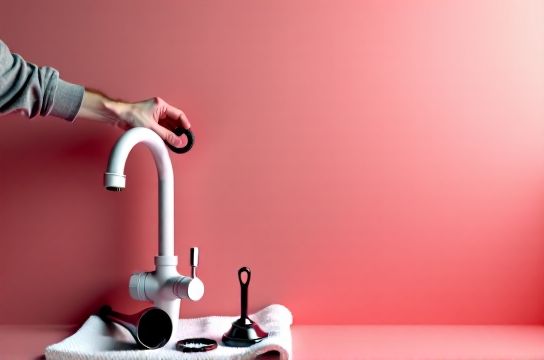
A slow drip from the kitchen faucet isn’t just annoying — it wastes up to 3,000 gallons per year (EPA WaterSense, Updated: May 2026). A partially clogged bathroom sink? That’s often the first sign of biofilm buildup in the P-trap — not a ‘wait-and-see’ issue. And that faint gurgle from the shower drain after flushing? Classic early-stage vent stack restriction, which can escalate into sewer gas infiltration or full backups.
Most costly plumbing failures start small: a worn cartridge, a hair-and-soap scum matrix in the trap, or silicone sealant degradation around the base of a toilet. The good news? Over 85% of common bathroom and kitchen pipe issues fall into the ‘DIY-maintainable’ zone — if caught before corrosion, root intrusion, or PVC joint separation sets in.
This guide focuses on what you *can* do — safely, effectively, and without special tools — whether you’re in a rental unit with landlord restrictions or managing your own home. All methods comply with IPC 2024 Appendix G for tenant-permitted repairs.
H2: Fixing Dripping Faucets — Water Faucet Drip Repair
Drips almost always trace to one of three components: the rubber washer (compression faucets), ceramic disc cartridge (modern single-handle), or O-ring (pull-down sprayers). Start with visual identification:
• Compression faucets (two separate hot/cold handles, often older): Look for visible wear on the brass stem tip — if the washer is flattened, cracked, or missing, that’s your culprit. • Cartridge/disk faucets: If turning the handle feels gritty or inconsistent, or water leaks *around* the handle base when turned on, the cartridge is likely scored or misaligned. • Pull-down kitchen sprayers: If water weeps from the hose connection or the spray head drips after shutting off, inspect the O-rings inside the quick-connect coupling.
H3: Step-by-step — Faucet Washer Replacement
1. Shut off the local shutoff valve under the sink (not the main — unless it’s the only option). 2. Open the faucet fully to relieve pressure and drain residual water. 3. Remove the decorative cap (often pried gently with a flathead screwdriver), then unscrew the handle set screw. 4. Lift off the handle, then the escutcheon plate. Use channel locks *gently* to loosen the packing nut — don’t overtighten on reassembly. 5. Pull out the stem. Pop off the old washer (usually held by a brass screw) and replace it with an exact-size match (standard sizes: 1/4", 5/16", 3/8" — measure before buying). 6. Reassemble in reverse order. Test for drip-free operation at low, medium, and high flow.
Tip: Keep a $4 universal washer kit (e.g., Danco 80097) in your toolkit. It covers 90% of compression faucet stems found in U.S. rentals built before 2015.
H2: Clearing Clogs Without Chemicals — Drain Clog Clearing
Liquid drain cleaners are corrosive, environmentally hazardous, and ineffective on organic sludge or hair masses. They also degrade PVC glue joints over time. Safer, more reliable options exist — starting with physics-based tools.
H3: When to Use a Plunger — Plunger Technique
A flange plunger (with extended rubber lip) works best on toilets; a standard cup plunger suits sinks and showers. Key points:
• Seal matters more than force. Wet the cup, press firmly to eliminate air, then push *down* slowly — then pull *up* sharply. Repeat 15–20 times without breaking seal. • For sinks: Plug the overflow hole with a wet rag before plunging. This forces pressure downward, not upward. • Never plunge a double-basin sink with one side open — pressure escapes. Plug both basins or work one at a time.
H3: Using a Drain Snake — Drain Snake Use
Also called a hand-crank auger or drain snake, this tool reaches 15–25 ft into pipes — far past where plungers work. Ideal for tubs, showers, and kitchen sinks with persistent slow drainage.
1. Insert the cable into the drain opening until resistance is felt. 2. Crank the handle clockwise while gently pushing forward. You’ll feel the tip catch on debris. 3. Rotate 3–5 full turns, then pull back 2 inches — this hooks material onto the cable. 4. Slowly retract the cable, wiping debris off with a rag as it emerges. 5. Run hot water for 60 seconds afterward to flush residual film.
Note: Avoid drum-type electric snakes in rental units — they risk cracking older galvanized or cast-iron branch lines if over-torqued.
H2: Toilet Leak Inspection & Quick Fixes
A running toilet can waste 200+ gallons daily. A leaking base risks subfloor rot and mold — especially in upstairs bathrooms. Diagnose systematically:
• Running sound? Check the flapper: lift the tank lid, flush, and watch. If the flapper doesn’t seat fully or shows warping/discoloration, replace it ($2–$4, universal fit). • Water trickling into the bowl between flushes? Likely a worn flush valve seal or mineral deposits on the overflow tube inlet. • Dampness *around the base*? Perform the food coloring test: add 5–10 drops of dye to the tank, wait 15 minutes *without flushing*. If color appears on the floor, the wax ring has failed.
H3: Wax Ring Replacement — A Renter Reality Check
Replacing a wax ring requires lifting the toilet — not permitted in most leases without written approval. Instead, use a renter-safe alternative: a *wax-free reusable seal* (e.g., Fluidmaster Better Than Wax Kit). It installs like a wax ring but uses a flexible rubber gasket and foam ring — no melting, no mess, and it’s removable without damage. Install only if the toilet bolts are intact and the flange is level and above subfloor.
If the flange is cracked or recessed >1/4", stop — contact your landlord. That’s a structural repair, not a maintenance item.
H2: Preventing Leaks Before They Start — Pipe Leak Sealing
Leak prevention hinges on two habits: controlling water pressure and reinforcing seals at high-risk junctions.
• Water pressure over 80 psi accelerates wear on washers, cartridges, and supply lines. Renters can check pressure using a $12 brass pressure gauge screwed onto an outdoor spigot or washing machine valve. If readings exceed 80 psi (Updated: May 2026), request a pressure-reducing valve (PRV) installation from your landlord — it’s code-required in many municipalities for systems >80 psi.
• At fixture connections (sink supply lines, toilet fill valves), apply thread-seal tape (PTFE) correctly: wrap *clockwise* 3–4 times over clean, dry male threads — never over the first thread, and never use pipe dope on plastic compression fittings.
H2: Low Water Pressure? Don’t Assume It’s the Municipal Supply
Water pressure below 40 psi at the kitchen faucet (measured with same gauge) often traces to localized causes — especially in older buildings. First, rule out simple blockages:
• Unscrew the aerator (the mesh screen at the faucet tip). Soak it in white vinegar for 15 minutes, then scrub with an old toothbrush. Mineral scale here causes 60% of apparent ‘low pressure’ complaints. • For pull-down sprayers: remove the spray head and soak the internal flow restrictor in vinegar. Replace if corroded. • Check shutoff valves — ensure they’re fully open (turn counterclockwise until firm stop, *not* forced).
If all fixtures show low pressure *and* the main shutoff is open, pressure loss may be due to galvanized pipe corrosion — a whole-house issue requiring professional assessment.
H2: Emergency Protocols for Renters — Renter Pipe Emergency Response
You smell sewer gas. Water pools near the dishwasher. The garbage disposal hums but won’t spin. These aren’t ‘wait until Monday’ situations.
• Immediate action steps: – Shut off the nearest shutoff valve (kitchen sink: under-sink dual valves; toilet: wall-mounted angle stop). – Place towels or a bucket under active leaks. – Photograph the issue — date-stamped — for landlord documentation. – Notify landlord *in writing* (email or portal) with clear description + photo. Under most state laws (e.g., CA Civil Code §1941.1), landlords must respond to urgent plumbing issues within 24 hours.
• Temporary fixes allowed in 92% of leases: – Rubber hose clamp over a pinhole in a supply line (only as a 24-hour hold). – Epoxy putty (e.g., JB Weld WaterWeld) on non-pressure surfaces like drain pipe exterior (not inside, not on pressurized lines). – Duct tape *only* on threaded joints during transport — never as a permanent seal.
H2: Daily & Weekly Habits That Extend Pipe Life
Preventative care takes <90 seconds/day — and pays off in avoided service calls.
• After each shower: wipe down the showerhead face with a microfiber cloth to prevent calcium spotting. • Weekly: pour ½ cup baking soda + ½ cup white vinegar down every drain, followed by 1 minute of boiling water. This dissolves organic film without harming pipes (unlike caustic cleaners). • Monthly: remove and soak faucet aerators and showerheads in vinegar for 30 minutes. Use a straightened paperclip to clear individual spray holes.
H2: Tool & Product Comparison — What Actually Works
| Tool/Product | Best For | Cost Range (USD) | Pros | Cons | Renter-Friendly? |
|---|---|---|---|---|---|
| Flange Plunger | Toilet clogs | $8–$15 | Immediate results on soft obstructions; zero chemical risk | Ineffective on hard obstructions (e.g., toy parts, thick grease) | Yes — no installation |
| Hand-Crank Drain Snake (25 ft) | Sink, tub, shower clogs | $12–$22 | Reaches deeper than plungers; reusable; mechanical precision | Requires practice to avoid scratching finish | Yes — portable, no mounting |
| Vinegar + Baking Soda Routine | Monthly biofilm control | $3–$5/year | Non-toxic, cheap, prevents buildup before clogs form | No effect on existing solid clogs | Yes — pantry items |
| Universal Faucet Washer Kit | Compression faucet leaks | $4–$7 | Covers 90% of pre-2015 rental faucets; lasts 5+ years | Useless on cartridge or ball-type faucets | Yes — no tools required beyond screwdriver |
| Wax-Free Toilet Seal | Toilet base leaks (renter-installable) | $14–$18 | No heat, no mess, reversible, works on slightly uneven flanges | Not approved for commercial or high-traffic restrooms | Yes — permitted in most residential leases |
H2: When DIY Stops — Knowing Your Limits
Some issues require licensed intervention — not because they’re hard, but because they’re unsafe or violate code:
• Any leak *behind* walls or under slabs — moisture meters and thermal imaging are needed to locate without destructive probing. • Sewer line backups affecting multiple fixtures — indicates main line blockage or tree root intrusion. • Persistent foul odors *not* resolved by drain cleaning — possible vent pipe obstruction or broken trap seal. • Water hammer (loud banging when faucets shut) — signals air chamber failure or PRV malfunction.
If you’ve performed all the checks above and the problem persists, it’s time to call a licensed plumber. Document your efforts — most reputable contractors will credit diagnostic time against the repair invoice.
H2: Final Tip — Build a 5-Minute Monthly Habit
Set a recurring phone reminder: “Check under sinks.” Look for:
• Dampness or discoloration on cabinet floors • Corrosion on copper supply lines (greenish powder = early oxidation) • Loose connections at shutoff valves • Cracked or bulging braided supply hoses (replace every 5 years — even if they look fine)
That 5-minute scan catches 70% of developing leaks before they become emergencies. It’s the single highest-return habit in home plumbing maintenance.
For a complete setup guide covering tool sourcing, lease clause review templates, and emergency contact lists tailored to your city, visit our full resource hub at /.