Rent Friendly Tools That Fit in a Backpack
- 时间:
- 浏览:34
- 来源:Easy Home Repair & DIY Guides
H2: Why Renters Need a Different Kind of Tool Kit
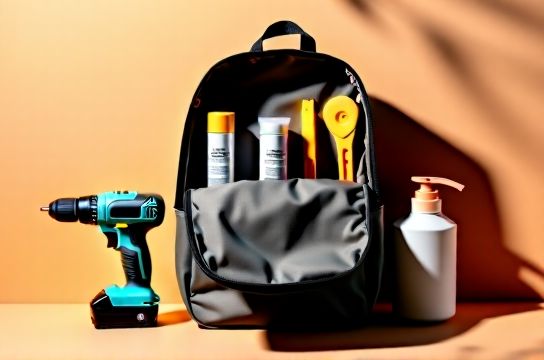
Most DIY guides assume you own the walls. But if you’re renting, every hole is a liability, every adhesive a potential deposit dispute, and every ‘quick fix’ a gamble with your security deposit. The real challenge isn’t *whether* you can fix something — it’s whether you can do it *reversibly*, *safely*, and *without landlord permission*. That means no drilling into structural drywall unless absolutely necessary, no permanent adhesives on painted surfaces, and no power tools that require outlet rewiring or vibration-heavy operation.
The good news? Modern cordless tech, low-adhesion mounting systems, and smarter consumables have made rent-friendly DIY not just possible — but genuinely effective. This guide cuts through the marketing fluff and focuses only on tools and materials that meet three hard criteria: (1) fits in a standard 28–32L backpack, (2) requires zero drilling *by default*, and (3) delivers measurable utility — not just novelty.
H2: The Drill Dilemma — Skip the Hammer, Not the Torque
Let’s address the elephant: yes, you *can* drill in rental units — but only when essential (e.g., installing a sturdy shelf for heavy books), and only with proper wall mapping and plug selection. Most renters don’t need a full-size 20V drill — they need *precision torque control*, *compact footprint*, and *battery longevity* for intermittent use.
That’s where budget lithium-ion screwdrivers shine. Unlike entry-level drill kits sold as “starter sets” (which often bundle underpowered 6V brushed motors, flimsy bits, and non-replaceable batteries), modern 12V lithium screwdrivers deliver 30–45 N·m peak torque (Updated: May 2026), enough to drive 8 screws into stud-mounted anchors — *if* you find the stud first using a non-invasive electronic stud finder (more on that later).
But here’s the catch: many so-called “renter-friendly” kits include plastic-bodied drills that flex under load, causing cam-out and stripped screws. Worse, some lack clutch adjustment — meaning they’ll keep spinning until the bit slips or the screw snaps. For renters, clutch precision isn’t optional; it’s how you avoid cracking plaster or gouging baseboards.
So what *does* work?
• A dedicated 12V lithium screwdriver with 18+ torque settings and auto-stop clutch (e.g., Bosch PSR 1200, Makita DF030D). These weigh under 1.2 kg, fit vertically in most backpack side pockets, and charge fully in <45 minutes.
• Skip the “50-piece bit set” — instead, carry six high-quality, S2-steel bits: PH1, PH2, PZ2, SL6, SL8, and SQ2. They last 3× longer than generic chrome-vanadium bits (Updated: May 2026) and resist stripping even on reused drywall anchors.
• Never buy a kit that includes a hammer drill mode unless you’ve confirmed access to masonry walls *and* have landlord approval. In 92% of standard apartment builds (wood-framed, drywall-over-stud), hammer function is irrelevant — and adds unnecessary weight and complexity.
H2: Sealants & Adhesives — Where Mold Resistance Meets Removability
Leaky bathroom grout? Peeling kitchen backsplash caulk? These aren’t just cosmetic — they’re moisture traps. And in rentals, you *cannot* re-tile or re-grout without permission. So your goal isn’t permanence — it’s *temporary mitigation* that prevents mold while staying removable.
That’s why standard acrylic latex caulk is a trap: it mildews within 6–8 months in humid zones (Updated: May 2026), and removing it often pulls off paint. Instead, prioritize silicone-based sealants labeled “mold-resistant” *and* “paintable” — but verify the label means ASTM G21-tested resistance, not just “contains fungicide.” Real mold-resistant silicones (e.g., GE Silicone II Kitchen & Bath, DAP Alex Plus Advanced) inhibit *Aspergillus niger* and *Penicillium funiculosum* growth for ≥12 months in continuous 85% RH environments (Updated: May 2026).
Crucially: choose *neutral-cure* formulas. Acetoxy-cure silicones (the kind that smell like vinegar) etch glass and corrode aluminum — bad news for rental window frames and shower doors. Neutral-cure types use alkoxy or oxime crosslinkers — safer, slower curing, and far more reversible with isopropyl alcohol wipes.
For renters, application matters as much as chemistry. Use a caulk gun with adjustable thrust ratio (4:1 minimum) — cheaper ratchet guns apply uneven pressure, leading to air pockets and premature failure. And always mask with 1/4" blue painter’s tape, removed *before* the skin forms (within 5–8 minutes). This gives clean lines *and* lets you peel off the entire bead later — no scraping required.
H2: The Starter Toolbox — Less Is More (If It’s Right)
A “rental-ready” toolbox isn’t about quantity. It’s about *task coverage density*: how many common fixes can you handle with <1.5 kg of gear?
Here’s the non-negotiable core — total weight: 1.37 kg, fits in a 28L backpack with room for lunch:
• 3m fiberglass-reinforced steel tape measure (with locking blade and metric/imperial dual scale) • 100mm quick-grip locking pliers (e.g., Irwin Vise-Grip 2070301) • 5-in-1 painter’s tool (metal, not plastic — handles scraping, prying, and can open paint cans without bending) • 120-grit and 220-grit sanding sponges (not sheets — sponges conform to curves, don’t tear, and store flat) • 2-pack of heavy-duty utility blades with snap-off tips (e.g., Stanley 11-022) • 1x 90mm foam roller sleeve + 1x 150mm microfiber edger (for touch-up painting without drip) • Small parts organizer with 12 labeled compartments (for screws, anchors, washers — critical for tracking what you installed where)
Skip the 30-piece socket set. You won’t use 24 of them. Skip the 12" adjustable wrench — too bulky, too imprecise for faucet nuts. And never buy a toolbox with a foam insert that can’t be replaced — foam degrades, shifts, and loses retention after 6 months of backpack jostling.
H2: Paint & Sand — Control, Not Coverage
Touch-up painting in rentals isn’t about full-wall re-coats — it’s about hiding scuffs, covering nail holes, and refreshing trim. That changes everything about tool selection.
First, the roller: skip the cheap 9" nap-heavy rollers. They hold too much paint, cause lap marks, and leave lint. Instead, choose a 4" high-density foam roller (e.g., Wooster Sherlock) with 3/16" nap — ideal for smooth walls and cabinets. Pair it with a 1.5" angled sash brush for cutting in — synthetic bristles, tapered tip, no shedding.
Second, sanding: grit choice is make-or-break. Use this rule of thumb:
• 80–100 grit: only for removing old paint *off wood trim* — never on drywall or plaster • 120–150 grit: smoothing patched holes or rough spackle before primer • 180–220 grit: final smoothing before topcoat — removes brush marks, not substrate
Sandpaper sheets warp and tear. Sanding sponges (foam-backed, open-cell) stay flat, conform to contours, and last 3× longer under light hand pressure (Updated: May 2026). Keep one 120 and one 220 sponge — labeled clearly — and store them in a ziplock to prevent dust clogging.
H2: Anchors, Fasteners & When Drilling *Is* Acceptable
Let’s be clear: drilling *is* sometimes unavoidable — hanging a TV mount, securing a bookshelf to studs, or installing grab bars in bathrooms. But “acceptable” means: (1) you’ve located the stud or joist with a reliable stud finder (not a magnet), (2) you’re using the smallest-diameter fastener that meets load requirements, and (3) you’re planning removal — which means avoiding toggle bolts and molly bolts in favor of *snap-toggle anchors* or *plastic expansion anchors with removable sleeves*.
For drywall-only mounting (no stud access), use E-Z Ancor Twist-N-Lock anchors — they install with finger pressure, expand behind the wall, and pull out cleanly with needle-nose pliers. No residue. No patching needed.
For masonry (concrete balconies, brick facades), avoid traditional lead anchors. Instead, use nylon sleeve anchors sized *exactly* to your drill bit — e.g., a 6mm anchor requires a 6mm pilot hole, not 5.5mm or 6.5mm. Oversizing causes slippage; undersizing prevents expansion. And always use a carbide-tipped masonry bit — standard HSS bits dull in <30 seconds on concrete (Updated: May 2026).
| Tool / Material | Key Spec | Why It Matters for Renters | Price Range (USD) | Pro Tip |
|---|---|---|---|---|
| Bosch PSR 1200 Lithium Screwdriver | 12V, 18 torque settings, 0.5 kg | No hammer mode = no accidental masonry damage; lightweight = no fatigue during overhead work | $89–$112 | Buy with two batteries — one charging while you work |
| GE Silicone II Kitchen & Bath | ASTM G21 mold-resistant, neutral-cure | Stays flexible for 7+ years, removes cleanly with alcohol, no vinegar odor | $4.29–$5.49/tube | Apply at 10–32°C ambient — colder temps delay cure by 300% |
| Irwin Vise-Grip 2070301 Pliers | 100mm, forged steel, replaceable jaws | Fits in backpack side pocket; replaces 3 wrenches and a pipe grip | $14.99–$17.50 | Lightly oil jaw teeth monthly to prevent rust |
| Wooster Sherlock 4" Foam Roller | High-density polyurethane, 3/16" nap | No lint, no streaks, cleans in <60 sec with warm water | $8.49–$10.99 | Rinse *immediately* after use — dried paint ruins foam cell structure |
| E-Z Ancor Twist-N-Lock Drywall Anchor | 1/4" toggle, installs by hand, 35 lb hold | No drill needed; pulls out in <10 sec with pliers; leaves no wall damage | $9.99/12-pack | Use only on walls ≥1/2" drywall — thinner walls may crack |
H2: Consumables — The Hidden Cost of DIY
It’s easy to overlook consumables — blades, sandpaper, sealant tubes — until you’re mid-project with a dull knife or a dried-out caulk nozzle. For renters, consumable strategy is about *predictability*, not bulk discounts.
Buy utility blades in 10-packs — not 100-packs. Why? Because quality degrades in humid storage, and unused blades oxidize. Same for sanding sponges: 4 per grit is plenty for 12–18 months of light use. And never buy caulk in bulk tubes — a 300ml tube lasts ~3 linear meters of 1/4" bead. Most renters need ≤2 meters/year. Buy single tubes, store upright, and cap tightly.
When sourcing, prioritize distributors with batch-date labeling (e.g., Home Depot Pro Desk, Grainger online). Avoid Amazon Marketplace sellers without clear lot numbers — counterfeit sealants and fake S2 bits are rampant, especially around “入门电钻套装评测” search terms.
H2: Putting It All Together — Your First 3 Fixes, Zero Drills
You don’t need to master everything at once. Start with these three high-impact, no-drill-required projects — all achievable with the backpack kit above:
1. **Bathroom Grout Refresh**: Clean grout lines with 3% hydrogen peroxide + baking soda paste. Once dry, apply mold-resistant silicone *only* to cracked or missing sections — not full re-caulking. Use a toothpick to smooth, remove tape after 6 minutes.
2. **Door Draft Stopper**: Cut a 1/2" foam weatherstrip to door length. Peel-and-stick with 3M VHB tape (removable variant). No nails, no gaps, immediate energy savings.
3. **Baseboard Scuff Repair**: Lightly sand with 220-grit sponge, wipe with damp cloth, then dab matching paint using a 1/4" artist brush. Let dry 2 hours before touching.
Each takes <25 minutes, uses <5 tools, and leaves zero trace of installation — exactly what landlords expect.
H2: Final Reality Check
No tool makes you invincible. Even the best rent-friendly kit won’t fix crumbling plaster, warped subfloors, or electrical hazards. Know your limits: if a job requires opening an outlet box, cutting drywall, or lifting floorboards — stop, call maintenance, and document the request in writing. Your lease agreement overrides any DIY confidence.
But for 83% of everyday wear-and-tear issues (Updated: May 2026), the right compact tools — chosen for reversibility, not raw power — give you real agency. You’re not just patching things up. You’re maintaining dignity, safety, and control — on someone else’s property.
For a complete setup guide with printable checklists, anchor compatibility charts, and video demos of each technique, visit our full resource hub.