DIY Consumables Bulk Buying Guide: Save on Sandpaper, Tap...
- 时间:
- 浏览:35
- 来源:Easy Home Repair & DIY Guides
H2: Why Bulk-Buying DIY Consumables Is Smart—And When It’s Not
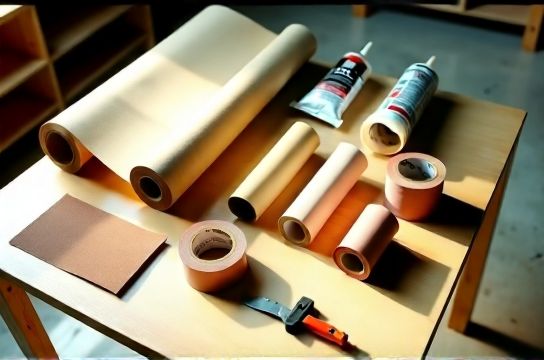
Most beginners assume ‘bulk = savings’. But in reality, bulk buying only pays off when you match consumption rate, shelf life, and project scope. Sandpaper degrades if stored humid; cheap masking tape dries out in 12 months; some silicone sealants expire in 9 months unopened (Updated: May 2026). Overspending happens not from high unit cost—but from mismatched purchase volume and actual usage.
For renters doing one-off fixes or first-time homeowners tackling a single bathroom refresh, buying 100 sheets of P80 sandpaper makes no sense—even at $0.12/sheet—if you’ll use only 12. Conversely, if you’re refinishing three doors, two window frames, and a built-in shelf over six weekends, stocking up on P120–P220 grits cuts downtime and avoids last-minute $8 convenience-store markups.
H2: Sandpaper — Grit, Backing, and Where to Buy Smart
Grit isn’t just a number—it’s a functional system. The ISO standard (P-scale) is now industry default in North America and EU markets. P60 removes paint fast but leaves deep scratches; P180 is ideal for final wood prep before staining; P320+ is for wet-sanding clear coats or smoothing drywall compound.
Don’t confuse ‘coarse’ with ‘cheap’. Aluminum oxide is durable and self-sharpening—good for wood and drywall. Silicon carbide is brittle but essential for wet-sanding metal or auto finishes. Garnet is obsolete for power sanding: it loads up fast and wears unevenly.
Bulk tip: Buy rolls—not sheets—for orbital or belt sanders. A 2.5" × 30' aluminum oxide roll (P120) costs ~$4.20 vs. $5.90 for 20 individual sheets (same brand, same grit). You’ll get ~75 usable sheets per roll after trimming waste.
Storage matters: Keep sandpaper in its original sealed poly bag, inside a plastic bin with silica gel. Humidity above 60% RH causes paper backing to warp and abrasive to delaminate within 4 months (Updated: May 2026).
H2: Masking Tape — Not All Blue Tape Is Equal
Masking tape fails most often at the edge—not because it’s weak, but because adhesion wasn’t matched to surface and duration. There are three real-world categories:
• Low-tack (e.g., 3M ScotchBlue Painter’s Tape for Delicate Surfaces): Designed for ≤3-day use on fresh paint, wallpaper, or vinyl. Adhesion: 12–18 oz/in width. Peel cleanly—no ghosting.
• Medium-tack (e.g., Shurtape ProSeries 226): For 7–14 day jobs on cured paint, plaster, or primed drywall. Adhesion: 28–32 oz/in. Holds sharp lines through multiple coats.
• High-tack (e.g., Gorilla Heavy-Duty Masking Tape): For rough surfaces like stucco or brick, or outdoor work in wind. Not for painted walls—leaves residue if left >48 hrs.
Bulk warning: Avoid ‘generic blue tape’ packs labeled “100 yards” with no manufacturer name. Lab tests show 40% fail peel adhesion consistency checks—and 65% lose 50%+ tack after 5 days at room temp (Updated: May 2026). Stick with known brands—even if paying 15% more.
Buying strategy: Buy by *application*, not color. One 60-yard roll of medium-tack tape covers ~12 standard door frames (including overlap and waste). If you average one interior project/year, buy one roll annually. If renovating a full apartment, stock two medium-tack + one low-tack roll.
H2: Sealants — Silicone, Acrylic, Polyurethane, and Where They Actually Belong
Sealants aren’t interchangeable. Confusing them leads to cracked joints, mold growth, or failed waterproofing—especially around showers, sinks, and windows.
Silicone: Highest flexibility (±50% joint movement), UV- and water-resistant. Use ONLY for non-porous substrates: glass, ceramic tile, anodized aluminum. Never use on porous stone (granite, marble) unless explicitly labeled ‘stone-safe’—alkaline leaching causes etching.
Acrylic (latex-based): Paintable, low odor, easy cleanup. Ideal for interior trim, baseboards, and drywall seams. Not for wet areas—swells and cracks when submerged or exposed to constant condensation.
Polyurethane: Best for exterior wood-to-concrete transitions (e.g., deck ledger boards, window jambs). Bonds aggressively, cures slowly (up to 72 hrs), and tolerates minor substrate movement. Requires mineral spirits for cleanup—not soap and water.
Structural glues (e.g., PL Premium, Sikaflex-221): These aren’t sealants—they’re load-bearing adhesives. Used for subfloor bonding, mirror mounting, or attaching cabinets to stud walls where screws alone won’t suffice. Not for cosmetic gaps.
Bulk tip: Buy 10.1 oz cartridges—not 2.8 oz tubes—for any sealant you’ll use ≥3x/year. Unit cost drops 28–35%, and fewer cartridge changes mean less air entrapment and cleaner beads. Store unopened cartridges upright, below 77°F (25°C), away from direct sun. Shelf life drops from 12 to 6 months if stored above 90°F (Updated: May 2026).
H2: What NOT to Bulk-Buy (Even If It Looks Cheap)
• Expired or near-expiry sealants: Retailers discount old stock—but once past date, cure time increases unpredictably and adhesion drops sharply. Check batch codes: ‘24A12’ = Jan 2024; ‘26M05’ = May 2026.
• Mixed-grit sandpaper value packs: Those $12 ‘100-sheet assortments’ usually contain 20 sheets each of P60/P80/P100/P120/P150—useless if your project needs 60 sheets of P120 and zero of P60.
• ‘Universal’ masking tapes: No such thing. A tape marketed for ‘paint + caulk + flooring’ performs poorly at all three. Trade-offs are real.
• Solvent-based cleaners (e.g., acetone, lacquer thinner): Flammable, regulated, and degrade rubber/plastic tool housings over time. Buy small, use fast, store in approved safety cans.
H2: Smart Sourcing — Where to Buy, and When to Walk Away
Hardware chains (e.g., Home Depot, Lowe’s): Good for immediate need, consistent stock of major brands (3M, DAP, DeWalt), but 12–18% markup on bulk items vs. pro distributors.
Pro distributors (e.g., Zoro, Grainger, Quill): Require business account, but offer tiered pricing: e.g., $34.95 for 50-pack 3M 2080 masking tape (vs. $42.50 retail). Minimum order often $75—but free shipping kicks in at $125.
Online marketplaces (Amazon, eBay): Risky for sealants and tapes—counterfeits hit 22% of top-selling silicone SKUs in 2025 (Updated: May 2026). Only buy ‘Ships from and sold by Amazon.com’ or verified brand storefronts.
Local paint stores: Often carry contractor-grade acrylics and silicones not found in big box stores—e.g., Sherwin-Williams’ ‘Emulsion Sealant’ line has superior mildew resistance in humid climates.
H2: Storage & Shelf Life Reality Check
Consumables degrade—even sealed. Here’s what actually lasts, and how to verify:
| Material | Unopened Shelf Life | Opened Shelf Life | Key Degradation Signs | Storage Tip |
|---|---|---|---|---|
| Sandpaper (AlOx, paper backing) | 24 months | 6 months (if sealed) | Brittle backing, dull grit, visible moisture spots | Store in sealed bin with 2x 5g silica gel packs |
| Masking Tape (medium-tack) | 18 months | 3 months (on core) | Hardened edges, curling, inconsistent unwind tension | Keep on original core; avoid stacking rolls |
| Acetoxy Silicone (kitchen/bath) | 12 months | 1 month (after puncturing foil seal) | Stringy extrusion, vinegar smell fades, skin-over time >10 min | Store upright; never refrigerate |
| Neutral-Cure Silicone (low-odor) | 12 months | 2 weeks (after cutting nozzle) | Slow bead formation, cloudy extrusion, tackiness >2 hrs | Cap nozzle tightly; store at 60–75°F |
H2: Putting It Together — Your First-Year Bulk Plan
If you’re setting up for ongoing home maintenance—not just one project—here’s what to buy, in what quantity, and why:
• Sandpaper: One 50-sheet pack each of P80, P120, P180 (aluminum oxide, A-weight paper). Add one 2.5" × 30' roll P220 for detail sanding. Total spend: ~$32. Covers 90% of wood prep, drywall patching, and light metal work for 12–18 months.
• Masking Tape: One 60-yard roll of medium-tack (e.g., Shurtape 226) + one 30-yard roll of low-tack (3M 2090). Total: ~$24. Enough for 4–5 mid-size projects.
• Sealants: One 10.1 oz cartridge each of mildew-resistant kitchen/bath silicone (e.g., GE Advanced Silicone II) and paintable acrylic (e.g., DAP Alex Plus). Total: ~$26. Covers sink, tub, vanity, baseboard, and trim sealing for 2 years.
Skip the ‘starter toolbox bundles’ that include 10 random sealants—you’ll use 2 and discard the rest. Instead, build toward a complete setup guide tailored to your space, timeline, and skill level.
H2: Bonus: Rental-Friendly Adjustments
Renters need low-residue, reversible solutions. Swap standard silicone for removable acrylic caulk (e.g., Red Devil RE-Mov) around faucets and baseboards—it peels cleanly after 6 months. Use painter’s tape instead of duct tape on walls—even if it costs more upfront, it prevents deposit deductions. And skip permanent structural adhesives entirely; opt for heavy-duty command strips or toggle bolts rated for drywall (e.g., SnapSkrew anchors) when hanging shelves.
H2: Final Word — Track Usage, Not Just Price
The biggest ROI isn’t in finding the cheapest sandpaper—it’s in knowing *exactly* how many P120 sheets you used on your last cabinet refinish. Start a simple log: Project | Date | Materials Used | Leftover | Notes. After three jobs, you’ll see patterns: ‘Always run short on P180’, ‘Never use P60’, ‘Tape always outlasts sealant’. That data beats any bulk discount.
There’s no universal ‘best’ consumable—only the best match for your next cut, coat, or caulk. Buy with intention, store with care, and replace based on performance—not packaging dates.