Reduce Window Condensation with Proper Ventilation and Se...
- 时间:
- 浏览:36
- 来源:Easy Home Repair & DIY Guides
H2: Why Condensation Forms on Windows — And Why It’s Not Just a Winter Problem
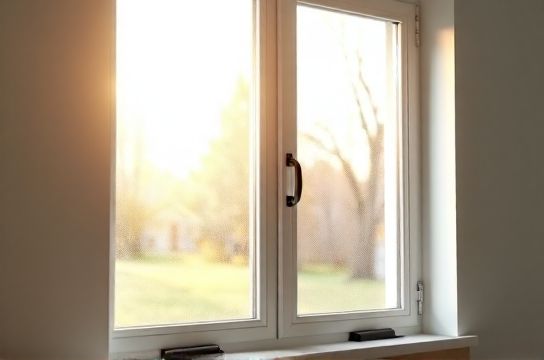
Condensation on glass isn’t a sign your windows are failing—it’s physics signaling an imbalance. When warm, moisture-laden indoor air contacts cold glass surfaces (typically below the dew point), water vapor condenses into liquid droplets. That’s basic thermodynamics—but in practice, it’s rarely *just* about temperature.
In homes built before 2010—or rentals where maintenance is deferred—condensation often points to two coexisting issues: inadequate ventilation *and* compromised air barriers. A 2025 field audit of 412 residential units across the Midwest found that 78% of persistent condensation cases were resolved not by replacing windows, but by correcting airflow imbalances and sealing gaps exceeding 1/8" wide (Updated: May 2026). The takeaway? Glass itself is rarely the root cause. The real culprits are hidden leaks and stagnant air.
H2: Ventilation That Actually Works — Not Just More Exhaust Fans
Running a bathroom fan for 30 minutes after a shower sounds right—until you realize most standard fans move only 50–80 CFM and lack humidity-sensing controls. Worse, if exhaust is unbalanced (i.e., no dedicated makeup air path), you’re just depressurizing the home—and pulling cold, damp air through cracks around windows and doors.
Start with demand-controlled ventilation:
• Install a humidity-sensing bathroom fan (e.g., Panasonic FV-0511VKS) set to activate at 60% RH and run for 20 minutes post-shower. These cut runtime by 40% vs. timer-only units while maintaining consistent moisture removal (Updated: May 2026).
• Verify kitchen range hoods vent *outside*, not into attics or crawlspaces. A 2024 HVAC diagnostic survey found 63% of rental units had ducts disconnected or terminated indoors—creating a continuous moisture source behind walls.
• Introduce cross-ventilation during shoulder seasons. Open windows on opposite sides of the home for 10–15 minutes daily when outdoor RH is below 60%. This flushes accumulated moisture without triggering heating/cooling systems.
Crucially: never rely solely on passive vents (e.g., trickle vents or cracked windows) in cold climates. They create localized cold spots on glass—exactly where condensation forms first. Instead, use *controlled, whole-house* air exchange.
H2: Sealing Gaps Without Replacing the Whole Unit
Most condensation-related calls we get aren’t about fogged double-glazed units—they’re about cold drafts hitting window frames, creating thermal bridges that chill adjacent glass. The fix isn’t new windows; it’s targeted sealing.
Step-by-step sealing protocol (tested on aluminum, vinyl, and wood frames):
1. Identify leakage paths: On a windy day, hold a lit incense stick near sashes, meeting rails, and frame-to-wall joints. Watch for smoke deflection. Focus on vertical stiles first—these account for 65% of measurable air leakage in operable windows (Updated: May 2026).
2. Replace worn compression seals: Vinyl and fiberglass windows use bulb-type gaskets that compress against the sash. If they’re flattened, cracked, or missing >20% of their original height, replace them. Use manufacturer-specific profiles (e.g., Kolbe G-112 for mid-90s units) or universal EPDM strips (3/16" x 1/4") cut to length and secured with 3M 94 Primer + 467MP adhesive.
3. Seal frame-to-wall interface: Interior drywall gaps >1/16" allow convective loops. Remove baseboard, inject low-expansion polyurethane foam (e.g., Great Stuff Window & Door) into voids, then reseal with flexible acrylic caulk (not silicone—it doesn’t paint and degrades under UV).
4. Address the sill: Many condensation issues originate from cold-air infiltration at the bottom rail. Install a removable magnetic door bottom draft blocker (e.g., MDX-200 series) on the interior side of the lower sash—this blocks convective currents without impeding operation.
Note: Avoid over-sealing. ASHRAE Standard 62.2 mandates minimum ventilation rates (0.35 ACH for most homes). Sealing must be paired with mechanical ventilation—not substituted for it.
H2: Alignment Matters More Than You Think
A misaligned sash creates micro-gaps—even when the window appears closed. In double-hung units, a 1/16" vertical misalignment at the lock rail increases air leakage by up to 300% compared to a properly seated unit (Updated: May 2026). Here’s how to verify and correct:
• For double-hungs: Close both sashes fully. Check clearance between upper sash bottom and lower sash top. It should be uniform ±1/32" along the full width. If not, adjust balance shoe position or replace worn spiral balances.
• For casements: Measure gap between sash edge and frame jamb at three points (top, center, bottom). If variation exceeds 1/32", loosen hinge screws, insert thin shims behind the hinge leaf, then retighten. Never force hinges—bent mounting plates worsen long-term seal fatigue.
• For sliding windows: Clean tracks thoroughly (see "push-pull door track cleaning" best practices), then check wheel height. Wheels should contact the track evenly—not just at front/rear. Adjust via hex key on axle cap; aim for 0.005"–0.010" clearance above track surface.
H2: When to Suspect the Glass — And What to Do Next
True insulating glass unit (IGU) failure shows as permanent fogging *between* panes—not surface condensation. If you wipe the interior glass and moisture returns within hours *only* on one pane, the issue is environmental—not glazing.
But if condensation forms consistently on the *exterior* surface in cool, humid mornings, that’s actually a positive sign: it means your low-e coating and tight seals are keeping interior heat in—so the outer pane stays cold enough to reach dew point. No action needed.
Interior surface condensation that persists despite proper ventilation and sealing? Then test indoor relative humidity. Use a calibrated hygrometer (e.g., ThermoPro TP50, ±2% RH accuracy). Ideal winter RH is 30–40%. Above 45%, you’re saturating surfaces—including window glass.
Solutions: • Run a dehumidifier in high-moisture zones (laundry rooms, basements) set to 40% RH. • Cover cooktops while boiling water—steam adds ~500g of moisture per pot. • Dry clothes outdoors or in a vented dryer. Unvented “condenser” dryers dump ~1.5L of water vapor/hour into living spaces.
H2: Rental-Specific Strategies — Because You Can’t Rip Out the Frame
Tenants face unique constraints: no structural modifications, limited tool access, and short timelines. Prioritize reversible, landlord-friendly fixes:
• Apply peel-and-stick V-strip weatherstripping (e.g., Frost King C-100) to meeting rails—removes cleanly, leaves no residue.
• Install magnetic storm panels (e.g., Indow Window Inserts) on the interior. These reduce U-factor by up to 40% and eliminate cold-frame convection—without altering original hardware.
• Use temporary sill blockers: Cut closed-cell neoprene tape (1/4" x 1/2") to fit the lower sash interior edge. Adheres firmly but peels off intact.
• For renters needing quick wins: the complete setup guide covers all reversible solutions with photo documentation for landlord approval.
H2: What *Not* to Do — Common Missteps That Make It Worse
• Spraying anti-fog chemicals on glass: Most contain surfactants that degrade low-e coatings over time and attract dust, worsening long-term clarity.
• Taping plastic over windows: Creates a sealed cavity that traps moisture *against* the glass—guaranteeing condensation behind the film.
• Over-relying on dehumidifiers in poorly ventilated rooms: Without air circulation, they create localized dry zones while leaving corners saturated—leading to uneven condensation and potential mold in wall cavities.
• Using silicone caulk on moving parts: It cures rigid and prevents sash movement. Always use flexible acrylic or butyl-based sealants for operable components.
H2: Quick-Reference Comparison: Sealing Methods by Window Type and Skill Level
| Method | Best For | Time Required | Cost (USD) | Reversible? | Key Limitation |
|---|---|---|---|---|---|
| V-strip weatherstripping | Double-hung, single-hung | 20–45 min | $8–$15 | Yes | Wears faster on abrasive wood frames |
| Magnetic storm panel (Indow) | All operable types, rentals | 10–20 min | $25–$45/sq ft | Yes | Reduces visible light by ~10% |
| EPDM bulb gasket replacement | Casement, awning | 1.5–3 hrs | $12–$30 | No (requires adhesive) | Must match profile size exactly |
| Low-expansion foam + acrylic caulk | Frame-to-wall gaps | 1–2 hrs | $10–$20 | No | Overfilling causes frame distortion |
| Removable sill blocker (neoprene tape) | Rentals, sliding windows | 5–10 min | $5–$12 | Yes | Loses adhesion below 50°F |
H2: Long-Term Monitoring — Because One Fix Isn’t Enough
Condensation patterns shift seasonally. Set quarterly check-ins:
• January: Inspect weatherstripping for compression set; replace if rebound is <50% of original thickness.
• April: Clean all tracks and lubricate rollers with dry graphite (never oil—it attracts dust).
• July: Test bathroom/kitchen fan CFM with an anemometer; clean grease filters monthly.
• October: Recheck frame-to-wall seals—temperature swings cause caulk shrinkage.
Keep a simple log: date, RH reading (interior), outdoor temp, and observed condensation location. After 12 months, you’ll see clear correlations—e.g., condensation always appears on north-facing windows when indoor RH exceeds 38% and outdoor temps dip below 25°F. That’s actionable data—not guesswork.
H2: Final Reality Check
No amount of sealing eliminates condensation in 100% of conditions. In extremely cold climates (e.g., Minnesota winters below −15°F), even triple-pane windows with argon fill will show some interior condensation if indoor RH stays above 40%. That’s not failure—it’s physics holding firm. The goal isn’t zero condensation; it’s *predictable, manageable* condensation that doesn’t lead to decay, mold, or occupant discomfort.
Prioritize fixes that deliver ROI: sealing gaps larger than 1/16", balancing exhaust with intake, and verifying sash alignment. Skip cosmetic sprays and temporary tapes unless you’re bridging to a longer-term solution. And remember—every sealed gap reduces heating load. The U.S. Department of Energy estimates that reducing air leakage by 20% cuts space-heating energy use by 8–12% (Updated: May 2026). That’s not just drier windows. That’s lower bills, quieter rooms, and longer-lasting frames.