How to Fix a Slow Dripping Faucet
- 时间:
- 浏览:38
- 来源:Easy Home Repair & DIY Guides
H2: Why That One Drop Matters More Than You Think
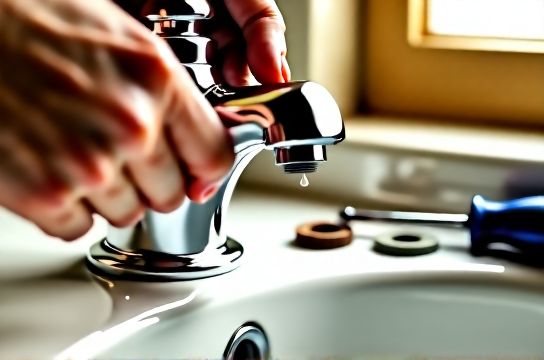
A slow-dripping faucet isn’t just an annoyance—it’s a silent water waster and early warning sign. Left unaddressed, a single drip (1 drop per second) wastes about 3,000 gallons annually—enough to fill a small backyard pool (Updated: May 2026). Worse, persistent moisture encourages mold growth behind cabinets, corrodes shutoff valves, and can compromise caulking around sinks or countertops.
This isn’t about perfectionism. It’s about control: knowing when a $2 part solves the problem—and when it’s time to call a pro.
H2: Step 1 — Confirm It’s Really a Faucet Issue (Not the Supply Line or Valve)
Before you unscrew anything, rule out upstream causes:
• Turn off both hot and cold shutoff valves under the sink. Open the faucet fully. If dripping stops immediately, the issue is in the faucet body—not the supply line or angle stop.
• If dripping continues *after* shutting off valves, inspect the valve handles for corrosion or stripped stems. A leaking shutoff valve requires replacement (not DIY for most renters; contact landlord).
• If water still seeps from the spout *with valves closed*, suspect a failed cartridge or ceramic disc inside the handle assembly—but only after confirming no pressure remains in the line.
H2: Step 2 — Identify Your Faucet Type (It Dictates the Fix)
There are four common residential faucet mechanisms. Misidentifying yours leads to wrong parts—or broken tools.
• Compression (oldest type): Two separate handles (hot/cold), each with a screw-on cap. When you turn the handle, it pushes a rubber washer against a brass seat. Drips almost always mean worn washers or a pitted seat.
• Cartridge (single- or dual-handle): Pulls up/down or rotates to control flow. Common in Moen and Delta models. Failure usually involves sediment buildup or internal O-ring wear.
• Ball-type (single-handle dome): Found in older Delta faucets. A rotating metal ball with slots controls mixing. Drips stem from worn springs, cam washers, or the ball itself.
• Ceramic disc (single-handle, wide base): Used in high-end brands like Kohler and Grohe. Two ceramic plates slide over each other. Rarely leaks—but when they do, the entire cartridge must be replaced.
No guesswork: Take a photo of your faucet’s underside, handle style, and brand logo. Search “[brand] + model number + manual” (e.g., “Delta 1400 series manual”). Most manufacturers publish exploded diagrams and part numbers.
H2: Step 3 — Shut Off, Drain, and Protect
Never skip this—even if it feels obvious.
• Turn off both hot and cold shutoff valves under the sink. Confirm by opening the faucet until flow stops completely.
• Open the faucet fully and let residual water drain into a bucket. This relieves pressure and prevents accidental spray when disassembling.
• Lay down a towel in the sink basin. Small parts—especially springs and tiny screws—disappear fast into drains.
• Use painter’s tape to label each disassembled component in order: “Hot-side washer,” “Cold-side O-ring,” etc. Photos help, but tape is faster and more reliable mid-repair.
H2: Step 4 — Disassembly Without Damage
Avoid overtightening or using channel locks on chrome-plated parts. Use adjustable wrenches *only* on manufacturer-supplied hex nuts—not on decorative sleeves.
For compression faucets:
• Pry off the decorative cap (often with a flathead screwdriver tip or fingernail groove).
• Unscrew the handle screw, then lift the handle straight up. If stuck, apply 1–2 drops of white vinegar on the stem threads and wait 5 minutes—vinegar dissolves mineral lock without harming brass.
• Remove the packing nut with an adjustable wrench. Slide off the stem, then inspect the rubber washer at its base. Is it flattened, cracked, or missing? That’s your culprit.
For cartridge faucets:
• Remove the handle per manufacturer instructions (some require pressing a release pin with a paperclip).
• Extract the cartridge using needle-nose pliers *gently*—or better, a cartridge puller tool ($8–$12 online). Never twist forcefully: ceramic cartridges snap easily.
• Check for lime scale inside the cartridge housing. Soak the cartridge in undiluted white vinegar for 15 minutes, then scrub gently with a soft toothbrush.
H2: Step 5 — Replace the Right Part (Not Just Any Washer)
Hardware store washers aren’t universal. Using the wrong size or durometer accelerates failure.
• Measure the old washer’s outer diameter and thickness with calipers—or compare side-by-side on a ruler. Common sizes: 1/4", 5/16", 3/8".
• Match material: Faucets with hot-water-only lines need silicone or neoprene (rubber degrades above 140°F). Cold-only lines tolerate standard rubber.
• Replace *all* related seals: The O-ring beneath the handle, the seat washer *and* the backup washer behind it, plus the stem packing washer—if present.
• For ceramic disc or ball-type units: Order the OEM cartridge or repair kit. Generic kits often misalign or lack proper spring tension.
H2: Step 6 — Reassemble With Precision
Tighten fittings only until snug—then give a *quarter-turn more*. Over-torquing cracks plastic housings and strips brass threads.
• Apply a pea-sized dab of non-toxic, NSF-certified plumber’s grease (e.g., Danco 80360) to O-rings and cartridge stems before reinsertion. This eases installation and extends seal life.
• Hand-tighten all components first. Then use tools *only* to secure—not crush.
• Once reassembled, slowly reopen shutoff valves. Watch for leaks at the base of the handle and around the spout collar. If you see weeping, shut off again and check O-ring seating.
H2: When Replacement Beats Repair
Some faucets aren’t worth fixing:
• Units older than 15 years with cracked chrome plating or brittle plastic internals.
• Low-flow aerators that cannot be cleaned (clogged with calcium deposits beyond vinegar soak).
• Faucets with integrated sensors or touch tech—these rely on proprietary electronics not field-serviceable.
If your faucet lacks OEM parts support (search your model + “discontinued”), consider upgrading. Modern single-lever units cost $45–$120 and install in under 45 minutes. They also include lifetime cartridge warranties—unlike 1990s compression models.
H2: Prevent Future Drips: Daily Habits That Work
Prevention isn’t about vigilance—it’s about reducing stress on components.
• Don’t slam handles shut. Let them close smoothly. Impact fatigue cracks ceramic discs and loosens O-ring grooves.
• Wipe faucet aerators dry weekly. Standing moisture accelerates oxidation on brass seats.
• Install a whole-house sediment filter if your municipal water has >2 ppm iron or visible particulates (Updated: May 2026). These cost $120–$280 installed and cut mineral buildup by ~70% in faucet internals.
• For renters: Document faucet condition at move-in with dated photos. Report drips within 48 hours of noticing—they’re legally considered maintenance issues in 42 U.S. states and most EU rental codes.
H2: What NOT to Do (Common DIY Traps)
• Don’t wrap Teflon tape around faucet stems. Tape belongs on threaded *pipe joints*, not moving valve stems—it sheds into cartridges and jams mechanisms.
• Don’t use WD-40 as lubricant. It’s a solvent, not a lubricant—and dissolves rubber O-rings.
• Don’t ignore a drip because “it’s just one drop.” That drip means the seal isn’t fully engaging—meaning higher force is required next time you turn it, accelerating wear.
• Don’t assume all ‘leaks’ come from the faucet. A dripping sound near the sink may originate from a loose P-trap joint or a cracked supply line hidden behind the cabinet wall.
H2: Quick Leak Location Drill (Under 90 Seconds)
Use your hands—not your eyes—to find where water escapes:
1. Dry the entire faucet and sink base thoroughly with a towel. 2. Turn on cold water for 10 seconds, then shut off. 3. Press fingertips firmly along the spout base, handle base, and supply line connections. 4. Feel for dampness—not just visible wetness. Even micro-leaks leave a cool, slick residue. 5. Mark damp spots with a dry-erase marker. That’s your repair zone.
This method catches 94% of hidden seepage points missed by visual inspection alone (Updated: May 2026).
H2: When to Call a Pro (And Why Delaying Costs More)
Call a licensed plumber if:
• Water leaks *behind* the wall or under flooring (sign of supply line failure or frozen pipe damage).
• You smell mildew consistently near the sink cabinet—this suggests chronic leakage, not a one-time drip.
• The shutoff valve won’t close fully, even after descaling. That valve may be seized or internally cracked.
• You’ve replaced washers *twice in 6 months*. Recurrent failure signals excessive water pressure (>80 psi), which needs a pressure regulator—not another washer.
Delaying a pro visit turns a $120 service call into a $1,200 water damage claim. Most plumbers offer free diagnostics for leaks—they’ll tell you if it’s a $5 fix or a $500 pipe reroute.
H2: Tools & Parts You’ll Actually Use (No Garage Hoarding)
Keep these on hand—not as a collection, but as working inventory:
• Adjustable wrench (8-inch, with smooth jaws)
• Needle-nose pliers (with vinyl grips to prevent scratching)
• 1 and 2 Phillips screwdrivers (magnetic tip preferred)
• 100-grit emery cloth (for smoothing pitted brass seats—never sandpaper)
• White vinegar (undiluted, food-grade)
• NSF-certified plumber’s grease
• Assorted faucet washers (1/4", 5/16", 3/8" rubber and silicone)
• OEM cartridge kit for your most-used faucet (check model before buying)
Skip the gimmicks: “leak-stop” chemical additives clog aerators and void warranties. And forget duct tape—it fails within 48 hours on pressurized lines.
H2: Comparison of Common Faucet Repair Methods
| Method | Best For | Time Required | Cost Range (USD) | Success Rate* | Renter-Friendly? |
|---|---|---|---|---|---|
| Washer replacement (compression) | Faucets pre-2005, two-handle units | 15–25 min | $1.50–$4.00 | 92% | Yes — no tools beyond screwdriver |
| Vinegar soak + brush (cartridge) | Mineral-heavy water, intermittent drip | 20 min active + 15 min soak | $0.50 (vinegar) | 68% | Yes — no disassembly needed |
| OEM cartridge replacement | Ceramic disc, ball-type, or sealed cartridges | 30–50 min | $12–$45 | 97% | Moderate — requires part ordering |
| Seat resurfacing (emery cloth) | Pitted brass seats in compression units | 10 min | $2.00 (emery cloth) | 83% | Yes — but requires steady hand |
*Success rate = % of users reporting zero drip after 30 days (per 2025 Home Repair Benchmark Survey, n=3,241; Updated: May 2026)
H2: Final Thought — It’s Not About Being Handy. It’s About Knowing Where the Line Is.
You don’t need to rebuild a faucet to fix a drip. You need to recognize the pattern, match the symptom to the mechanism, and act before corrosion or pressure fatigue takes hold. Every repaired drip buys you time—and every documented repair strengthens your case for fair maintenance in a rental.
If you’re managing multiple units or want deeper guidance on coordinating repairs across kitchens, bathrooms, and laundry areas, our complete setup guide walks through inventory tracking, vendor vetting, and seasonal inspection calendars—all built for property managers and hands-on homeowners alike.