How to Handle a Leaking Pipe Under Sink as a First Time R...
- 时间:
- 浏览:33
- 来源:Easy Home Repair & DIY Guides
H2: Stop the Drip Before It Drips Away Your Deposit
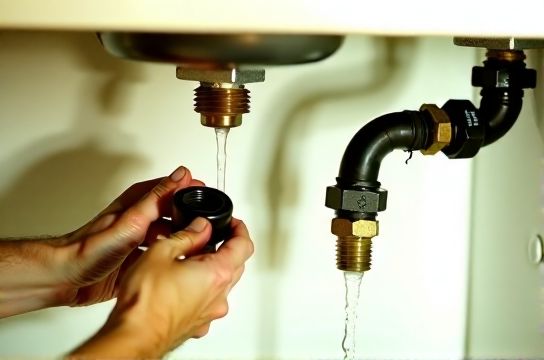
You’re rinsing a bowl, hear a *plink… plink… plink*, then spot the dark stain spreading across the cabinet floor. The pipe under your kitchen sink is leaking—not gushing, not catastrophic—but persistent, annoying, and quietly destructive. As a first-time renter, your instinct might be to ignore it (“It’s not *my* problem”) or panic (“I’ll get charged for water damage!”). Neither works. What *does* work is knowing exactly what you can safely fix yourself—and when you must pause, shut off, and notify your landlord.
This isn’t about becoming a plumber. It’s about owning the 15 minutes between noticing the leak and taking smart, low-risk action. We’ll walk through real-world diagnostics, tools you can buy for under $20 at any hardware store (or borrow from a neighbor), and clear boundaries: what’s renter-safe, what’s lease-voiding, and how to document everything so you’re protected.
H2: Step 1: Shut Off the Water — Fast and Right
Before touching anything, locate and operate the shut-off valves. Under most sinks, you’ll find two quarter-turn (ball) valves—one for hot, one for cold. Turn them clockwise until snug (don’t force). If they’re stiff, squeak, or won’t budge: stop. Don’t use pliers. Forcing a valve can crack its body or shear the stem—creating a *new* leak.
✅ Do this first—even if the drip seems minor. ❌ Don’t assume the main house shutoff is obvious. In older apartment buildings, it may be in the basement, hallway closet, or even behind a panel. Know where it is *before* an emergency. Ask your landlord or building manager during move-in (it’s a reasonable request).
Once valves are closed, open the faucet fully to relieve pressure and drain residual water. You’ll hear air hiss and see the last few drops fall—that’s normal.
H2: Step 2: Dry & Inspect — Find the Real Leak Point
Grab towels or rags and dry *everything*: the pipe joints, supply lines, P-trap, and underside of the faucet base. A wet surface hides the true source. Then inspect with a flashlight (phone light works). Look for:
• Beading or streaking along threaded connections (e.g., where the supply line meets the valve or faucet) • Corrosion or white mineral crust near compression nuts (common on older braided hoses) • Cracks or splits in the flexible supply line (especially near bends or kinks) • Dampness around the P-trap’s slip-nut joints—not just the bottom nut, but the upper connection to the tailpiece
⚠️ Important: A dripping faucet handle is *not* the same as a leaking pipe under the sink. “水龙头滴水维修” targets the faucet cartridge or worn seat washer *inside* the fixture. This section focuses strictly on the visible plumbing *beneath*—supply lines, traps, and connectors.
H2: Step 3: Fix the Most Common Culprits (Renter-Safe Only)
Most under-sink leaks fall into three categories. Here’s how to address each—without tools that require permanent modification or warranty voiding.
H3: A. Loose Slip-Nut on P-Trap (85% of minor leaks)
The P-trap is the U-shaped pipe that catches debris and blocks sewer gases. Its slip-nuts are hand-tightened—no tools needed. If water pools near the trap’s lower nut or drips from the joint, try this:
1. Place a bucket underneath. 2. Firmly tighten the nut *by hand*—clockwise only. Use rubber grip gloves if it’s slippery. 3. Don’t overtighten. If it’s already snug and still leaking, the washer inside is likely degraded or misaligned.
✅ Renters can replace the entire P-trap kit ($6–$12 at Home Depot). Choose PVC (not metal) for ease—it’s lightweight, corrosion-proof, and doesn’t require pipe dope.
❌ Don’t use Teflon tape on slip-nut threads. It’s designed for compression, not sealing—tape here causes binding and uneven pressure.
H3: B. Worn Supply Line Gasket (Especially on Braided Stainless Steel)
Braided supply lines look tough—but the internal rubber gasket degrades after ~5 years (Updated: May 2026). If you see moisture at the valve or faucet end, replace the line—not the valve.
✅ Buy new 3/8" compression x 3/8" compression braided lines (check length: standard is 12" or 20"). Tighten *by hand*, then give a *quarter-turn* with adjustable pliers—just enough to seal. Over-torquing cracks the ferrule.
❌ Never reuse old gaskets or wrap threads with tape. Compression fittings rely on metal-to-rubber contact, not thread sealant.
H3: C. Faucet Base Leak (Not the Handle)
If water seeps from where the faucet mounts to the countertop/sink deck, the issue is likely the mounting gasket or failing silicone seal—not internal parts. This is *not* “水龙头垫片更换” (which refers to internal cartridge washers). Instead:
1. Dry thoroughly. 2. Check if the mounting nuts under the sink are loose (tighten by hand or with basin wrench). 3. If still weeping, apply a *thin* bead of 100% silicone caulk (plumber’s grade, mold-resistant) around the base *on top*. Let cure 24 hours before heavy use.
✅ This is landlord-permissible cosmetic sealing—no structural change. ❌ Don’t remove the faucet or drill new holes. That’s beyond renter scope.
H2: What *Not* to Touch — And Why
Some “fixes” sound simple but risk liability, code violations, or escalation:
• **Epoxy putty or tape on cracked pipes**: Temporary at best; violates most leases and can mask worsening corrosion. Landlords require certified repairs. • **Replacing angle stops (shut-off valves)**: Requires soldering or press-fit tools—prohibited without written permission. A failed DIY valve replacement could flood the unit below. • **Cutting into walls/floors to access hidden lines**: Even if you *think* the leak is behind the cabinet, never open finished surfaces. That’s structural—and your security deposit won’t cover drywall repair + paint + inspection fees.
When in doubt: photograph the leak, note date/time, and send a brief email to your landlord or property manager: “Noticed slow drip under kitchen sink this morning. Valves shut off. Requesting maintenance assessment per lease Section 4.2.” Keep the email. That’s your paper trail.
H2: When to Skip DIY and Call for Help — Immediately
These situations require professional attention *within 24 hours*:
• Water pooling *under the floor* (not just in cabinet) • Rust-colored water or sulfur smell (indicates galvanized pipe decay or bacterial growth in drains) • Leak near the main shutoff valve or water meter • Any sign of mold (fuzzy black/green patches, musty odor) • Repeated leaks in same spot after two attempts
Note: “马桶漏水检修” and “马桶吸使用技巧” apply to toilet-specific issues—not under-sink plumbing. If your toilet runs constantly or won’t flush, that’s a separate protocol (and often covered by faster landlord response).
H2: Tools & Supplies You Actually Need (No Garage Required)
Forget full toolkits. Here’s the minimal, portable list:
• Adjustable wrench (8-inch, with smooth jaws—no teeth marks on chrome) • Needle-nose pliers (for gripping small nuts in tight spaces) • Microfiber cloths + shallow plastic tray (to catch drips during work) • Flashlight (headlamp preferred—keeps hands free) • Replacement P-trap kit (PVC, 1.25" or 1.5", includes washers) • Two new braided supply lines (3/8" FIP x 3/8" FIP, 20" length) • 100% silicone caulk + caulk gun (small, disposable)
Skip the “管道疏通棒操作” and “下水道堵塞疏通” unless the leak *is caused by* a clog backing up pressure—rare under sink, but possible if the P-trap is fully blocked with grease + coffee grounds. In that case, use a Zip-It tool (not a chemical drain cleaner—those corrode pipes and void warranties) *first*, then retest for leaks.
H2: Preventing Future Leaks — The Renter’s 5-Minute Monthly Habit
“管道日常保养” isn’t about scrubbing pipes. It’s about early detection:
1. Once a month, open cabinet doors and visually scan for damp spots, discoloration, or new mineral deposits. 2. Run both hot and cold water for 10 seconds—listen for hissing, gurgling, or delayed flow (early signs of pressure loss or clog buildup). 3. Wipe down supply lines with a dry cloth—feel for stickiness (leak residue) or bulging (hose fatigue). 4. Check P-trap nuts: if they turn more than 1/8 turn by hand, re-tighten. 5. Note water pressure: if it’s suddenly weak at multiple fixtures, it may indicate a main line issue—report immediately.
“水压过低调节” is almost never a renter task. Pressure regulators are located at the main entry point—landlord-maintained infrastructure. Document low pressure with video (showing all faucets running) and reference it in your maintenance request.
H2: Bonus: Quick Reference Table — Leak Type, Action, Time, Risk Level
| Leak Location | Renter-Safe Action | Time Required | Risk Level | When to Escalate |
|---|---|---|---|---|
| P-trap slip-nut | Tighten by hand; replace trap kit if leaking | 5–10 min | Low | If leak persists after new trap + proper tightening |
| Supply line (valve or faucet end) | Replace line; hand-tighten + ¼-turn with wrench | 8–12 min | Low–Medium | If valve body leaks *after* line replacement |
| Faucet base (mounting seal) | Tighten mounting nuts; apply silicone bead top-side | 15 min + 24h cure | Low | If water appears *under* sink cabinet floor |
| Corroded copper pipe or pinhole | None — shut off water, document, report | 2 min | High | Immediately — do not delay |
H2: Final Notes: Your Rights, Your Responsibility
Your lease likely references local habitability laws—most U.S. states and Canadian provinces require landlords to maintain “fit and habitable” premises, including functional plumbing (Uniform Residential Landlord and Tenant Act, Sec. 2.104). A slow leak may seem minor, but unchecked, it causes wood rot, mold, and increased water bills—your bill, if submetered.
That said, you’re responsible for *caused* damage. So: act fast, act smart, document everything, and know the line between prudent care and unauthorized renovation. For deeper guidance on lease clauses, reporting timelines, and tenant advocacy resources, visit our complete setup guide.
H2: Recap: The 4-Step Renter Response Flow
1. **Shut off** — Close both hot/cold valves. Confirm flow stops. 2. **Dry & locate** — Towel-dry, inspect with light, pinpoint exact drip origin. 3. **Fix or flag** — Use only hand-tightening, gasket replacement, or surface sealing. If unsure, stop and notify. 4. **Follow up** — Email landlord with photo + timestamp. Keep copy.
Leaks under the sink aren’t emergencies—but they *are* signals. Treat them like routine car maintenance: small attention now prevents big cost later. You’ve got this.
(Updated: May 2026)