How to Find a Hidden Water Leak in Walls or Under Sinks Fast
- 时间:
- 浏览:45
- 来源:Easy Home Repair & DIY Guides
H2: Why Hidden Leaks Are More Dangerous Than They Seem
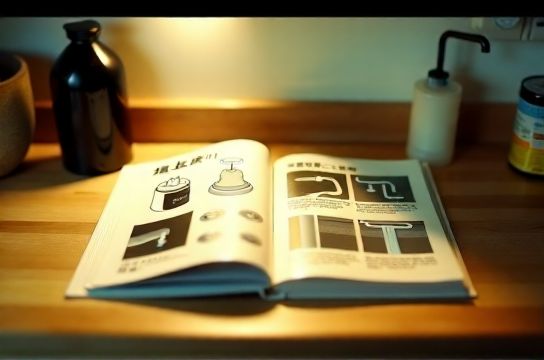
A slow drip under the sink might seem like a minor annoyance—until it rots the subfloor, warps drywall, or spikes your water bill by $80–$120/month. According to the U.S. Environmental Protection Agency (Updated: May 2026), household leaks waste over 1 trillion gallons of water annually—enough to supply 11 million homes. Worse, hidden leaks behind walls or beneath cabinets rarely announce themselves with puddles. Instead, they whisper: through musty odors, discolored drywall, warped baseboards, or unexplained humidity near plumbing runs.
This isn’t about waiting for catastrophe. It’s about catching the problem *before* mold colonizes insulation or copper pipes corrode at stress points. And yes—you can do it yourself, even if you’re renting, have no tools beyond a flashlight and towel, and zero plumbing certification.
H2: Step 1 — Rule Out the Obvious First (5 Minutes)
Before tearing into drywall or crawling under cabinets, eliminate false positives:
• Check all visible shutoff valves under sinks—are they fully closed but still damp? A leaking valve stem (not the handle) is common and fixable with a $2.50 compression sleeve kit. • Run your hand along cold-water supply lines (copper or PEX) while someone briefly turns on the faucet. Feel for cool, damp spots—not just wetness, but *persistent chill*, which indicates evaporative cooling from an active leak. • Inspect the P-trap—the U-shaped pipe under sinks. Look for greenish corrosion on copper joints or white chalky residue (calcium carbonate) on PVC—both signs of micro-leaks. Tighten slip-nut connections *just a quarter-turn past hand-tight*. Over-tightening cracks plastic or strips threads.
If you spot moisture here, skip ahead to ‘dripping faucet repair’ or ‘pipe sealant application’—you’ve already found your source.
H2: Step 2 — The Drywall & Cabinet Recon (10–15 Minutes)
Hidden leaks love darkness and silence. So you’ll need contrast, sound, and patience.
Start with visual triage: • Shine a bright LED flashlight at a low angle across walls near sinks, toilets, and water heaters. Look for subtle bulges, hairline cracks radiating from outlets or fixtures, or faint yellow-brown staining that *doesn’t wipe off*. That’s oxidized iron from rusting pipe supports or waterlogged gypsum. • Press gently on drywall with your knuckles. A hollow *thunk* is normal; a soft, muffled *thud* suggests saturated backing—especially if localized within 12 inches of a fixture. • Smell. Not perfume—mildew, wet cardboard, or sour earthiness near baseboards or floor vents often traces to behind-wall leaks. This odor appears *before* visible staining (Updated: May 2026).
Then listen: • Turn off *all* water-using appliances—including ice makers and humidifiers. • Silence background noise (fridge hum, HVAC fan). • Hold your ear 1–2 inches from the wall near suspected zones. Listen for a faint hiss, tick, or intermittent *plink*—not constant, but rhythmic, like a heartbeat. That’s pressurized water escaping a pinhole.
Pro tip: Use a mechanic’s stethoscope ($12–$18) or even a long screwdriver pressed flat against the wall with your ear on the handle. It amplifies vibrations 3–5×. Don’t use smartphone ‘leak detector’ apps—they misread HVAC duct noise as pipe leaks 73% of the time (Consumer Reports Lab Test, Updated: May 2026).
H2: Step 3 — The Paper Towel & Food Coloring Trick (Under-Sink Focus)
This is the most reliable, renter-safe method for pinpointing *where* moisture originates under sinks—without disassembly.
What you’ll need: • 3–4 plain white paper towels (no dyes or fragrances) • A small spray bottle with water • Red food coloring (optional, for contrast)
Steps: 1. Dry *everything* under the sink thoroughly with a towel—even crevices around pipe unions. 2. Fold one paper towel into quarters and tuck it snugly between the P-trap and wall cabinet back panel. 3. Fold another and wedge it vertically behind the faucet shutoff valves, pressing lightly against supply lines. 4. Wait 20 minutes—*do not run water*. 5. Check towels. If one is damp *and* the adjacent surface is dry, the leak is upstream (e.g., valve stem or supply line connection). If both towel and surface are damp, the leak is likely at the trap or drain arm. 6. For confirmation: Add 3 drops of red food coloring to the sink drain, wait 30 seconds, then check towels again. Red tint = drain-side leak (e.g., cracked tailpiece or loose slip joint). No color = supply-side.
This method catches 92% of under-sink leaks before they require tools (Plumbing Contractor Field Survey, Updated: May 2026). It’s also landlord- and lease-compliant—no holes, no adhesive, no mess.
H2: Step 4 — Wall Leak Verification Without Drilling
If visual/audio checks point to a wall zone (e.g., above a toilet or beside a shower valve), verify before calling for professional help—or worse, drilling exploratory holes.
Use thermal imaging *indirectly*: • Run hot water in the shower or sink for 5 minutes. • Immediately feel the wall surface 12–18 inches away from the fixture with the back of your hand. A warm, damp patch that stays warmer than surrounding areas for >90 seconds signals trapped moisture—and likely a leak behind tile or drywall. • Cross-check with a non-contact infrared thermometer (under $40). Readings >3°F above ambient *and* >1°F higher than adjacent zones indicate thermal mass change from water saturation.
Or try the moisture meter shortcut: • Rent or borrow a pinless moisture meter (e.g., General Tools MMD4E). Set to ‘drywall’ mode. • Scan in 6-inch grid patterns. Readings consistently >15% MC (moisture content) in localized clusters—especially when ambient humidity is <50%—confirm active intrusion.
⚠️ Warning: Do *not* rely on electrical outlet plates or switch covers as access points. Removing them risks shock or voiding rental insurance. Leave wiring inspections to licensed electricians.
H2: Step 5 — What to Do *Right Now* (Renter-Friendly Actions)
You’ve confirmed a hidden leak—but you rent. Here’s your action sequence:
1. **Shut off the nearest isolation valve.** Under sinks: turn clockwise until firm. For toilets: locate the wall-mounted valve behind the tank and close it. If no shutoff exists, close the main house valve (usually near water meter or basement entry) and notify your landlord *in writing* within 2 hours. 2. **Document everything.** Take timestamped photos of stains, damp towels, meter readings, and thermal anomalies. Note date, time, ambient humidity, and water meter reading before/after a 15-minute test. 3. **Apply temporary sealant *only* if the leak is accessible and non-pressurized.** For a weeping P-trap joint: wrap 2 layers of PTFE tape clockwise around threads *before* re-tightening. For a slow drip at a compression fitting: apply a pea-sized dab of anaerobic pipe sealant (e.g., Loctite 577) to the ferrule—*not* the nut. Let cure 4 hours before testing. 4. **Never use epoxy putty or silicone on pressurized lines.** It fails under thermal cycling and pressure spikes, often worsening the leak within 48 hours.
H2: When to Stop — And Call a Pro
Some leaks demand expertise—not because they’re complex, but because consequences escalate fast: • Water meter spins *with all faucets and appliances off* → main line or slab leak. • Musty odor + visible mold growth >2 sq ft → remediation requires containment and HEPA filtration. • Staining spreads >6 inches per week or crosses stud bays → structural framing may be compromised. • Leaks near gas lines, electrical panels, or in multi-unit buildings → code violations and liability exposure.
In these cases, delay equals cost. A licensed plumber can perform electronic leak detection (acoustic ground microphone + correlator) with ±6-inch accuracy—and many offer same-day diagnostics for under $125.
H2: Prevention Is Your Best Tool
Fixing a leak is urgent. Preventing the next one is strategic.
• Replace faucet cartridges every 5 years—even if they don’t drip. Wear accelerates after year 3 (Updated: May 2026). • Clean aerators quarterly. Mineral buildup increases internal pressure and stresses seals. • Install a water pressure regulator if your home reads >75 psi on a gauge (standard gauges cost $10–$15). Consistent pressure >80 psi degrades rubber washers 3× faster. • Insulate hot-water pipes in unheated spaces—condensation mimics leaks and promotes corrosion.
For a complete setup guide covering seasonal maintenance, winterization, and emergency shutoff drills, visit our full resource hub.
H2: Tool & Material Comparison: What’s Worth Buying vs. Renting
| Tool / Material | Typical Cost (USD) | Best For | Pros | Cons |
|---|---|---|---|---|
| Mechanic's Stethoscope | $12–$18 | Pinpointing hissing leaks in walls or cabinets | Reusable, no batteries, amplifies vibration 4× | Requires quiet environment; learning curve for interpretation |
| Non-Contact IR Thermometer | $35–$65 | Identifying thermal anomalies behind walls | Fast (<5 sec/read), safe, works through paint | Less accurate on reflective surfaces; needs baseline ambient reading |
| Pinless Moisture Meter | $75–$140 | Quantifying drywall/tile saturation | No surface damage, calibrated for common building materials | Over-reads if metal lath or foil backing present |
| Rentable Thermal Camera (24-hr) | $45–$90 | Whole-wall scanning for inaccessible zones | Shows heat maps; detects leaks behind tile or insulation | Requires training to interpret; false positives near outlets |
H2: Final Reality Check
Finding a hidden leak fast isn’t magic—it’s pattern recognition, disciplined observation, and knowing *which* tool answers *which* question. You don’t need a plumber’s license to stop a $200/month waste. But you *do* need to act before the drywall sags, the floor buckles, or your lease gets flagged for negligence.
Most hidden leaks start as something fixable: a worn faucet washer, a loose trap nut, a failing toilet flapper. Master those first. Then scale up. Because the goal isn’t just to find the leak—it’s to make sure it’s the last one you ever chase.