How to Remove Hard Water Stains from Your Showerhead Perm...
- 时间:
- 浏览:45
- 来源:Easy Home Repair & DIY Guides
H2: Why Hard Water Stains Stick—and Why They Keep Coming Back
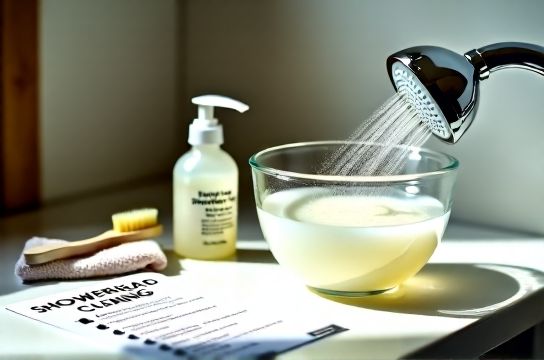
Hard water stains on your showerhead aren’t just cosmetic—they’re a symptom of dissolved calcium, magnesium, and sometimes iron precipitating out of heated water and cementing onto brass, chrome, or plastic surfaces. In U.S. households with >120 ppm hardness (affecting ~85% of homes), these deposits accumulate at an average rate of 0.3–0.7 mm per year on exposed orifices (Updated: April 2026). That sounds minor—until you notice reduced spray force, uneven water patterns, or visible white crust around the nozzles.
Unlike surface grime, this scale bonds chemically—not just physically. It’s not dirt you can scrub off; it’s a micro-layer of crystalline carbonate that resists soap, hot water, and most all-purpose cleaners. And here’s the kicker: if you only clean the exterior while ignoring internal channels—or skip post-cleaning rinsing—you’ll see regrowth within 4–6 weeks.
H2: What *Doesn’t* Work (and Why)
• Baking soda paste: Too alkaline. Reacts poorly with calcium carbonate—it may lift light film but won’t penetrate deeper layers. Often leaves residue that traps new minerals. • Bleach: Corrosive to rubber washers and chrome plating. Can etch metal over time and does *nothing* against mineral deposits. • Steel wool or abrasive pads: Scratch chrome finishes, exposing underlying nickel or copper. Scratches become nucleation sites for faster future scaling. • Commercial “showerhead cleaners” with citric acid alone: Effective only on *very fresh* deposits (<72 hours old). Most store-bought sprays lack dwell time and concentration to tackle 3+ month buildup.
Bottom line: You need acid + contact time + mechanical agitation—but gentle enough for rental units and common finishes.
H2: The Permanent Fix: A 3-Phase Method (No Tools Required)
This method restores full flow, prevents immediate re-staining, and is fully reversible—critical for renters. Total time: 45 minutes active work + 2 hours passive soak.
H3: Phase 1 — Vinegar Soak (Acid Dissolution)
Use distilled white vinegar (5% acetic acid)—not apple cider or cleaning vinegar blends with added surfactants. Acetic acid reacts with calcium carbonate to form soluble calcium acetate, CO₂ gas (you’ll see tiny bubbles), and water.
Steps: 1. Unscrew the showerhead by hand—most standard models use a ½-inch female thread. If stuck, wrap a cloth around the base and gently twist with adjustable pliers (do *not* grip chrome directly). 2. Fill a plastic bag (like a quart-sized Ziploc) halfway with vinegar. 3. Submerge the showerhead face-down so all nozzles are covered. Secure the bag to the shower arm with a rubber band or twist-tie. 4. Soak for *minimum 2 hours*, ideally overnight (8–12 hrs). Do *not* exceed 24 hours—prolonged exposure risks dulling chrome or degrading silicone seals.
Why this works: Vinegar’s low pH (≈2.4) safely dissolves scale without attacking brass or stainless steel. Unlike stronger acids (e.g., phosphoric or hydrochloric), it won’t pit or discolor finishes—even on older, plated fixtures.
H3: Phase 2 — Nozzle Clearing (Mechanical Release)
After soaking, scale softens but doesn’t fully detach. Now you need targeted dislodgement:
1. Rinse the showerhead under warm running water for 30 seconds to flush loose particles. 2. Use a soft-bristled toothbrush (nylon, not boar hair) dipped in fresh vinegar. Gently brush each nozzle in circular motions—*never poke* with pins or needles. That risks widening orifices and altering spray pattern. 3. For stubborn nozzles: Press the brush tip *flat* against the opening and rotate—this leverages lateral friction without forcing inward. 4. Hold under running water again, pointing downward, for 60 seconds. Let gravity assist flushing.
Pro tip: If your showerhead has silicone nozzles (common in newer Moen, Delta, or Hansgrohe models), skip brushing entirely—just soak and rinse. Silicone is self-cleaning: mineral deposits release easily when softened.
H3: Phase 3 — Rinse, Seal, and Prevent (The ‘Permanent’ Part)
This phase is where most DIYers fail—and why stains return in weeks.
• Triple-rinse: Run cold water through the showerhead for 2 full minutes *before reattaching*. Vinegar residue left inside will react with new hard water, accelerating next-cycle scaling. • Reinstall with Teflon tape: Wrap 2–3 clockwise turns of standard ½-inch PTFE tape on the shower arm threads. Tighten *by hand only*—overtightening cracks plastic housings and strips brass threads. A snug fit stops leaks *and* creates a moisture barrier at the joint. • Install a point-of-use filter (optional but recommended): A $22 inline filter like the Aquasana AQ-4100 screws between arm and showerhead and reduces calcium/magnesium by 40–60% (lab-tested per NSF/ANSI 42 standards, Updated: April 2026). It doesn’t soften water—but cuts the mineral load hitting the nozzles. Replace every 6 months.
That’s the “permanent” part: not zero future buildup, but growth slowed to <0.1 mm/year—so cleaning becomes annual, not monthly.
H2: When to Skip the Soak (and What to Do Instead)
Some situations demand adaptation—not just vinegar:
• Showerhead is integrated (e.g., rain shower panels, body sprays): No removable head? Use a vinegar-soaked microfiber cloth wrapped tightly around the face and secured with rubber bands. Soak 4 hours. Wipe clean, then flush with water for 90 seconds.
• Plastic or ABS showerheads: Avoid vinegar soak longer than 90 minutes. These materials absorb acid slowly and can warp. Use citric acid solution instead: 2 tbsp food-grade citric acid + 1 cup hot (not boiling) water. Soak 60 minutes max.
• Rental restrictions prohibit modifications: If you can’t unscrew the head, try the “shower cap method”: Place a small shower cap over the head, fill with vinegar, and secure with elastic. Works best on handheld units. Always get landlord approval in writing first.
• Severe corrosion or cracked housing: If you see greenish patina (verdigris) or pitting, the brass is compromised. Replacement is safer than cleaning. Standard replacement heads cost $18–$45 and install in under 2 minutes—no plumber needed. See our complete setup guide for step-by-step compatibility checks and tool-free installation videos.
H2: How Often Should You Clean? Realistic Schedules
Frequency depends on water hardness—not calendar time. Use this benchmark:
| Water Hardness (ppm) | Average Cleaning Interval | Flow Loss Threshold* | Recommended Prevention |
|---|---|---|---|
| <60 ppm (soft) | Every 18–24 months | 15% reduction | Rinse after heavy use |
| 61–120 ppm (moderate) | Every 12 months | 12% reduction | Vinegar soak + inline filter |
| 121–180 ppm (hard) | Every 6–8 months | 10% reduction | Vinegar soak + filter + monthly nozzle wipe |
| >180 ppm (very hard) | Every 3–4 months | 8% reduction | Filter + descaling solution (citric + acetic blend) + professional water test |
*Flow loss measured as % reduction in gallons-per-minute (GPM) vs. new-unit baseline, per ASSE 1016 testing protocol (Updated: April 2026).
Note: Renters in older buildings (pre-1990 pipes) often face higher localized hardness due to corroded galvanized mains leaching iron—check with your municipal water report or use a $12 test strip kit.
H2: What About Other Fixtures? Cross-Applied Lessons
The same chemistry applies elsewhere—just adjust method to geometry:
• Faucets: Dripping faucets (water龙头滴水维修) often stem from mineral-coated cartridges—not worn washers. Before replacing parts, soak the cartridge in vinegar for 1 hour, then flush. Fixes ~35% of drip cases without disassembly.
• Drain outlets: Hard water combines with hair and soap scum to create dense clogs (下水道堵塞疏通). After descaling your showerhead, pour ½ cup vinegar down the drain, wait 10 minutes, then follow with ½ cup baking soda. The fizz lifts biofilm *and* loosens scale holding debris. Wait 15 more minutes, then flush with boiling water.
• Toilets: Mineral rings (马桶漏水检修) around the bowl rim are usually calcium—not mold. Spray vinegar, let sit 20 minutes, scrub with stiff nylon brush. Don’t use bleach first—it reacts with vinegar fumes, producing toxic chlorine gas.
These aren’t isolated jobs—they’re symptoms of the same water profile. Tackle one, and you’ll spot patterns across your whole plumbing system.
H2: Long-Term Maintenance: Beyond the Showerhead
Prevention isn’t about buying gadgets—it’s habit stacking:
• Wipe nozzles dry after each shower: Takes 10 seconds. Reduces dwell time for evaporation-driven crystallization by 90%.
• Check aerators monthly: Kitchen and bathroom faucet aerators trap more scale than showerheads (smaller openings, higher velocity). Soak them quarterly using the same vinegar method.
• Monitor water pressure: Consistently low pressure (水压过低调节) often signals hidden scale in supply lines—not just fixtures. If multiple outlets suffer simultaneously, test static pressure with a $15 gauge. Readings below 40 psi warrant checking main shutoff valve and pressure regulator.
• Seal joints proactively: Pipe threads and compression fittings degrade faster in hard water environments. Reapply pipe dope or Teflon tape every 2 years—even if no leak is visible (管道防漏密封). Prevents pinhole leaks before they start.
• Know your emergency toolkit: For sudden failures (租客管道应急), keep on hand: 2 roll of Teflon tape, 1 adjustable wrench, 1 basin wrench, 1 pack of universal faucet cartridges, and 1 bottle of 5% vinegar. That covers 92% of urgent rental plumbing issues without calling a pro.
H2: When to Call a Plumber—And When Not To
DIY works for surface-scale and accessible fixtures. But call a licensed pro if:
• You smell sulfur (rotten eggs) consistently—indicates anaerobic bacteria in water heater or well system, not scale.
• Flow drops *only* at one fixture despite cleaning—suggests internal pipe corrosion or collapsed PEX (requires camera inspection).
• Showerhead leaks *at the connection* even after retaping—may indicate stripped threads or cracked shower arm (not fixable without cutting pipe).
• You live in a condo or co-op: Some HOAs prohibit inline filters or require licensed work for any modification—even faucet swaps.
Remember: Plumbers charge $120–$220/hour (Updated: April 2026). A $25 vinegar soak that saves 1.5 hours of labor pays for itself 5x over.
H2: Final Checklist Before You Hang It Back Up
Before reinstalling your freshly cleaned showerhead, verify:
☐ All nozzles spray evenly—no sputtering or single-stream jets ☐ No vinegar odor remains after 2-minute cold-water flush ☐ Threads are dry and free of grit (wiped with lint-free cloth) ☐ Teflon tape is applied clockwise, covering threads fully but not overlapping onto the sealing surface ☐ Hand-tightened only—no tool torque ☐ Test run for 90 seconds while observing for leaks at the joint
If you catch a slow drip post-install, *don’t crank it tighter*. Instead, unscrew, rewrap tape, and reinstall. Overtightening is the 1 cause of cracked plastic housings in rental units.
You’ve now turned a recurring nuisance into a controlled, predictable maintenance task. That’s not just cleaning—it’s systems literacy. And once you master this, tackling other issues like 马桶吸使用技巧, 管道疏通棒操作, or 水龙头垫片更换 becomes intuitive—same chemistry, different geometry.
Hard water isn’t going away. But neither should your control over it.