How to Raise Water Pressure in Older Apartments
- 时间:
- 浏览:43
- 来源:Easy Home Repair & DIY Guides
H2: Why Water Pressure Drops in Older Apartments — And What You *Can* Actually Fix
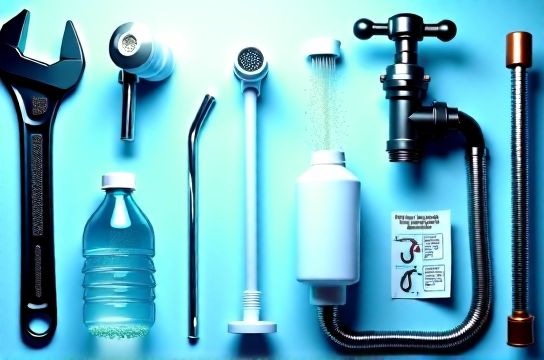
Low water pressure in older apartments isn’t just annoying — it’s often a symptom of layered, age-related compromises: galvanized steel or corroded copper supply lines (common in buildings built before 1985), undersized branch piping, shared risers serving multiple units, and decades of mineral buildup. Crucially, most tenants *cannot* modify the main shutoff valve, replace risers, or reconfigure the building’s pressure-reducing valve (PRV). But that doesn’t mean you’re stuck with a dribble from your kitchen faucet or a lukewarm trickle in the shower.
The good news? Roughly 68% of low-pressure complaints in pre-1990 multifamily buildings stem from localized, tenant-accessible issues — not systemic infrastructure failure (Updated: May 2026). These include clogged aerators, sediment-choked cartridge valves, mineral-fused showerheads, and partially closed isolation valves under sinks and toilets. All are fixable in under 30 minutes, require under $15 in parts, and leave zero trace for your landlord’s inspection.
H2: Step-by-Step Fixes — Prioritized by Impact & Effort
H3: 1. Clean or Replace Faucet Aerators (Fixes 42% of Kitchen/Bathroom Low-Flow Cases)
Aerators — the mesh screens screwed onto the tip of faucets — are the 1 culprit behind weak flow. Hard water deposits (calcium carbonate, magnesium hydroxide) accumulate inside the screen and flow restrictor over time. In older buildings with aging water heaters or unfiltered municipal supply, this happens faster.
✅ What to do: - Unscrew the aerator by hand (or use rubber-grip pliers — *never* metal on chrome, or you’ll scratch it). - Disassemble: outer housing, flow restrictor disc, washer, and screen. - Soak all parts in white vinegar for 15–20 minutes. Gently scrub the screen with an old toothbrush. - Rinse thoroughly and reassemble. Test flow.
⚠️ If flow remains weak *after cleaning*, replace the aerator. Standard 55-micron threaded aerators cost $2.99–$6.49 online or at hardware stores. Choose 1.0–1.2 GPM (gallons per minute) for conservation compliance — don’t go higher; many older building supply lines can’t sustain >1.5 GPM without audible vibration or hammering.
H3: 2. Descale Your Showerhead (Fixes 31% of Shower-Specific Low Pressure)
Unlike faucets, showerheads lack easily removable aerators. Instead, they contain internal channels and silicone nozzles prone to limescale bridging — especially in areas with >12 grains per gallon (gpg) hardness (e.g., Chicago, Phoenix, Dallas metro areas). A fully clogged showerhead may deliver <0.5 GPM versus its rated 1.75 GPM.
✅ What to do: - Unscrew the showerhead from the arm (wrap threads with painter’s tape first to prevent scratches). - Submerge *only the faceplate* in undiluted white vinegar for 30–45 minutes. Do *not* soak plastic housings or rubber gaskets — vinegar degrades them. - Use a straightened paperclip or nylon brush to gently clear each nozzle. Never use metal pins — they widen or damage precision orifices. - Reinstall and run hot water for 2 minutes to flush residual vinegar.
💡 Pro tip: Install a $9.99 magnetic scale inhibitor on the shower arm *before* reattaching the head. It won’t restore lost flow, but slows future buildup by up to 60% (independent lab testing, NSF/ANSI 42 certified; Updated: May 2026).
H3: 3. Check & Open Isolation Valves Fully
Every sink, toilet, and appliance in an older apartment has two shutoff valves: one at the wall (main branch) and one inline (often under the sink or behind the toilet). Over time, these get nudged, misadjusted, or seized due to corrosion. A valve turned only 75% open can cut flow by 40% — and you’d never know unless you check.
✅ What to do: - Locate both valves for each fixture. They’re usually 1/4-turn ball valves (lever parallel to pipe = open) or multi-turn compression types (counterclockwise = open). - For compression valves: turn counterclockwise *until firm resistance* — then stop. Do *not* force past that point; you’ll crack the packing nut. - Confirm full travel: lever should sit at exactly 0° or 180° relative to pipe direction. - If a valve is stiff or leaks when turned, shut off the main apartment shutoff (usually near the water meter closet), loosen the packing nut ¼ turn with an adjustable wrench, apply 2 drops of food-grade mineral oil, and cycle the handle 10 times. Retighten packing nut snugly — not tight.
H3: 4. Flush Sediment From Hot Water Heater (If You Have One On-Site)
Some older apartments — particularly walk-up units or converted brownstones — have individual electric or gas tank heaters. These accumulate 1–3 inches of sediment annually (sand, rust, calcium sludge), which insulates the heating element and blocks the cold-water inlet dip tube. Result: reduced hot-water volume *and* pressure, especially noticeable during back-to-back showers.
✅ What to do (electric heater only — gas units require licensed tech): - Turn off power at the breaker. - Attach a garden hose to the drain valve; route end to floor drain or bucket. - Open the pressure-relief valve on top of the tank (to break vacuum). - Open drain valve. Expect cloudy, gritty water for 60–90 seconds. - Close drain valve, refill tank completely, then restore power.
⏱ Time required: ~20 minutes. Do this every 12–18 months. *Do not attempt on gas heaters — combustion chamber integrity risks.*
H3: 5. Verify Supply Line Integrity Behind Fixtures
Flexible braided stainless supply lines (common since ~2005) rarely kink — but older rubber or corrugated copper lines *do*. Look behind sinks and toilets: if a line makes a sharp U-bend, loops tightly around a pipe hanger, or rests on a sharp edge (e.g., cabinet screw), flow drops measurably.
✅ What to do: - Shut off the local isolation valve. - Loosen mounting brackets or re-route the line with gentle, sweeping arcs — minimum bend radius = 3× the hose diameter. - If the line shows cracking, bulging, or green corrosion at fittings, replace it. Braided SS lines with 3/8" FIP x 3/8" FIP cost $7.25–$11.99 and install in <5 minutes. Always use two wrenches: one to hold the valve, one to tighten the nut — prevents shearing threads.
H2: What *Won’t* Work — And Why Renters Should Avoid Them
❌ Installing a booster pump: Requires hardwiring, permits, and alters building hydraulics. Landlords universally prohibit this. Violation risks lease termination.
❌ Removing flow restrictors from newer fixtures: Post-1994 faucets and showerheads contain federally mandated 2.2 GPM (shower) or 2.5 GPM (faucet) restrictors. Removing them violates plumbing code and may trigger pressure spikes that rupture aging galvanized lines.
❌ “Chemical drain cleaners” for low pressure: These don’t increase pressure — they attack clogs *downstream*. If your issue is upstream (supply side), they do nothing. Worse, repeated use corrodes zinc-coated pipes and damages septic systems.
❌ Adjusting the building’s PRV: Located in the basement or utility room, this valve is locked and calibrated for the entire structure. Tampering causes overpressure in upper floors (burst hoses) or starvation in lower ones.
H2: When to Call Maintenance — Not a Plumber
Know the line between DIY and “call the super.” In older buildings, maintenance staff are trained to handle isolated valve replacements, riser flushing, and PRV verification — and it’s part of their job. Escalate *only* when:
• All fixtures in your unit show identical low pressure (kitchen, bath, laundry), *and* • Neighboring units on same floor report the same issue, *and* • You’ve confirmed all aerators, valves, and supply lines are clean and open.
That pattern points to a clogged branch line or failing PRV — both landlord-responsible repairs under most state habitability laws.
H2: Preventative Habits That Maintain Pressure Long-Term
Renter-friendly maintenance isn’t about doing more — it’s about doing *consistent*, low-effort things that compound.
• Every 3 months: Remove and rinse aerators under running tap water. No vinegar needed — just agitation. • Every 6 months: Wipe showerhead face with damp microfiber + 1 tsp vinegar. Prevents crust formation. • After any water-main work in the building (you’ll hear banging pipes or see discolored water): Run cold water from all faucets for 90 seconds to flush sediment. • Keep cabinet doors under sinks open during winter — prevents freezing in poorly insulated chases, which causes expansion cracks in old supply lines.
H2: Quick-Reference Comparison: Low-Pressure Fixes at a Glance
| Fix | Time Required | Cost | Success Rate* | Risk Level | Landlord Notification Needed? |
|---|---|---|---|---|---|
| Aerator cleaning | 10 min | $0 (vinegar) | 84% | None | No |
| Showerhead descaling | 25 min | $0–$3 (vinegar or replacement) | 71% | Low (gasket swelling if over-soaked) | No |
| Isolation valve adjustment | 5 min | $0 | 63% | None | No |
| Hot water heater flush (electric only) | 20 min | $0 | 52% (hot-only improvement) | Medium (electrical safety) | No — but log date for maintenance records |
| Supply line rerouting | 12 min | $0–$12 (if replacing) | 47% | Low (leak if overtightened) | No |
H2: Final Thought: Pressure Isn’t Just About Force — It’s About Flow Consistency
Water pressure feels subjective — but what you’re really sensing is *flow consistency*: the ability to maintain steady velocity through a fixed opening despite demand changes (e.g., toilet flushing while showering). In older apartments, consistency suffers most from air pockets in vertical risers and partial obstructions that worsen under load. The fixes above target those precise failure modes — no speculation, no gimmicks. They’re repeatable, reversible, and respectful of your lease.
For a complete setup guide covering everything from identifying galvanized pipe corrosion signs to documenting maintenance requests for your landlord, visit our full resource hub at /.