How to Adjust Your Home Water Pressure Regulator
- 时间:
- 浏览:56
- 来源:Easy Home Repair & DIY Guides
H2: Why Your Water Pressure Regulator Needs Adjustment — And When It Doesn’t
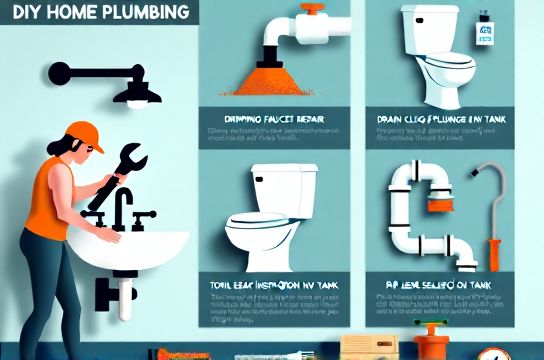
Water pressure regulators (also called pressure-reducing valves or PRVs) are small but critical brass devices typically installed near your main shutoff valve — often in the basement, utility room, or crawlspace. Their job is simple but vital: reduce incoming municipal or well pressure (often 60–120 psi) down to a safe, consistent 40–70 psi for household plumbing. Without one, high pressure stresses pipes, joints, faucets, and appliances — accelerating wear and raising the risk of leaks, burst hoses, or premature failure of fixtures like washing machines or tankless water heaters.
But here’s what most homeowners miss: a regulator isn’t a dial you tweak every season. It’s a mechanical device with a spring-loaded diaphragm and internal seat. Over time, it can drift, fail, or become clogged with sediment — especially if your home has older galvanized piping or unfiltered well water. Symptoms of a failing or misadjusted regulator include:
• Sudden drops in shower pressure while other fixtures run normally, • Pounding or banging pipes (water hammer) after turning off a faucet, • Frequent dripping faucets despite replacing washers or cartridges (a sign of excessive pressure eroding seals), • Leaky toilet fill valves or running toilets that won’t stay quiet, • Premature failure of hose bibbs or irrigation valves.
Crucially: low pressure *throughout* the house — especially when multiple fixtures are on — is rarely fixed by adjusting the regulator. That’s usually a supply issue (clogged main line, corroded pipes, or municipal flow restriction). Likewise, localized low pressure (e.g., only in the upstairs bathroom) points to fixture-specific clogs or valve issues — not the regulator. Before you reach for a wrench, rule out those first. A quick test: attach a pressure gauge (like the Watts 225-200, $28–$35) to an outdoor spigot or laundry sink cold valve. Take readings at peak usage (e.g., morning rush hour) and at night with all fixtures off. If the baseline reads 80+ psi with zero flow, your regulator may be stuck open or failed. If it reads <40 psi consistently — even with no fixtures running — the regulator could be stuck closed or obstructed.
H2: Tools & Safety Prep — What You’ll Actually Need
This isn’t a job for improvisation. Use the right tools — and respect the physics. High-pressure water systems store energy. A sudden release or over-torque can shear threads, crack brass bodies, or send debris into your lines.
Required: • Adjustable wrench or 12-point box-end wrench (size depends on regulator — most common is 1″ or 1¼″ hex nut) • Accurate water pressure gauge (digital or analog, calibrated to ±1 psi; avoid cheap $8 gauges — they’re often off by ±8 psi) (Updated: April 2026) • Small flashlight and mirror (for tight spaces) • Clean rag and bucket (for minor drips) • Pen and notebook (record pre- and post-adjustment readings)
Optional but recommended: • Pipe dope or Teflon tape (for resealing threaded connections if disassembly is needed) • Needle-nose pliers (to hold the adjustment screw while tightening the locknut)
Safety first: • Shut off the main water supply *before* loosening any fitting — even if you’re just checking pressure. • Never adjust the regulator while water is flowing through it. The spring mechanism must be under static load to respond predictably. • If your regulator has a bypass or relief port (some older models do), cover it with a rag — pressure spikes during adjustment can eject water forcefully. • Renters: Check your lease. While minor pressure checks are generally allowed, regulator adjustments may require landlord approval — especially if it involves disassembly. Document original pressure readings and share them proactively.
H2: Step-by-Step Adjustment — No Guesswork
Step 1: Locate and Identify Your Regulator Most residential regulators are ¾″ or 1″ brass bodies with a bell-shaped cap and an external adjustment screw (often covered by a plastic or metal cap). Look for stamped markings: "Watts", "Apollo", "Cash Acme", or "Sioux Chief". If you see no visible regulator, your home may not have one — common in homes built before 1975 or in low-pressure municipal zones. Confirm by checking your water bill or calling your utility. If pressure consistently measures 55–65 psi across seasons, you likely don’t need one.
Step 2: Record Baseline Pressure Attach your gauge to a cold-water fixture downstream of the regulator (e.g., laundry sink or outdoor spigot). Open the valve fully and record the reading. Then close it and wait 60 seconds — pressure should hold steady. A 5+ psi drop in that time suggests a leak *or* regulator bypass. Note both numbers.
Step 3: Access the Adjustment Screw Remove the protective cap (usually hand-tightened or secured with one small screw). Underneath, you’ll see a slotted or hex-head screw — this controls spring tension. Turning clockwise increases outlet pressure; counterclockwise decreases it. Most regulators have a 1/4-turn range for fine control — full rotation can overshoot by 20+ psi.
Step 4: Make Micro-Adjustments Using a flathead screwdriver (or 2mm hex key, depending on model), turn the screw **¼ turn clockwise**. Wait 90 seconds for system stabilization. Recheck pressure. Repeat until you hit 55–60 psi — the ideal target for most modern homes with PEX or copper piping and standard fixtures. Do *not* exceed 65 psi unless you have verified appliance ratings (e.g., some tankless heaters tolerate up to 80 psi — check manual).
Why 55–60 psi? It balances performance and longevity: enough for rain showers and dishwasher fills, but low enough to cut stress on rubber seals (reducing frequency of dripping faucet repairs and toilet leak inspections) and minimize erosion in older galvanized or CPVC lines.
Step 5: Lock and Verify Once at target, gently tighten the locknut (if present) — snug only, not torqued. Over-tightening distorts the diaphragm housing and causes drift. Re-test pressure under load: run the kitchen faucet + shower simultaneously for 2 minutes, then measure again. If pressure drops >5 psi, your regulator may be undersized or failing — not just misadjusted.
H2: When Adjustment Won’t Help — And What to Do Instead
Not every pressure complaint is regulator-related. Here’s how to triage:
• Dripping faucets persisting after pressure adjustment? Replace the cartridge or ceramic disc — high pressure accelerates wear, but the fix is still the washer or cartridge, not the PRV. See our complete setup guide for faucet pad replacement steps.
• Slow drains *only* in one sink? That’s almost certainly a hair-and-soap clog — use a drain snake or a quality pipe cleaning gel, not regulator tweaks.
• Toilet runs intermittently? Check flapper seal and fill valve height first. Excess pressure can force water past worn flappers — but replacing the flapper (a $3 part) solves it 80% of the time.
• Whole-house pressure drops *only* when irrigation runs? Your regulator may be undersized for peak demand — or your main line is too small. A licensed plumber should assess flow capacity, not DIY adjustment.
If after 2–3 careful adjustments your pressure doesn’t change — or fluctuates wildly — the regulator is likely failed. Internal debris, a collapsed diaphragm, or seat corrosion prevents response. Replacement is safer and more reliable than repeated fiddling. Most units last 7–12 years (Updated: April 2026); if yours is older than 10, budget for replacement.
H2: Renter-Friendly Considerations & Emergency Workarounds
Renters face real constraints: limited tool access, no wall penetration rights, and liability concerns. Good news: regulator adjustment is nearly always reversible, non-invasive, and requires no permanent modification. But proceed deliberately:
• Photograph the original position of the adjustment screw and pressure reading before touching anything.
• Use only hand tools — no power drills or impact drivers.
• If the locknut is seized or the screw stripped, stop. Forcing it risks breaking the body. Call maintenance — this is a legitimate warranty item.
• For immediate relief from hammer or dripping caused by high pressure, install pressure-rated aerators ($8–$15) on affected faucets — they throttle flow without altering system pressure.
• Suspect a hidden leak? Use food coloring in the toilet tank — wait 15 minutes without flushing. Color in the bowl = flapper issue. No color? Try the dye test at shut-off valves or under sinks. Fast leak detection cuts repair costs and prevents mold.
H2: Maintenance Habits That Extend Regulator Life
Unlike filters, regulators aren’t “serviceable” — but you *can* protect them:
• Install a whole-house sediment filter upstream (5-micron minimum) if using well water or living in an area with frequent pipe work. This catches rust and sand before they jam the seat.
• Flush your cold-water lines annually: open all exterior spigots for 90 seconds with main supply on — clears accumulated debris near the regulator inlet.
• Monitor pressure quarterly. Keep a log. A slow creep upward (e.g., +3 psi/year) suggests spring fatigue. A sudden jump means failure.
• Never use pipe joint compound on regulator threads — it can migrate into the sensing chamber and gum up the diaphragm. Use only approved thread sealant (e.g., RectorSeal No. 5).
H2: Comparison Table — Regulator Types, Adjustment Range, and Real-World Suitability
| Model Type | Typical Adjustment Range | Max Flow Rate (GPM) | Key Pros | Key Cons | Renter-Friendly? |
|---|---|---|---|---|---|
| Watts 225A (standard) | 25–75 psi | 40 | Widely available, field-serviceable, clear calibration marks | Requires 1″ wrench, no integrated gauge | Yes — simple screw adjustment |
| Apollo 72B (compact) | 30–80 psi | 35 | Small footprint, works in tight utility closets | Screw recessed — needs precision driver, less durable spring | Moderate — harder to access in cramped spaces |
| Cash Acme PRV-100 (smart) | 40–100 psi | 50 | Digital readout, auto-compensating, Bluetooth logging | $220+, requires battery, overkill for basic homes | No — needs app setup and power source |
| Sioux Chief 660-M (lead-free) | 20–65 psi | 30 | NSF/ANSI 61 certified, ideal for rental properties with strict codes | Narrower upper range, lower max flow | Yes — simple, code-compliant, low-risk |
H2: Final Reality Check — Know When to Stop and Call a Pro
Adjusting a regulator is straightforward — but it’s not magic. If you’ve followed these steps and still get inconsistent pressure, hear hissing from the unit, or notice weeping around the cap or body, the regulator is compromised. Continuing to adjust it won’t restore function — it may worsen leakage or cause sudden failure.
Likewise, if your home uses polybutylene (PB) piping (gray flexible tubing, common 1978–1995), do *not* increase pressure above 50 psi without professional assessment. PB degrades under sustained high pressure — and regulator adjustment could accelerate failure.
Bottom line: This fix is for confirmed regulator drift or minor underperformance. It’s not a substitute for pipe replacement, main line cleaning, or whole-house repiping. But for the vast majority of homes with copper, PEX, or CPVC — and for renters managing day-to-day comfort — mastering this one adjustment puts real control back in your hands. You’ll extend fixture life, reduce drip frequency, and sidestep unnecessary service calls. Just remember: measure twice, turn once, and never chase pressure beyond what your system was built to handle.