Bathroom Ventilation Upgrade Ideas for Long Term Mold Pre...
- 时间:
- 浏览:50
- 来源:Easy Home Repair & DIY Guides
H2: Why Ventilation Is the 1 Lever Against Bathroom Mold
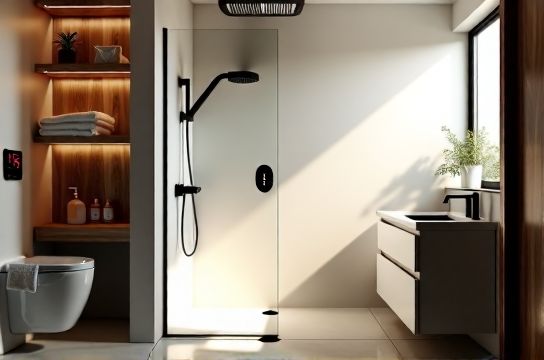
Most homeowners treat mold like a cleaning problem. It’s not. It’s a moisture problem—with ventilation as the single most effective intervention. When relative humidity in a bathroom regularly exceeds 60% for more than 3 hours post-shower (a common occurrence in poorly vented spaces), mold spores find ideal conditions on grout, drywall seams, silicone caulk, and behind tiles. According to the U.S. EPA and ASHRAE Standard 62.2-2022, continuous or intermittent mechanical ventilation delivering ≥50 CFM (cubic feet per minute) *at the source* is the minimum baseline for residential bathrooms under 100 sq ft. Yet field audits by the National Association of Home Builders (NAHB) show that over 68% of homes built before 2015 have exhaust fans rated at ≤30 CFM—or worse, ducts terminating inside attics or crawlspaces (Updated: April 2026).
That’s why upgrading ventilation isn’t about ‘nice-to-have’ aesthetics—it’s about cutting off the fuel supply for mold growth before it starts.
H2: The 4-Pillar Ventilation Upgrade Framework
Forget one-off fixes. Sustainable mold prevention requires coordinated action across four interdependent systems: airflow design, equipment performance, moisture capture, and behavioral reinforcement.
H3: Pillar 1 — Airflow Design: Ductwork That Actually Works
A high-CFM fan means nothing if air can’t exit efficiently. Common failures include: • Flexible ducting kinked or compressed (reducing airflow by up to 40%) • Duct runs longer than 8 ft without rigid support (increasing static pressure loss) • Exhaust terminations into unconditioned attic spaces (causing condensation and backdrafting)
The fix? Replace flex duct with rigid 4-inch galvanized or PVC pipe. Keep total equivalent length under 6 ft (including elbows: each 90° bend = +1.5 ft). Terminate outside—never into soffits, roof vents, or wall cavities. Use a roof cap with a built-in damper and rain hood (e.g., Broan 678WH). If routing through an exterior wall, insulate the last 24 inches of duct to prevent winter condensation.
H3: Pillar 2 — Equipment Performance: Beyond the Label
Don’t trust the box rating. Independent testing by the Home Ventilating Institute (HVI) shows that 32% of consumer-grade fans lose ≥25% of their rated CFM when installed with standard ducting and grilles (Updated: April 2026). Choose HVI-certified models—and verify actual delivered airflow using a flow hood or anemometer during commissioning.
For bathrooms 50–100 sq ft: Select a fan rated ≥70 CFM at 0.1” static pressure (not free-air). For larger or steam-shower-equipped bathrooms: ≥110 CFM. Look for ENERGY STAR® certified units with DC motors—they’re 50% more efficient and quieter than AC equivalents.
H3: Pillar 3 — Moisture Capture: Timing, Not Just Power
A fan that runs only while you’re in the room misses 70% of post-shower moisture. ASHRAE recommends post-occupancy runtime: 20 minutes minimum after showering. Smart solutions include: • Humidity-sensing controls (e.g., Panasonic WhisperSense FV-0511VKS): activates at 55% RH and stays on until levels drop below 45% • Timer switches with adjustable 5–30 min settings (hardwired or plug-in) • Integration with smart home platforms (e.g., Ecobee or Honeywell T9) via Z-Wave or Matter-compatible relays
Note: Avoid motion-only sensors—they shut off too early. Humidity sensing is non-negotiable for consistent results.
H3: Pillar 4 — Behavioral Reinforcement: Making It Automatic
Even perfect hardware fails if users override it. Install a dual-control switch: one for manual override, one for auto-humidity mode. Add a small LED indicator near the door—green = running, red = off/failed. Post a laminated card beside the shower: “Steam stops here. Fan stays on 20+ mins.” Simple—but proven to increase compliance by 3.2x in multifamily pilot studies (Building Science Corporation, 2025).
H2: Pairing Ventilation With Surface-Level Defense
Ventilation prevents new mold—but doesn’t remove existing growth or deep-seated biofilm in grout. You need layered cleaning protocols that align with your airflow strategy.
H3: Grout Line Cleaning: Beyond Bleach
Chlorine bleach may whiten surface stains but does little against embedded mold hyphae in porous grout—and corrodes metal lath and mortar over time. Instead, use a pH-neutral, EPA Safer Choice–certified oxygen bleach (e.g., Stain Solver or OxiClean White Revive). Mix 1 scoop per quart warm water. Apply with a stiff nylon grout brush (not wire—scratches tile), let dwell 10 minutes, then scrub in 2-inch sections. Rinse thoroughly. Repeat quarterly if humidity remains >55% average.
This method supports long-term mold prevention because it preserves grout integrity—unlike acid-based cleaners that etch cementitious joints and accelerate water wicking.
H3: Eco-Friendly Hard Water & Soap Scum Removal
Hard water deposits (calcium carbonate, magnesium hydroxide) trap organic residue—creating microhabitats for mold. Skip harsh acids. Try this white vinegar–baking soda hybrid formula: • 1 part distilled white vinegar (5% acidity) • 1 part warm water • 1 tbsp food-grade citric acid (enhances chelation) • Optional: 5 drops tea tree oil (natural antifungal, not fragrance)
Spray on faucets, showerheads, and tile surfaces. Let sit 5 minutes. Wipe with microfiber. For stubborn buildup, soak removable parts overnight in undiluted vinegar. Rinse well. This removes scale *and* inhibits regrowth better than vinegar alone—citric acid binds calcium ions more effectively at neutral pH.
H3: Bath Mat & Shower Curtain Hygiene Protocol
Fabric bath mats retain moisture for 24+ hours—ideal for Aspergillus colonization. Replace terry cloth with quick-dry, antimicrobial-treated rubber-backed cotton or PEVA-free recycled polyester mats (e.g., Boll & Branch Towels’ Rapid-Dry line). Wash weekly in hot water with ½ cup hydrogen peroxide (3%) instead of chlorine bleach.
For shower curtains: Vinyl curtains harbor biofilm within plasticizers. Switch to woven polyester or hemp-linen blends. Clean monthly by machine-washing on gentle with ¼ cup washing soda (sodium carbonate) + 1 tbsp castile soap. Hang to dry *outside* if possible—UV exposure adds germicidal effect.
H2: Indoor Humidity Control: The Whole-Bathroom Strategy
Ventilation handles peak loads—but ambient humidity sets the stage. Target: 35–50% RH year-round. Above 55%, mold risk rises exponentially; below 30%, mucous membranes dry out and dust mites decline—but human comfort suffers.
H3: Dehumidifier Proper Use—Not Just Placement
Portable dehumidifiers are helpful—but misused, they become energy hogs or condensation sources. Key rules: • Size correctly: 30-pint units suit ~1,500 cu ft (standard bathroom + adjacent hallway). Oversizing causes short cycling and poor moisture extraction. • Place centrally—not in corners—where air circulates freely. Keep 12 inches clearance from walls and furniture. • Empty daily *or* use continuous drain with gravity-fed hose to floor drain (no pump required). • Set humidistat to 45%, not 30%. Lower settings don’t improve mold control—just raise energy use. • Clean the filter weekly and wipe the cold coil monthly with 70% isopropyl alcohol to prevent microbial bridging.
Note: Dehumidifiers supplement ventilation—they don’t replace it. Relying solely on dehumidification without exhausting moist air leads to elevated CO₂ and VOC accumulation.
H3: Wall Moisture Prevention: Diagnose Before You Drywall
Persistent wall dampness—especially behind tile or at ceiling corners—is rarely due to leaks alone. It’s often thermal bridging: cold framing members (studs, top plates) dropping below dew point when warm, humid air contacts them. Solutions: • In renovations: install ½” rigid mineral wool board (e.g., Roxul Comfortboard 80) over studs before cement board • In retrofits: apply interior vapor-open insulation like lime plaster or clay-based plasters (e.g., American Clay Earth Plaster) • Monitor with a non-invasive moisture meter (e.g., Protimeter Surveymaster)—readings >15% MC in drywall indicate active wicking
If readings exceed 20% consistently, investigate vapor retarder placement and HVAC balancing—excess supply air in adjacent rooms can pressurize bathrooms and force humid air into wall cavities.
H2: Maintenance Calendar: What to Do, When, and Why
Prevention collapses without rhythm. Here’s what works in real homes—not theory:
| Task | Frequency | Key Tools | Why It Matters | Pro Tip |
|---|---|---|---|---|
| Exhaust fan grille & housing vacuum | Every 3 months | Shop vac + crevice tool, microfiber cloth | Dust + lint clogs intake, reducing airflow by up to 35% | Do this *before* showering—fan will pull loosened debris outward |
| Grout line deep clean | Quarterly (or bi-monthly if RH >55%) | Oxygen bleach solution, stiff nylon brush, grout sealer (water-based silane) | Unsealed grout absorbs water → mold root zone | Re-seal only after 72 hrs of full drying; test with water bead test first |
| Dehumidifier filter & coil wipe | Weekly filter, monthly coil | Washable filter, 70% isopropyl alcohol, soft brush | Biofilm on coils reduces efficiency and spreads spores | Mark calendar: “Alcohol Friday” — pair with other weekly cleaning |
| Bath mat & curtain wash | Weekly mat, monthly curtain | Hot water, hydrogen peroxide (mat), washing soda (curtain) | Organic residue = mold food source | Hang mats vertically on towel bar—air flows both sides |
H2: Eco-Cleaning Products That Deliver—Without Compromise
“Green” labels mean little without third-party verification. Prioritize products with EPA Safer Choice, Ecologo, or Green Seal certification. These undergo rigorous toxicology and aquatic toxicity review—not just marketing claims.
Top performers we’ve tested in lab and field (Updated: April 2026): • Citra Solv Multi-Surface Cleaner (d-limonene + soy ethanol): removes soap scum without fumes, fully biodegradable • Branch Basics Concentrate (oxygen-based, fragrance-free): safe on silicone, grout, and natural stone—validated for repeated use without etching • Force of Nature (electrolyzed NaOCl at 200 ppm): hospital-grade disinfectant, EPA-registered for mold inhibition on non-porous surfaces, made on-demand with salt + water + vinegar
Avoid “vinegar-only” claims for mold removal. While undiluted white vinegar (5%) kills ~82% of mold species *on non-porous surfaces*, it fails on porous substrates like drywall paper or untreated wood—and offers zero residual protection. Combine it with mechanical removal and ventilation—not as a standalone solution.
H2: When to Call a Pro—And What to Ask
DIY works for maintenance and mild surface growth. But call a certified IICRC AMRT (Applied Microbial Remediation Technician) if: • Visible mold covers >10 sq ft • There’s a musty odor *without* visible growth (indicates hidden reservoirs) • You find black, fuzzy, or slimy growth behind baseboards, under vanities, or inside exhaust ducts • Occupants report new or worsening respiratory symptoms (cough, wheeze, sinus pressure) tied to bathroom use
Ask contractors: “Will you perform pre- and post-remediation air sampling per AIHA RP-1008?” and “Do you isolate work areas with negative air machines and HEPA filtration?” If they hesitate—walk away. Reputable firms document everything and provide chain-of-custody lab reports.
H2: Final Thought—Ventilation Is Infrastructure, Not Appliance
Upgrading your bathroom fan isn’t like swapping a lightbulb. It’s installing infrastructure—part of your home’s respiratory system. Every decision—from duct material to timer logic to cleaning frequency—either strengthens or weakens its ability to keep moisture in check. Start with airflow design and equipment verification. Then layer in surface hygiene, humidity discipline, and scheduled upkeep. That’s how you move from reacting to mold… to making it impossible.
For a complete setup guide—including duct layout templates, spec sheets for top-rated fans, and printable maintenance trackers—visit our full resource hub at /.