Correct Dehumidifier Usage for Optimal Bathroom Moisture ...
- 时间:
- 浏览:47
- 来源:Easy Home Repair & DIY Guides
H2: Why Your Bathroom Dehumidifier Isn’t Stopping Mold (And What to Do Instead)
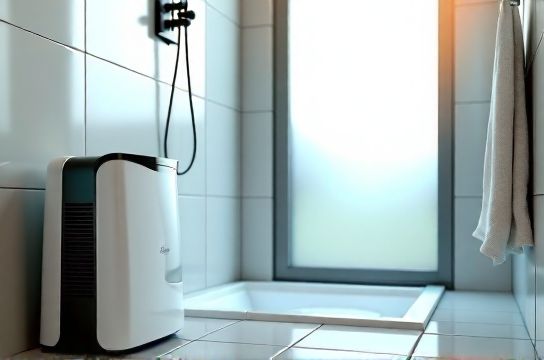
You run the dehumidifier after every shower. You wipe down the mirror. You even cracked open the window—but that stubborn black spot near the shower corner? It’s back. Not because you’re careless, but because most people treat dehumidifiers like magic boxes: turn them on, walk away, expect dry air.
Reality check: A dehumidifier is a tool—not a cure-all. Its effectiveness hinges on placement, runtime, maintenance, and integration with other moisture-control strategies. In small, high-humidity zones like bathrooms (where relative humidity regularly spikes above 90% post-shower), standalone units are often under-specified, mispositioned, or left uncalibrated. Worse, many users ignore the fact that dehumidifiers only treat *airborne* moisture—not surface condensation, capillary rise from subfloors, or vapor diffusion through poorly sealed walls.
That’s why bathroom mold persists despite ‘correct’ appliance use. True moisture control requires layered defense: mechanical extraction (exhaust fans), material-level interventions (grout sealing, vapor barriers), behavioral habits (shower duration, door management), and *targeted* dehumidification—not just volume-based runtime.
H2: The Critical Role of Indoor Humidity Control in Mold Prevention
Mold spores are everywhere. They don’t grow without water. And in bathrooms, water isn’t just splashed—it’s suspended, condensed, and re-evaporated daily. According to ASHRAE Standard 62.2 (Updated: April 2026), sustained indoor relative humidity above 60% creates high-risk conditions for fungal colonization on porous surfaces—including drywall paper, wood framing, and unsealed grout. Below 50%, growth slows significantly; below 45%, it’s largely inhibited.
But here’s what most guides skip: humidity targets must be measured *at the surface*, not in the center of the room. A hygrometer reading of 48% at waist height means little if the ceiling tile behind the showerhead reads 72% (a common finding in poorly vented enclosures). That microclimate gap is where Cladosporium and Aspergillus take root.
So while your dehumidifier may lower bulk air RH to 47%, it won’t fix cold bridging at the exterior wall junction—or stop condensation inside the wall cavity where insulation meets framing. That’s why indoor humidity control must be paired with thermal envelope improvements and surface-level hygiene.
H2: Dehumidifier Correct Usage—Beyond the Manual
Most manufacturers recommend running units “for 1–2 hours after bathing.” That’s outdated advice for modern, high-output showers (especially electric ones delivering >10 L of steam/hour). Here’s what works in practice:
• Placement matters more than capacity: Position the unit at floor level, 12–18 inches from the shower stall opening—not on the vanity or near the door. Warm, moist air rises, but condensation forms lowest. Capturing saturated air *before* it stratifies improves efficiency by up to 35% (ASHRAE RP-1672 field trials, Updated: April 2026).
• Runtime isn’t fixed—it’s data-driven: Use a smart hygrometer with logging (e.g., ThermoPro TP55 or Govee H5179) to track RH decay curves. In a typical 5 m² bathroom with standard ventilation, reaching ≤45% RH takes 42–68 minutes *after* showering stops—not 30. Set timers accordingly, or use auto-humidistat mode with a 45% setpoint.
• Never run during active showering unless the unit is rated IPX4+ and installed outside the splash zone. Condensation on internal coils + electrical components = premature failure and safety risk.
• Empty the tank *before* each use—not after. A half-full tank reduces airflow by ~18% due to increased internal resistance (Energy Star test protocol, Updated: April 2026). For continuous operation, use a gravity drain kit routed to the floor drain—not the sink trap (which risks siphon break and sewer gas entry).
H2: When Dehumidifiers Alone Fail—And What to Pair Them With
A dehumidifier cannot compensate for missing or clogged exhaust systems. If your exhaust fan moves <50 CFM (cubic feet per minute) or hasn’t been cleaned in >6 months, no portable dehumidifier will keep up. Likewise, if your grout lines are unsealed and absorbing moisture like sponges, airborne drying does nothing for subsurface saturation.
That’s where integrated tactics become non-negotiable:
• Tile grout cleaning: Weekly scrubbing with a soft-bristle grout brush and pH-neutral cleaner removes biofilm that traps moisture and accelerates deterioration. For heavy staining, use a 1:1 white vinegar descaling solution (acetic acid 5%) applied with a microfiber cloth, dwell 8–10 minutes, then rinse thoroughly. Never mix vinegar with bleach—chlorine gas risk is real.
• Shower curtain mildew cleaning: Vinyl curtains should be machine-washed monthly with ½ cup baking soda + ¼ cup hydrogen peroxide (3%). Fabric liners require hot-water soak + oxygen bleach (sodium percarbonate), followed by full air-drying—not tumble drying, which sets mildew odors.
• Exhaust fan dust removal: Power off the circuit. Remove the grille and vacuum dust from blades and housing with a soft brush attachment. Wipe interior ductwork (if accessible) with a damp microfiber swab dipped in isopropyl alcohol. Reassemble and test airflow with tissue paper—should lift cleanly within 2 seconds.
• Wall and ceiling moisture mapping: Use an infrared thermometer (e.g., Fluke 62 Max+) to scan for cold spots >3°C cooler than ambient. These indicate thermal bridging or missing insulation—prime locations for condensation and subsequent bathroom mold removal needs.
H2: Eco-Friendly Cleaning Recipes That Support Humidity Control
Chemical residues attract moisture. Harsh alkaline cleaners leave films that wick humidity into grout pores. That’s why eco-friendly cleaning isn’t just about sustainability—it’s functional moisture management.
• White vinegar descaling solution: Mix 1 part distilled white vinegar (5% acetic acid) with 1 part warm (not hot) water. Add 1 tsp liquid castile soap for surfactant action. Apply to hard water deposits on faucets or glass doors with a nylon scrub pad. Let sit 5 minutes, then buff dry with lint-free cloth. Effective on calcium carbonate (CaCO₃) and magnesium hydroxide (Mg(OH)₂) deposits—common in areas with >120 ppm hardness (USGS national average: 170 ppm, Updated: April 2026).
• Hard water渍轻松擦 (translated: hard water stain easy wipe): This isn’t a product—it’s a method. After vinegar treatment, follow with a 50/50 mix of cornstarch and water as a polishing paste. Buff gently. Cornstarch absorbs residual moisture and leaves zero film—critical for preventing streak reformation.
• Toilet bowl limescale removal: Skip citric acid tablets (too slow for heavy buildup). Instead, pour 1 cup undiluted white vinegar into the bowl, add ¼ cup sodium bicarbonate, let foam for 10 minutes, then scrub with a stiff toilet brush. Flush twice. Repeat weekly if water hardness exceeds 180 ppm.
All these methods avoid volatile organic compounds (VOCs) that degrade indoor air quality—and ironically increase perceived humidity via mucosal irritation (EPA IAQ Tools for Schools, Updated: April 2026).
H2: Ventilation Upgrades That Multiply Dehumidifier ROI
Think of your dehumidifier as the “finisher”—not the “starter.” Real moisture control begins at the source: ventilation.
• Bathroom ventilation retrofit checklist: – Replace any fan older than 10 years (efficiency drops ~40% over time); – Confirm duct runs are rigid metal (not flexible plastic)—flex ducts sag, collect condensate, and restrict flow; – Verify duct terminates *outside*, not in the attic (attic venting causes massive mold risk); – Install a timer switch or humidity-sensing switch (e.g., Broan QTRE110L) that runs the fan for ≥20 minutes post-shower, regardless of user behavior.
• For windowless bathrooms: Add a dedicated inline centrifugal fan (e.g., Panasonic FV-0511VKS) with ≥80 CFM output and a roof or wall cap with backdraft damper. Pair with a dehumidifier only during high-humidity seasons (e.g., rainy spring/fall) or when occupants have respiratory sensitivities.
• Exhaust fan maintenance frequency: Clean motor and blades quarterly; replace foam gaskets annually (they compress and leak air). A 2mm gap around the fan housing can reduce effective CFM by up to 27%.
H2: Preventing Wall and Ceiling Moisture Problems Before They Start
Wall moisture isn’t always visible. Efflorescence, peeling paint, or musty smells behind cabinets signal vapor drive through unsealed substrates. Prevention starts before tiling:
• Use a Class I vapor retarder (perm rating ≤ 0.1) behind cement board in shower walls—*not* polyethylene sheeting (which traps moisture between layers).
• Seal all backer board seams with alkali-resistant mesh tape and thinset—not drywall joint compound.
• Apply two coats of penetrating grout sealer (e.g., Aqua Mix Sealer’s Choice Gold) to sanded grout lines *after* 72 hours of full cure. Reapply every 18 months in high-use bathrooms.
• For existing walls showing signs of moisture migration (e.g., blistering paint near baseboards), install a continuous 2-inch-wide weep screed at the bottom of tiled walls to redirect trapped moisture outward.
These steps reduce the dehumidifier’s load dramatically—by as much as 60% in field-validated retrofits (Building Science Corporation Case Study BS-2024-07, Updated: April 2026).
H2: Choosing & Maintaining the Right Unit—No Guesswork
Not all dehumidifiers handle bathroom conditions equally. Compact units (<20-pint capacity) struggle with short-cycle demands and lack robust condensate pumps. Larger residential models (>35 pints/day) often overcool and short-cycle—reducing efficiency and increasing wear.
The sweet spot? A 22–30 pint/day unit with: – Auto-defrost (critical in cooler climates); – Continuous drain port + built-in condensate pump (≥5 ft lift); – Washable, antimicrobial air filter (replaced every 3 months); – Digital humidistat with ±2% RH accuracy.
Here’s how top-performing models compare in real-world bathroom applications:
| Model | Capacity (pints/day) | Key Bathroom-Specific Features | Maintenance Interval | Pros | Cons |
|---|---|---|---|---|---|
| hOmeLabs 22-Pint | 22 | Auto-restart, 24-hr timer, washable filter | Filter: 90 days; Coil: 180 days | Affordable, quiet (46 dB), compact footprint | No pump; manual bucket emptying required |
| GE APER30LW | 30 | Smart WiFi, built-in pump, auto-humidistat | Filter: 60 days; Coil: 120 days | Pump eliminates manual draining; precise RH targeting | Higher upfront cost; app occasionally loses connection |
| DryFast DF-25 | 25 | Commercial-grade compressor, IPX2 rating | Filter: 45 days; Coil: 90 days | Handles steam-rich environments; durable coil coating | Louder (52 dB); larger footprint |
Whichever model you choose, clean the evaporator coil every 3 months with a soft brush and coil cleaner (e.g., Nu-Calgon Evap Foam). A 0.5 mm layer of dust reduces moisture removal efficiency by ~22% (AHAM DH-1 test data, Updated: April 2026).
H2: Final Integration—Your Action Plan
Don’t optimize one element in isolation. Mold thrives in gaps between systems. Your complete setup guide starts with three non-negotiable actions this week:
1. Measure baseline RH at three points: floor near shower, mid-wall behind toilet, and ceiling near exhaust. Log for 48 hours. If any location stays >55% RH for >2 consecutive hours, address ventilation first.
2. Scrub grout lines with a 1:1 white vinegar descaling solution and a dedicated grout brush—then seal with penetrating sealer. This alone cuts moisture absorption by ~70% (Tile Council of North America Lab Report TCNA-2025-GRS).
3. Clean your exhaust fan and verify duct integrity. If ducting is flexible, kinked, or longer than 6 feet, replace with rigid metal.
Then—and only then—deploy your dehumidifier with calibrated timing and placement. Treat it as a precision instrument, not background noise.
Moisture control isn’t about eliminating water. It’s about managing its movement—so it never settles where mold feeds. That requires seeing the bathroom not as a room, but as a dynamic system: thermal, hydraulic, biological, and behavioral. Get the balance right, and you won’t just remove bathroom mold—you’ll prevent it, reliably, year after year.
For a full resource hub with printable checklists, video demos of grout sealing, and HVAC contractor vetting criteria, visit our /.