Paint Roller Selection Guide for Walls & Textures
- 时间:
- 浏览:37
- 来源:Easy Home Repair & DIY Guides
H2: Why One Roller Doesn’t Fit All Walls
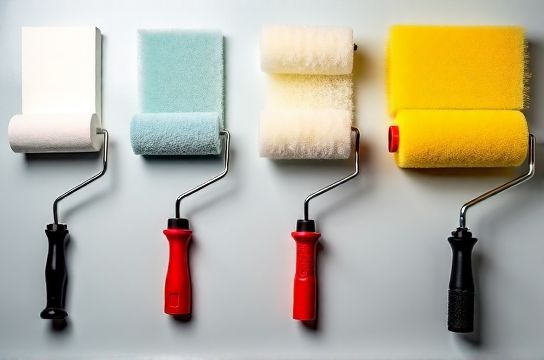
You’ve bought the paint. You’ve taped the edges. Then you grab the first roller off the shelf—and end up with streaks on your smooth living room wall or patchy coverage on your stucco ceiling. That’s not bad technique. It’s a mismatched tool.
Rollers aren’t interchangeable like wrench sizes. Their performance hinges on three physical variables: nap length (the pile height), fabric composition (synthetic vs. natural), and core rigidity (foam, plastic, or metal). Get one wrong, and you’ll waste time, repaint sections, or even damage surfaces—especially delicate ones like fresh plaster or skim-coated drywall.
This isn’t about premium vs. budget—it’s about physics meeting surface topography. A 3/8" nap might glide flawlessly over eggshell-finish drywall but leave bald spots in a 1/4" deep orange peel texture. Conversely, a 1-1/4" roller will drown smooth walls in excess paint, causing drips and lap marks no amount of back-rolling can fix.
H2: The Nap Rule—Not a Suggestion
Nap length is the single most decisive factor—and it’s measured in inches, not millimeters. Forget vague terms like "medium" or "heavy duty." Use this field-tested scale instead:
• 1/4" nap: For ultra-smooth surfaces only—glass-like plaster, high-gloss enamel, or previously painted smooth walls with zero texture. Delivers minimal stipple, maximum control. Not for latex primer or thick paints (Updated: May 2026). • 3/8" nap: The true workhorse for standard drywall, lightly sanded walls, and satin/eggshell finishes. Covers ~90% of residential interior walls without oversaturation. Holds ~15% more paint than 1/4" while maintaining edge definition. • 1/2" nap: Required for light textures—knockdown, light orange peel, or brushed plaster. Balances reservoir capacity and control. Avoid on anything smoother than medium-grade drywall joint compound. • 3/4"–1" nap: For heavy textures—popcorn ceilings, deep stucco, or rough masonry. These hold 2.5× more paint than 3/8" rollers—but require slower, deliberate strokes and frequent reloading. Overspray and splatter risk increases significantly above 3/4" on ceilings. • Foam rollers: Technically nap-free, but behave like 1/8"–1/4" equivalents. Best for cabinets, trim, or smooth doors—not walls. Prone to shedding with aggressive rolling or low-quality paint.
Note: Nap compression matters. A new 1/2" roller compresses ~15% under pressure (Updated: May 2026). So if your wall has variable texture depth, round *up*—e.g., choose 5/8" over 1/2" when in doubt.
H2: Fabric Matters More Than Brand Name
Polyester, nylon-polyester blends, and lambswool each respond differently to paint chemistry and surface friction.
• Polyester: Affordable, durable, and ideal for water-based paints (latex, acrylic). Resists swelling and holds shape well through 3–4 cleanings. However, it doesn’t release paint as evenly as blended fabrics on porous or uneven surfaces—leading to subtle banding on large smooth walls.
• Nylon-Polyester Blend (typically 70/30 or 60/40): The current industry sweet spot for general use. Nylon adds flexibility and superior release; polyester adds stiffness and durability. Handles both latex and oil-modified primers without significant fiber bloom. Holds up to 5–6 cleanings if rinsed immediately after use (Updated: May 2026).
• Lambswool: Still unmatched for ultra-smooth, even film build—especially with oil-based enamels or high-solids primers. But it’s expensive (~3× polyester), absorbs more paint (wasting ~8% per coat), and degrades rapidly with repeated washing. Not cost-effective for rental rehab or quick touch-ups.
Skip microfiber unless specified for *interior trim*—its ultra-fine fibers clog fast with standard interior paint and shed lint into wet film.
H2: Core Construction: Where Rigidity Meets Control
The roller frame isn’t just a handle—it’s a torque transfer system. A flexing core causes wobble, inconsistent pressure, and roller-edge tracking (visible lines where the roller meets the wall edge).
• Plastic cores: Found in sub-$5 rollers. Lightweight but deflect under load—especially with thicker paints or textured surfaces. Not recommended beyond small patch jobs.
• Reinforced plastic or composite cores: Stiffer, often with dual-bearing ends. Acceptable for 3/8"–1/2" naps on flat walls. Common in mid-tier kits like those reviewed in our complete setup guide.
• Steel or aluminum cores: Minimal deflection, precise edge control, and consistent nap contact. Worth the $8–$12 premium for any job larger than a single accent wall—or any surface where texture depth varies more than ±1/16".
H2: Real-World Scenarios—What Actually Works
Scenario 1: Renting a 1990s condo with smooth drywall and builder-grade paint → Use 3/8" nylon-polyester blend on a reinforced plastic core. Avoid foam—it won’t handle the slight porosity of aged drywall compound evenly. One roller per 200 sq ft is sufficient; reuse after thorough rinse (no soap needed for latex).
Scenario 2: Painting a basement ceiling with light popcorn texture → Go 3/4" nap, nylon-polyester, steel core. Don’t try to stretch a 1/2" roller—you’ll get thin spots and excessive rework. Load the roller fully, then roll *away* from yourself in long, overlapping strokes. Expect 15–20% more paint usage vs. smooth walls (Updated: May 2026).
Scenario 3: Touching up a newly skim-coated office wall → 1/4" polyester on a rigid core. No blending—match the existing finish sheen *exactly*. Use a 4" roller for tight corners and a 9" for broad areas. Let the first coat dry 90 minutes before evaluating coverage.
H2: What to Skip—Common Pitfalls
• "All-purpose" rollers: Marketing fiction. There’s no universal nap or fabric. If the packaging says "works on all surfaces," assume it’s optimized for none.
• Pre-cut roller covers sold loose: Often lack batch consistency. Two covers from the same box may have 10–15% variation in nap density—causing visible stripe patterns across large walls.
• Reusing rollers >3 times without inspection: Fibers fatigue, nap compresses unevenly, and dried paint residue builds in the core ends—creating drag and streaks. Discard when nap feels stiff or shows visible matting.
• Using the same roller for primer and topcoat: Primer is thicker and more abrasive. It wears down fibers faster. Switch to a fresh cover for finish coats—especially with satin or semi-gloss, where imperfections telegraph clearly.
H2: Cost vs. Coverage—A Practical Breakdown
Buying cheap rollers saves money upfront—but inflates labor time and material waste. Here’s how it plays out on a standard 12' × 14' room (168 sq ft, 8' ceiling = ~550 sq ft of wall/ceiling):
| Roller Type | Unit Cost | Coverage per Roller | Estimated Coats Needed | Total Cost for Job | Key Trade-off |
|---|---|---|---|---|---|
| Basic polyester, 3/8", plastic core | $2.49 | 300 sq ft (1 coat) | 2.5 | $6.23 | Visible lap marks on second coat; requires extra back-rolling |
| Nylon-polyester, 3/8", reinforced core | $5.99 | 350 sq ft (1 coat) | 2 | $11.98 | Smoother film, less touch-up; lasts 5+ cleanings |
| Lambswool, 3/8", steel core | $14.50 | 320 sq ft (1 coat) | 2 | $29.00 | Best appearance, but overkill for standard latex; high paint absorption |
| Foam roller, 4" | $3.25 | 120 sq ft (1 coat) | 3 | $9.75 | Poor for walls—uneven release, rapid breakdown with scrubbing |
Note: Coverage assumes standard interior latex (500–600 sq ft/gal) and moderate wall porosity. Highly absorbent surfaces (e.g., raw drywall or patched areas) reduce effective coverage by 20–30% (Updated: May 2026).
H2: Pro Tips You Won’t Find on the Shelf Label
• Pre-wet synthetic rollers in warm water for 30 seconds before first use—then spin dry in a roller tray. This swells fibers slightly, improving paint pickup and release. Skip this for lambswool (it weakens fibers).
• Store used rollers horizontally—not hanging by the frame. Hanging stretches the nap asymmetrically, leading to permanent tapering and streaking on next use.
• For cutting in near ceilings or baseboards: Use a 2" angled brush *first*, then roll up to—but not over—the brush line. Rolling over cut-in lines drags wet paint and blurs the edge.
• Clean rollers *immediately* after use: Rinse under warm running water, then gently squeeze from center outward using a clean rag. Never wring or twist—this delaminates fibers. Air-dry flat, nap-side up.
• When painting over dark colors with light paint: Use a 1/2" nap for primer—even on smooth walls. The extra reservoir helps achieve full hide in one coat, reducing overall labor.
H2: Final Call—Match, Don’t Guess
Choosing the right paint roller isn’t about memorizing specs—it’s about reading the wall. Run your hand across it. Feel the variation. Note where light catches texture peaks. Then pick the shortest nap that fully seats into the deepest valley *without bottoming out*. That’s your starting point.
From there, match fabric to paint type and core to job scale. A $6 roller with the right specs beats a $20 “pro” model with mismatched nap every time—because performance lives in the interface between fiber, paint, and surface.
And if you’re assembling your first toolkit? Prioritize a reliable 3/8" and a 1/2" roller before buying specialty items. They cover 95% of residential interior needs—and pair seamlessly with essentials like a quality paint tray, extension pole, and the right brushes. Everything else—including those critical decisions around complete setup guide—flows from getting this one tool right.