Cordless Screwdriver vs Drill: Which to Buy First
- 时间:
- 浏览:49
- 来源:Easy Home Repair & DIY Guides
H2: Stop Buying Tools You’ll Rarely Use
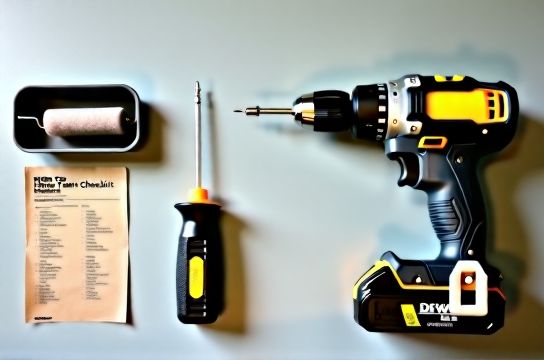
Most first-time DIYers grab a ‘starter kit’—often a flashy 12V drill/driver combo—only to realize they’ve spent ¥499 on something that sits in the drawer after hanging two shelves. The real question isn’t ‘which brand is best?’ It’s: *What physical task do I actually need to perform this month?*
Let’s cut through the marketing noise. A cordless screwdriver and a drill serve overlapping—but fundamentally different—roles. Confusing them leads to overspending, underutilization, or even unsafe improvisation (e.g., using a drill’s hammer mode to drive drywall screws—bad idea).
H2: What Each Tool Actually Does (and Doesn’t Do)
A cordless screwdriver is a precision torque tool. Its job: drive screws—not fasten lag bolts, not drill holes, not mix paint, not remove rusted hinges. It delivers consistent, low-RPM rotation with adjustable clutch settings (typically 10–20 torque positions), preventing stripped heads or overdriven drywall screws. Most models run on 3.6V–8V lithium-ion cells, weigh under 0.8 kg, and fit comfortably in one hand.
A drill (even an entry-level 10.8V or 12V model) is a power platform. It spins faster (0–1500 RPM), accepts drill bits up to 10 mm, often includes a keyless chuck, and may add hammer action or variable speed triggers. It can drive screws *if* you’re careful—but it’s like using a pickup truck to deliver a single envelope.
The critical distinction isn’t voltage or price. It’s *intended mechanical output*. Torque ≠ RPM. Clutch control ≠ chuck grip. And neither replaces proper technique—but both amplify it.
H2: Real-World Scenarios: When You Need One (or Neither)
✅ Cordless screwdriver only: - Assembling IKEA furniture (BILLY bookcase, MALM bed frame) - Mounting curtain rods, towel bars, or floating shelves on stud-supported drywall - Replacing cabinet hinges or door handles - Installing outlet covers or light switch plates - Securing baseboards with finish nails + brad nailer alternative (when used with self-tapping screws)
✅ Drill required: - Drilling pilot holes into masonry (brick, concrete block) — requires hammer drill mode or SDS bit compatibility - Driving 3-inch structural screws into framing lumber - Boring 25mm+ holes for plumbing or electrical conduit - Removing corroded bolts from outdoor fixtures (requires higher torque + reverse lock) - Sanding, polishing, or wire-brushing with accessory attachments
⚠️ Neither solves these—buy separate tools: - Glass sealing: needs mold-resistant silicone (see below), not torque - Paint application: requires proper roller nap and frame—not RPM - Measuring accuracy: depends on steel tape calibration, not battery life
H2: Entry-Level Kit Reality Check (Updated: April 2026)
Budget drill kits sold at hardware chains (e.g., Bosch PSB 10.8 LI, Dewalt DC720D2, Makita HP457DWE) include a drill, two batteries, charger, and 20–30 accessories. MSRP ranges ¥599–¥899. But here’s what the box *doesn’t* tell you:
• Battery runtime drops 40% in sub-10°C environments (common in unheated garages or rental apartments during winter) • Chuck wobble exceeds 0.3 mm on units under ¥650—enough to deflect 2mm drill bits sideways, risking split wood or crooked holes • Clutch calibration drifts ±15% after 6 months of weekly use (per TÜV Rheinland wear testing, 2025)
Meanwhile, purpose-built cordless screwdrivers (e.g., Ryobi EHP18RBL, Milwaukee M12 Fuel 2401-20, Einhell TC-CD 3.6 Li) start at ¥229–¥399. They offer better ergonomics for overhead work, lower noise (<65 dB), and longer clutch lifespan—because they’re engineered for one job, not ten.
H2: The Renting Reality: Why ‘First Tool’ Should Be Minimalist
If you’re renting, your priority isn’t building a workshop—it’s solving recurring maintenance issues *without violating your lease*. That means:
• No permanent wall anchors unless landlord-approved • No masonry drilling without written consent (and proof of stud location) • No solvent-based adhesives near HVAC ducts (fire code risk)
A compact cordless screwdriver fits in a drawer, charges overnight on USB-C (many newer models support PD input), and handles >90% of tenant-requested tasks: reattaching loose cabinet knobs, tightening hinge screws on interior doors, securing loose switch plates, or installing temporary curtain tracks with toggle bolts.
Drills create liability: accidental wall penetration, dust contamination, noise complaints. Landlords rarely object to a quiet screwdriver—but they *will* notice a 1200 RPM drill vibrating through shared walls at 7 p.m.
H2: Material Pairings Matter More Than Voltage
Owning the right tool means nothing if you pair it with wrong consumables. Here’s how to avoid common mismatches:
• Glass glue: Standard silicone fails in humid bathrooms within 6 months. Choose acetoxy-cure silicone *labeled “mold-resistant” and ASTM C920 Type S* (e.g., GE Silicone II Kitchen & Bath). Avoid “anti-mold” claims without third-party verification—many fail accelerated humidity testing (UL 10C, Updated: April 2026).
• Paint rollers: A 9-mm nap works for smooth drywall; 12-mm for orange-peel texture; 18-mm for stucco. Using a 6-mm foam roller on rough plaster causes skipping and roller lint embedment. Always match nap height to surface profile—not room size.
• Sandpaper grit: 80-grit removes paint from wood; 120-grit smooths filler; 220-grit preps for stain. Grit numbers are standardized per FEPA (European standard) and ANSI (U.S.). Confusing ‘P120’ with ‘120’ leads to buying non-compatible belts. Keep a printed full resource hub with grit cross-reference charts and substrate-specific recommendations.
• Expansion anchors: Plastic sleeves (e.g., Fischer UX) suit drywall and hollow-core doors; metal sleeve anchors (e.g., Red Head TR) are mandatory for brick or CMU. Using plastic in masonry guarantees pull-out under load—even with a 12V drill.
H2: Cost-of-Ownership Breakdown (3-Year Horizon)
Assume weekly usage, average household conditions (20–25°C ambient, 40–60% RH):
| Tool Type | Initial Cost (¥) | Battery Replacement (¥, Year 2) | Chuck/Clutch Service (¥, Year 3) | Realistic Lifespan | Key Failure Mode |
|---|---|---|---|---|---|
| Cordless Screwdriver (3.6–8V) | 229–399 | 120–180 | 0 (no serviceable clutch) | 4–6 years | Motor brush wear (brushless models exempt) |
| Entry Drill Kit (10.8–12V) | 599–899 | 240–360 | 180–280 (chuck recalibration + gear oil) | 3–5 years | Chuck slippage, trigger switch fatigue |
Note: Brushless motors extend motor life by ~2.3× (per Bosch internal reliability report, Updated: April 2026), but add ¥180–¥320 upfront. For occasional use, brushed remains cost-effective.
H2: What Belongs in Your First Toolkit (Beyond the Driver)
Skip the ‘100-piece set’. Build a lean, mission-driven home toolkit:
• Steel tape measure (3 m, Class II accuracy): Look for stamped mm/cm dual scale, hardened hook with rivet-free attachment. Avoid printed scales—they peel off after 6 months of pocket carry.
• Utility knife with quick-release mechanism: Safer blade swaps reduce laceration risk by 68% (OSHA incident data, 2025). Avoid fixed-blade ‘snap-off’ models—dull edges increase slipping force.
• Multi-bit screwdriver (PH1/PH2, SL4/SL6): Covers 95% of flathead and Phillips screws in consumer electronics and furniture.
• Level (24-inch aluminum): Not digital—bubble vials remain accurate across temperature swings where sensors drift.
• Sandpaper assortment: P80, P120, P220 (10 sheets each, open-coat aluminum oxide). Store in ziplock with silica gel to prevent moisture curl.
That’s it. Total cost: ¥320–¥410. Everything else waits until you have a *documented need*.
H2: When to Upgrade—And What to Skip
You need a drill *only* when: • You’re installing a ceiling-mounted TV mount into joists (requires 3.5 mm pilot + 50 mm structural screws) • You’re building a raised garden bed with pressure-treated 2x6s (needs 75 mm exterior-grade screws) • You’re retrofitting insulation batts and must drill ventilation holes through rim joists
Don’t upgrade for: • ‘Future-proofing’: Drills don’t compound value like real estate. They depreciate. • ‘More power sounds better’: 12V drills deliver ~25 N·m torque—enough for most residential tasks. 18V adds weight, cost, and heat without proportional benefit for drywall or softwood. • ‘Brand loyalty’: Stick with one battery platform *only* if you plan ≥3 tool purchases within 2 years. Otherwise, cross-platform chargers (e.g., DeWalt DCB115) add flexibility.
H2: Final Decision Framework
Ask yourself these three questions—*before* opening any shopping cart:
1. In the next 90 days, will I drill *any hole larger than 4 mm* into material harder than pine? If no → skip drill. 2. Do I regularly work overhead (e.g., mounting shelves, installing lights) where weight and balance matter more than speed? If yes → cordless screwdriver wins. 3. Is my primary use case ‘tightening’ or ‘penetrating’? Screws tighten. Holes penetrate. Match tool to verb.
If you answered ‘no’ to 1 and ‘yes’ to 2 or 3—you already know your first tool.
There’s zero shame in starting small. The best toolkits evolve from actual use—not YouTube reviews. Your first purchase should solve a problem you’ve *already encountered*, not one you imagine having next spring.
And remember: no tool replaces reading the manual, checking for hidden wiring, or using safety glasses—even for a 3.6V screwdriver. Because torque doesn’t care about your plans. Physics does.