Sandpaper Grit Scale Reference Quick Lookup for Sanding S...
- 时间:
- 浏览:32
- 来源:Easy Home Repair & DIY Guides
H2: Why Grit Confusion Wastes Time, Money, and Finish Quality
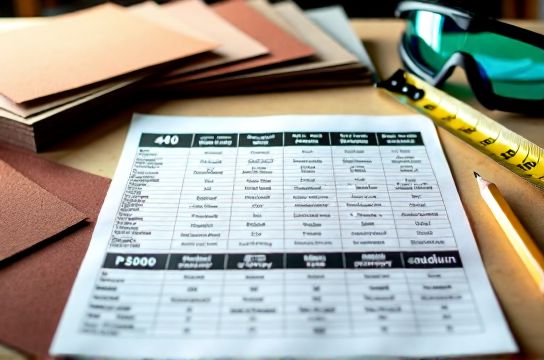
You’re sanding a pine cabinet door before staining. You grab what looks like ‘medium’ grit — maybe 120? But the surface gums up. You switch to something finer, say 220, and it barely bites. Then you try 80 — too aggressive, leaves deep scratches you’ll never fully sand out. Sound familiar?
This isn’t about skill. It’s about misaligned expectations. Sandpaper grit isn’t intuitive. A "150" doesn’t mean 150 scratches per inch — it’s a standardized particle size measurement governed by FEPA (Europe) or CAMI (US), with real tolerances. And crucially: grit numbers *don’t scale linearly*. Jumping from 120 to 150 isn’t a small step — it’s a ~25% reduction in average abrasive particle diameter (Updated: April 2026).
That mismatch explains why DIYers sand twice as long, burn through pads, or ruin finishes on first-timers’ projects — especially when prepping for glass胶防霉推荐-grade sealants or structural bonding where surface profile directly affects adhesion.
H2: The Real-World Grit Scale — Not Theory, But What Works on Wood, Metal, Drywall & Paint
Forget textbook charts. Here’s how grits actually behave across common home project materials:
• Below 60 grit: Reserved for aggressive stock removal — e.g., stripping old deck paint with an orbital sander, or leveling warped MDF edges before edge-banding. Not for hand-sanding. Risk of gouging is high; use only with firm backing pad and even pressure.
• 60–100 grit: Your go-to for heavy prep. Removing old varnish from hardwood floors (start at 60, then 80), leveling filled drywall patches, or cleaning rust off mild steel brackets before applying structure胶选购技巧-approved primer. On softwoods like pine or poplar, 80 grit often leaves visible scratches — always follow with at least two finer steps.
• 100–150 grit: The true 'starting finish' range. Ideal for smoothing bare wood after initial shaping (e.g., after routing cabinet edges), scuff-sanding between coats of latex paint, or prepping metal for lithium battery-powered screwdriver (锂电螺丝刀指南) mounting plates. At 120 grit, most hardwoods accept stain evenly — but test on scrap first. Note: On maple or cherry, even 150 may leave subtle swirls under gloss topcoats.
• 150–220 grit: Where control meets refinement. Use 180 to de-nib water-based polyurethane before recoating. Use 220 to prep bare drywall for skim coat, or to polish aluminum window frames prior to applying glass胶防霉推荐 sealant — critical for preventing moisture channeling behind the bead.
• 240–400 grit: Fine-tuning, not finishing. 240–320 is standard for final sanding before clear coat on cabinets or furniture. 320–400 is *only* needed if you’re rubbing out a high-gloss automotive-style finish — overkill for 95% of home projects. Don’t use >320 on raw wood before oil-based stains: it closes pores too tightly, causing blotchiness.
• 600+ grit: Wet-sanding territory. Used almost exclusively for polishing cured finishes (e.g., buffing out orange peel in enamel), not substrate prep. Not relevant for rental apartment touch-ups or basic家用工具箱清单 builds.
H2: The Critical Link Between Grit, Tool Type, and Material Behavior
Grit alone doesn’t determine results — it’s grit × tool × material × pressure.
• Orbital Sanders (common in budget drill kits): Generate heat and micro-vibrations. Using 120 grit on oak with a cheap orbital? You’ll get inconsistent scratch patterns unless you maintain <3 lbs of downward pressure and move steadily. That’s why入门电钻套装评测 consistently show mid-tier kits (e.g., Bosch PSB 500 RE or Dewalt DCD771) deliver better consistency than ultra-budget units — their variable-speed triggers and balanced weight help control dwell time.
• Detail Sanders (e.g., mouse-shaped or triangular): Excel at tight corners but lack mass. A 150-grit belt on a detail sander removes less material per pass than 150 on an orbital — so don’t assume grit number = speed. You’ll likely need one extra step finer.
• Hand Sanding: Most forgiving — and most inconsistent. Humans naturally apply uneven pressure. That’s why we recommend the 'two-pass rule': sand with the grain using your target grit, then lightly cross-grain with the *next finer* grit just to knock down any raised fibers. Especially vital before applying paint or sealant.
• Material Matters: Aluminum oxidizes fast — use 180–220 *dry*, then wipe with isopropyl alcohol before sealing. Concrete? Stick to 30–60 grit diamond pads — paper grits load instantly. Drywall joint compound? Never go below 120 — softer compounds tear at coarser grits.
H2: When Grit Choice Directly Impacts Other Tools & Materials
Your sandpaper decision ripples across your entire setup — especially in租房必备工具 scenarios where space and budget are tight.
• Pairing with 油漆滚筒挑选: A 3/8" nap roller applies flat latex smoothly — but only if walls are sanded to at least 220. Miss that, and you’ll see roller stipple highlight every 150-grit scratch. Conversely, using a 1/2" nap on smooth, 320-sanded drywall creates unnecessary texture.
• Impact on 膨胀螺丝选型: Sanding anchor holes in masonry? Don’t. But sanding the *surface around* a drilled hole before applying structural adhesive? Yes — 80–100 grit ensures mechanical tooth for bond strength. Over-sanding (>150) reduces grip; under-sanding leaves dust that blocks adhesion.
• Glass胶防霉推荐 compatibility: Mold-resistant silicone (e.g., GE Advanced Silicone II or DAP Alex Plus) needs a clean, slightly textured surface. Sanding glazed tile edges with 220 grit creates ideal micro-profile — but 320 is too smooth, and 120 leaves visible lines that break the aesthetic seal line. This is non-negotiable for bathroom recaulking in rental units.
• Steel tape measure accuracy (钢卷尺读数方法): You’re measuring sanded edges for trim. If the edge is rough from 60-grit oversanding, your reading will vary ±1/32" depending on where the hook contacts. Final sanding to 180+ ensures repeatable, reliable measurements.
H2: Quick-Reference Grit Selection Table — Real Projects, Not Lab Conditions
| Grit Range | Best For | Avoid On | Tool Recommendation | Pro Tip |
|---|---|---|---|---|
| 40–60 | Deck refinishing, heavy rust removal, leveling thick filler | Bare softwood, thin veneers, drywall compound | Orbital sander with dust extraction | Always wear PPE — silica dust hazard. Change pad every 3–5 min on hardwood (Updated: April 2026). |
| 80–120 | Stripping paint, pre-stain wood prep, scuffing glossy surfaces | Freshly applied spackle, aluminum, laminate edges | Orbital or detail sander + hand block | On pine: stop at 100 grit before stain — 120 raises grain excessively. |
| 150–180 | Sanding between paint coats, smoothing filled holes, drywall skim prep | Oil-based finishes (can gum), unsealed MDF edges | Hand sanding block or detail sander | Use a LED work light at 45° — reveals missed scratches invisible head-on. |
| 220–320 | Final wood prep before clear coat, polishing metal for sealant, drywall feathering | Raw wood before water-based stain (closes pores) | Hand sanding only — no power tools | Wipe surface with tack cloth *then* dry microfiber — removes static-attracted dust. |
H2: Common Pitfalls — And How to Avoid Them Without Buying More Gear
• The "One-Grit-Does-All" Myth: Some kits bundle 80/120/220 — great for basics. But skipping 150 means jumping from aggressive to fine without transition. Result: 120 leaves scratches you can’t fully erase with 220 alone. Always carry at least three consecutive grits (e.g., 120 → 150 → 180) for wood, or 100 → 150 → 220 for drywall/sealant prep.
• Reusing Clogged Paper: Sanding MDF or painted drywall loads paper fast. A loaded 150-grit pad performs like 280 — inefficient and misleading. Replace when cutting slows noticeably, not when it looks dirty.
• Ignoring Backing: Foam sanding blocks compress — 180 grit on foam feels like 220 on rigid plastic. Match pad hardness to task: rigid for leveling, medium foam for contouring, soft foam only for delicate curves.
• Skipping Dust Management: Even 220-grit dust clogs paint sprayers and voids warranties on some lithium battery tools. A $15 shop vac adapter + HEPA filter makes more difference than upgrading grits.
H2: Building Your Smart, Lean Sanding System — No Overbuying
You don’t need 12 grits. You need four — chosen for overlap, not coverage.
Start with this core set (fits any家用工具箱清单):
• 100 grit (aluminum oxide, open-coat): For general prep — stripping, leveling, scuffing. • 150 grit (ceramic blend, anti-clog coating): Your workhorse for wood and drywall transitions. • 220 grit (silicon carbide, waterproof): For final prep before sealant, paint, or clear coat — also doubles as wet-sand for spot repairs. • 320 grit (premium aluminum oxide, flexible backing): Only for high-gloss furniture or when rubbing out defects. Optional for most renters.
Store them in labeled ziplock bags with date written on tape — grit degrades after ~18 months exposure to humidity (Updated: April 2026). Rotate stock: use oldest first.
Pair this with a $12 cork sanding block (not foam) and a $9 LED inspection light — that’s your complete setup guide for 90% of sanding decisions. No guesswork. No wasted trips to the hardware store.
H2: Final Reality Check — When Grit Isn’t the Problem
If your finish still looks uneven after proper grit progression, look elsewhere:
• Is your paint stirred — not just shaken? Settled pigment causes blotchiness mistaken for sanding error. • Are you using the correct structure胶选购技巧 for substrate? Epoxy won’t bond to 320-sanded polyethylene — no amount of sanding fixes chemistry. • Did you skip acclimation? Sanding cold wood (<60°F) raises grain unpredictably.
Grit is a lever — powerful, but only one in the system. Master it, pair it right, and you’ll spend less time sanding and more time building.
For a full resource hub covering complementary topics — including how to choose your first lithium battery screwdriver, what belongs in a租房必备工具 kit, and how to read a steel tape measure correctly — visit /.