Which Caulk Should You Use Bathroom vs Kitchen
- 时间:
- 浏览:51
- 来源:Easy Home Repair & DIY Guides
H2: The Real Problem Isn’t ‘Which Caulk?’—It’s ‘Which Failure Mode Are You Trying to Avoid?’
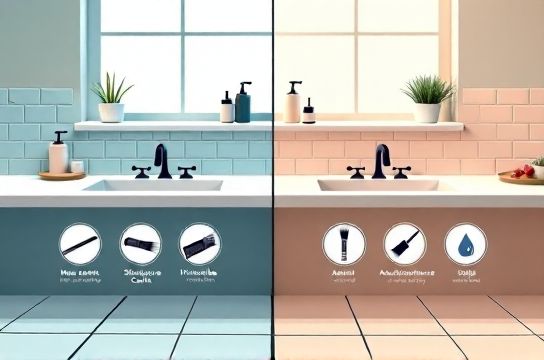
You’re recaulking your shower. Or sealing around a new kitchen sink. You grab a tube labeled “100% Silicone” because it says “waterproof” and “permanent.” Two months later, black streaks bloom along the seam. Or worse—you try to paint over it, and the brush drags like glue. Or you peel it off with your thumbnail because it never cured properly in the corner behind the fridge.
That’s not user error. That’s material mismatch.
Caulk isn’t one thing. It’s a family of polymer systems—each with hard trade-offs in adhesion, flexibility, cure chemistry, UV tolerance, paintability, and biocide stability. And bathrooms and kitchens demand *different* compromises. A bathroom needs relentless mold resistance and long-term water immersion tolerance. A kitchen needs paint compatibility, moderate moisture resistance, and clean removal during future upgrades—without damaging backsplash tile or cabinet finishes.
Let’s cut through the marketing fluff and match chemistry to function.
H2: What Actually Happens to Caulk in These Rooms?
Bathrooms: High humidity (70–95% RH), frequent thermal cycling (hot shower → cool air), condensation on cool surfaces (mirror frames, tub edges), and direct water contact (shower walls, tub-to-floor joints). Mold spores are airborne and omnipresent—especially in poorly vented spaces. The ASTM D3273 mold resistance test is the only standardized benchmark; top-performing products achieve ≥90% inhibition after 28 days under controlled inoculation (Updated: April 2026).
Kitchens: Lower ambient humidity (40–60% RH), but repeated splash exposure (sink perimeter, stove backsplash), grease vapor deposition, and frequent cleaning with alkaline detergents (pH 9–11). Painted drywall, MDF cabinets, and laminate countertops require adhesion that won’t creep or shrink—and must accept latex paint without cracking or discoloration.
So the question isn’t “which is strongest?” It’s “which survives *this specific stress profile* without failing visibly or chemically?”
H2: Silicone Sealants — When to Use (and When to Walk Away)
100% silicone is the go-to for wet-zone bathroom joints: tub-to-tile, shower pan perimeters, and window frames in steamy bathrooms. Why? It cures via moisture-catalyzed condensation (releasing acetic acid—hence the vinegar smell), forming a flexible, non-porous elastomer with exceptional elongation (300–600%) and water resistance.
But here’s what the tube doesn’t tell you: • Not paintable—ever. Acrylic or latex paint will delaminate within weeks. • Poor adhesion to some plastics (PVC trim, polycarbonate), powder-coated metals, and dusty or oily substrates. • Requires absolute surface cleanliness: isopropyl alcohol (91%), no soap residue, no silicone-based cleaners (they leave invisible films that prevent bonding). • Cures from surface inward—so deep joints (>¼”) may stay tacky for >72 hours in cold, dry rooms.
Use silicone when: You need maximum water immersion resistance, zero mold growth risk, and don’t plan to paint or modify the joint for 10+ years.
Skip silicone when: You’re sealing painted drywall seams, MDF cabinet backs, or any area you’ll repaint in <5 years—or if the substrate is unknown (e.g., rental unit with mystery wall coating).
H2: Acrylic Latex Caulk — The Kitchen’s Quiet Workhorse
Acrylic (often mislabeled “painter’s caulk”) is water-based, dries by evaporation, and remains porous after curing. That porosity lets trapped moisture escape—but also lets liquid water wick in. So it’s *not* for submerged joints.
Its strengths are practical: • Fully paintable within 1–2 hours (with quality acrylic or latex paints). • Easy cleanup with water—no solvents. • Bonds reliably to drywall, wood, primed metal, and most laminates. • Low odor, low VOC (<50 g/L), safe for occupied spaces. • Removable with a utility knife and damp rag—even after years—unlike silicone.
Downsides? Limited elongation (50–125%), so it cracks in high-movement joints (e.g., where countertop meets wall with seasonal expansion). And standard acrylic has zero mold resistance—it’s food-grade for microbes.
That’s why mold-resistant acrylics exist: they contain zinc pyrithione or sodium benzoate biocides. But those additives degrade over time—especially with UV exposure or alkaline cleaners. Independent lab testing shows most lose >50% efficacy after 18 months in high-humidity kitchen environments (Updated: April 2026).
Use acrylic when: Sealing backsplashes, cabinet-to-wall gaps, or sink perimeter on laminate countertops—where paintability, removability, and low-risk cleanup matter more than permanent waterproofing.
Skip acrylic when: Any joint sees standing water, frequent soaking, or high-humidity condensation (e.g., inside a shower niche or behind a freestanding tub).
H2: Hybrid Polymer (MS Polymer) — The Middle Ground With Teeth
Hybrid sealants (e.g., SikaFlex, GE Advanced Silicone) combine silicone backbone flexibility with urethane-like adhesion and paintability. They cure via moisture reaction like silicone—but release methanol instead of acetic acid, eliminating the vinegar smell and improving adhesion to difficult substrates.
Key traits: • Paintable in 2–4 hours with most water-based paints. • Elongation 200–400%, far exceeding acrylic. • Mold resistance built-in (ASTM D3273 pass rates ≥85% at 28 days) (Updated: April 2026). • Bonds to PVC, glass, ceramic, aluminum, and many plastics—no primer needed. • Higher cost (2–3× acrylic, ~1.5× silicone), but justified where performance overlap matters.
Where hybrids shine: Kitchen sink perimeters (needs paintability + splash resistance), bathroom vanity tops (requires mold resistance + compatibility with painted MDF), and rental-unit updates where future tenants may repaint or replace fixtures.
Trade-off: Longer skin-over time (1–2 hours vs. silicone’s 15 minutes), and slightly stiffer tooling feel. Not ideal for ultra-thin bead applications (<1/8” wide) where silicone’s slick extrusion wins.
H2: Mold-Resistant Claims — Read the Fine Print
“Mold-Resistant” ≠ “Mold-Proof.” And not all resistance is equal.
Three tiers exist: 1. **Biocide-loaded** (most common): Zinc pyrithione, sodium benzoate, or isothiazolinones. Effective short-term, but deplete as they kill spores. Performance drops sharply after 12–24 months in humid zones. 2. **Inherently resistant polymers**: Silicone and MS polymer backbones resist microbial digestion *structurally*. No biocide needed—so resistance lasts the life of the sealant. 3. **Fungistatic + hydrophobic combo**: Top-tier hybrids add surface tension modifiers to repel water *and* inhibit spore attachment—not just growth. This is rare below $8/tube.
If mold is your 1 concern (e.g., unvented bathroom, humid climate), skip biocide-only acrylics. Go silicone or MS polymer—and verify ASTM D3273 certification on the datasheet, not just the box.
H2: Application Is Half the Battle — Tools & Prep That Actually Matter
No caulk performs well on a dirty, damp, or chalky surface. Here’s the non-negotiable prep sequence: 1. Remove old caulk *completely*—use a caulk removal tool (not a razor blade) to avoid scratching tile grout or acrylic tubs. 2. Clean with isopropyl alcohol (91%), then let dry 15+ minutes. Never use vinegar or bleach—they leave residues that inhibit adhesion. 3. Mask with painter’s tape—but press edges firmly and remove tape *before* caulk skins (within 5–10 minutes). Delayed removal pulls cured material. 4. Cut nozzle at 45°, hole size = joint width. Too small = uneven bead; too large = wasted material and messy cleanup. 5. Apply steady pressure and consistent speed. Pause-and-pull creates voids. 6. Tool immediately with a damp finger or caulk finishing tool—don’t wait for skin-over.
Skip the “caulk gun with ratchet” gimmicks. A basic stainless steel gun with adjustable thrust gives better control than any battery-powered version for this task.
H2: Cost vs. Lifetime Value — Where to Spend (and Skip)
Budget matters—but not the way you think.
A $3 acrylic tube for a kitchen backsplash is fine. You’ll replace it in 5 years anyway.
A $4 silicone tube for your main bathroom shower joint? Worth every penny—if it lasts 12 years mold-free.
But a $12 “premium” silicone with no ASTM D3273 data? Waste. Same for $9 “mold-resistant” acrylic with no third-party validation.
Real-world cost per year (assuming 10-year bathroom use, 5-year kitchen use): • Standard acrylic ($3): $0.60/year (kitchen) • Mold-resistant acrylic ($5): $1.00/year (kitchen, limited mold protection) • 100% silicone ($4–$6): $0.40–$0.60/year (bathroom, full mold resistance) • MS polymer hybrid ($8–$12): $0.80–$1.20/year (dual-use, paintable + mold-resistant)
The smart move? Stock two: one silicone for wet zones, one acrylic for dry zones—and upgrade to hybrid only where requirements overlap (e.g., rental kitchen sinks). That’s how pros avoid callbacks.
H2: Quick-Reference Decision Table
| Property | Silicone (100%) | Acrylic Latex | MS Polymer Hybrid |
|---|---|---|---|
| Best For | Bathroom wet zones (tub, shower, windows) | Kitchen dry zones (backsplash, cabinets, painted walls) | Kitchen sinks, bathroom vanities, rental upgrades |
| Paintable? | No | Yes (immediately) | Yes (2–4 hrs) |
| Mold Resistance (ASTM D3273) | ≥90% (inherent) | 40–60% (biocide-dependent, degrades) | ≥85% (inherent + biocide) |
| Elongation | 300–600% | 50–125% | 200–400% |
| Cure Time (to handle) | 24–72 hrs (humidity-dependent) | 1–2 hrs | 12–24 hrs |
| Removability | Difficult (solvent + scraping) | Easy (utility knife + water) | Moderate (utility knife + isopropyl) |
H2: Final Call — Match Chemistry, Not Labels
Don’t buy “kitchen & bath” caulk. It’s usually a low-end acrylic with weak biocide—and fails at both jobs.
Instead: • Bathroom wet zones → 100% silicone *with ASTM D3273 certification*. • Kitchen dry zones → acrylic latex, *paintable*, low-VOC, no biocide needed if cleaned regularly. • Overlap zones (sink perimeters, vanity tops) → MS polymer hybrid—worth the extra $4–$6 for reliability.
And always read the technical data sheet—not the front label. Look for ASTM standards, cure chemistry, and substrate compatibility tables. If it’s not online, don’t buy it.
For a complete setup guide—including caulk gun selection, surface prep kits, and compatible cleaning tools—visit our full resource hub at /.