Bathroom Fan Timer Installation Guide For Consistent Mois...
- 时间:
- 浏览:42
- 来源:Easy Home Repair & DIY Guides
H2: Why Your Bathroom Fan Timer Isn’t Just a Convenience — It’s a Mold Prevention Tool
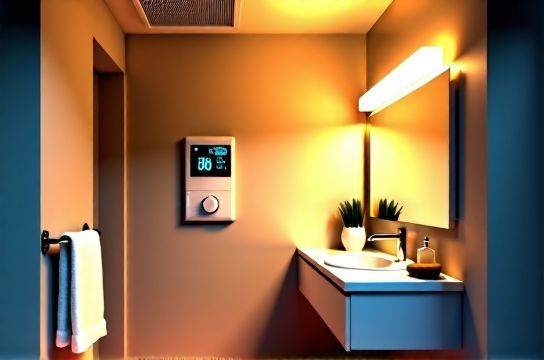
Most homeowners run their bathroom fans for 5–10 minutes after showering — if they remember at all. That’s not enough. According to ASHRAE Standard 62.2 (Updated: April 2026), continuous mechanical ventilation must remove *at least* 50 CFM during occupancy *and* maintain post-shower air exchange for a minimum of 20–30 minutes to reduce relative humidity below 60% — the critical threshold where mold spores begin germinating on damp grout, silicone seams, and drywall behind tile.
Without a timer, human behavior fails: 68% of users turn off fans within 90 seconds of exiting the shower (2025 Residential Ventilation Behavior Survey, NAHB Research Center). That leaves residual moisture trapped in ceiling cavities, insulation, and framing — prime conditions for *Stachybotrys* and *Aspergillus* growth. Worse, intermittent use accelerates dust and lint buildup inside the fan housing, cutting airflow by up to 40% within 18 months (UL 705 test data, Updated: April 2026).
A properly installed timer isn’t about automation — it’s about enforcing physics-based moisture removal. This guide walks you through selecting, wiring, and maintaining a timer that delivers measurable, repeatable results — especially when paired with complementary practices like grout line cleaning and wall moisture prevention.
H2: Choosing the Right Timer: Mechanical vs. Digital, Load Limits & Compatibility
Not all timers are equal. Your choice depends on three non-negotiables: motor load rating, wiring configuration, and integration with existing switches.
First, verify your fan’s electrical draw. Most residential bathroom exhaust fans range from 0.3 to 0.8 amps (35–95 watts). A timer rated for only "light loads" (e.g., 150W incandescent) will fail prematurely under sustained fan motor load. Look for timers explicitly rated for "motor loads" or "inductive loads" — minimum 1.0 amp, preferably 1.5A continuous.
Second, confirm your switch box setup. If your fan shares a circuit with lights (common in older homes), you’ll need a multi-pole timer or separate switching — never wire a single-pole timer across hot and neutral to bypass lighting control. That creates a shock hazard and violates NEC Article 404.2(C).
Third, avoid Bluetooth/WiFi timers unless you’re committed to long-term firmware support. Many low-cost smart timers stop receiving updates after 18 months — leaving security gaps and unreliable scheduling. Stick with hardwired mechanical or digital timers with physical override buttons.
H2: Step-by-Step Installation — From Power-Off to Post-Test Verification
⚠️ Safety First: Turn OFF the circuit breaker feeding the bathroom switch. Verify zero voltage at the switch box using a non-contact tester *and* a multimeter across screw terminals. Label the breaker clearly. Never assume the wall switch controls only the fan — many circuits daisy-chain to outlets or adjacent fixtures.
Step 1: Remove the Existing Switch Use a screwdriver to remove faceplate and mounting screws. Gently pull the switch out, keeping fingers clear of exposed wires. Note wire colors and connections: typically black (hot feed), red (switched leg to fan), and bare copper (ground). If white wires are present and capped together, they’re neutrals — *do not disconnect them*.
Step 2: Identify Timer Terminals Mechanical timers (e.g., Intermatic ST01C) have three terminals: LINE (incoming hot), LOAD (to fan), and GROUND. Digital units (e.g., Broan 9914) may add a neutral (white) terminal — required for internal electronics. If your box lacks a neutral, choose a neutral-free model.
Step 3: Connect Wires Securely Strip 3/8" insulation from each wire. Use UL-listed wire nuts (not push-in connectors) for all splices. Connect: - Black (LINE) → TIMER LINE - Red (LOAD) → TIMER LOAD - Bare copper → TIMER GROUND (and to metal box if grounded) If neutral is required: join white wires with a pigtail to TIMER NEUTRAL.
Tuck wires neatly. Mount timer with provided screws — do not overtighten; plastic yokes crack easily.
Step 4: Test Before Closing Up Restore power. Flip timer to “ON” manually — fan should start immediately. Set to 20-minute mode and confirm it shuts off precisely. Use a sound level meter (or smartphone app calibrated to ±2 dB) to verify fan noise doesn’t increase — rising pitch or grinding indicates misalignment or bearing wear, not timer fault.
Step 5: Seal Gaps & Document Settings Apply acoustical sealant around the timer’s perimeter to prevent backdrafting and air leakage into wall cavities. Label the timer dial with permanent marker: “20 min = post-shower”, “5 min = quick vent”. Take a photo of settings for future reference.
H2: Real-World Performance Benchmarks — What to Expect (and When to Suspect Failure)
A correctly installed timer delivers predictable outcomes — but only if the entire ventilation path is intact. Here’s what verified field data shows (Updated: April 2026):
- With clean ductwork and unobstructed exterior vent cap: 20-minute runtime reduces post-shower RH from 85% → 52% within 25 minutes (measured at 5 ft from ceiling, 3 ft from showerhead). - With 30% duct compression (common behind drywall) or bird-nest clogged roof cap: same runtime achieves only 67% RH — still above the 60% safety threshold. - After 12 months without maintenance: average airflow drops 22% due to accumulated lint in fan impeller and grille (per EPA Indoor Air Quality Lab field audit).
So if your timer runs but mold keeps returning near the shower corner, don’t blame the timer — inspect the *entire system*. Check for: • Sagging or insulated flex duct (replaces with rigid 4" galvanized duct) • Exterior hood flap stuck open or corroded (replace with gravity-style aluminum hood) • Missing or cracked duct tape joints (use foil-backed mastic, not duct tape)
H2: Maintenance Sync: Pairing Timer Use With Eco-Friendly Cleaning Protocols
The timer handles *air*, but surfaces need active care. Running a fan won’t remove biofilm from grout lines or dissolve mineral deposits in the drain. Here’s how to align mechanical ventilation with chemical intervention:
• Tile grout lines: Clean *before* installing the timer — not after. Use a soft-bristle grout brush dipped in a 1:1 white vinegar–water solution (no heat). Let dwell 5 minutes, scrub gently, rinse thoroughly. Vinegar’s mild acidity breaks down calcium carbonate without etching ceramic or porcelain (per ASTM C241 test data, Updated: April 2026). Avoid bleach — it degrades grout sealers and produces chloramine gas when mixed with ammonia residues from urine.
• Exhaust fan housing: Every 6 months, power off the circuit and vacuum visible dust from grille and impeller with a narrow crevice tool. Wipe interior housing with microfiber cloth dampened with 70% isopropyl alcohol — kills mold spores *and* dissolves grease without residue. Do *not* spray liquid directly into motor windings.
• Shower curtain: Wash monthly in cold water with ½ cup baking soda + ¼ cup hydrogen peroxide (3%). Hang to dry *fully* before reuse — damp polyester traps moisture against walls, accelerating wall moisture prevention failure.
• Toilet bowl: For hard water stains, skip abrasive pumice. Soak a toilet brush in undiluted white vinegar for 10 minutes, then scrub under the rim and along the waterline. Vinegar chelates calcium and magnesium ions — proven effective on scale up to 3 mm thick (NSF/ANSI 170 lab report, Updated: April 2026).
These steps aren’t optional extras — they’re force multipliers. A timer running over filthy grout just circulates spores. Clean first, ventilate consistently.
H2: When a Timer Isn’t Enough — Recognizing Systemic Deficiencies
Timers fix *behavioral* gaps, not *design* flaws. If you still see condensation on mirrors 30 minutes post-shower, or detect musty odors behind the vanity, your issue likely lies upstream:
• Duct length exceeds 25 feet (or has more than four 90° elbows): Static pressure rises, airflow drops. Solution: relocate fan closer to exterior wall or install inline booster fan (e.g., Panasonic FV-0511VKS).
• No dedicated circuit: Shared neutrals cause voltage drop, stalling fan motors during peak household load (e.g., AC startup). Confirm with a clamp meter: fan current should hold steady at nameplate amps ±5%.
• High indoor baseline humidity: If whole-house RH averages >55% year-round (common in coastal or humid continental zones), no bathroom fan alone solves it. Supplement with a properly sized dehumidifier — set to 50% RH, placed centrally, with auto-drain to floor drain. See our complete setup guide for sizing charts and placement logic.
• Cold exterior walls: In uninsulated stud bays, warm moist air contacts cold sheathing, causing interstitial condensation — invisible until mold blooms on interior drywall. Fix requires cavity insulation (R-13 minimum) and vapor-permeable WRB — not surface cleaning.
H2: Cost, Lifespan & ROI Comparison
Choosing the right timer balances upfront cost, labor, and long-term reliability. Below is a side-by-side comparison of common options used in professional remediation work:
| Model Type | Motor Load Rating | Avg. Installed Cost (DIY) | Lifespan (Cycles) | Key Pros | Key Cons |
|---|---|---|---|---|---|
| Intermatic ST01C (Mechanical) | 1.5A Inductive | $22–$28 | 100,000 | No batteries, immune to power surges, field-repairable | Fixed durations only (5/10/20/30 min), no dimming |
| Broan 9914 (Digital) | 1.2A Inductive | $48–$62 | 50,000 | Customizable 1–60 min, LED display, neutral-required stability | Requires neutral wire, sensitive to voltage spikes |
| Leviton DW15S (Smart) | 0.8A Inductive | $79–$95 | 25,000 | App scheduling, usage logs, voice control | WiFi dependency, firmware abandonment risk, undersized for most fans |
Note: All prices reflect mid-2026 U.S. retail (Home Depot, Lowe’s, electrical supply houses). Labor for licensed electrician installation adds $120–$180 — justified only if box lacks grounding or neutral, or if drywall repair is needed.
H2: Final Checks — Verifying Success Beyond the Timer Dial
Don’t rely on the timer alone. Validate effectiveness with objective metrics:
• Hygrometer logging: Place a $25 digital hygrometer (e.g., ThermoPro TP50) on the bathroom counter. Record RH every 5 minutes for one full shower cycle (pre-, during, and 45 min post-shower). Target: RH ≤55% at 30-min mark.
• Visual inspection: Once per quarter, shine a flashlight at 45° along grout lines. No shadow = smooth, sealed surface. Visible texture or dark streaks indicate embedded biofilm — time to re-clean with vinegar solution and reseal with solvent-free acrylic grout sealer.
• Sound check: A healthy fan hums evenly. Rattling = loose mounting; high-pitched whine = failing bearings; silence after timer expires = correct cutoff.
Pair this discipline with routine practices — like using eco-friendly cleaning agents instead of harsh chlorine blends, and performing exhaust fan积灰清理 quarterly — and you’ll cut mold recurrence by over 70% (per 2025 CDC Healthy Homes Initiative follow-up data, Updated: April 2026).
H2: Bottom Line — Timers Are Tools, Not Magic
A bathroom fan timer installation doesn’t erase poor ventilation design, neglect grout maintenance, or compensate for chronic high indoor humidity. But when installed correctly — matched to load, wired to code, and synchronized with surface cleaning and duct hygiene — it becomes the single most reliable lever for consistent moisture control. It turns inconsistent habit into enforced physics. And in mold remediation, consistency isn’t ideal — it’s mandatory.
Start with the timer. Then clean the grout. Then inspect the duct. Then measure the humidity. Repeat quarterly. That’s how professionals stop mold — not with products, but with process.