What to Do First When You Discover a Pipe Leak as a Renter
- 时间:
- 浏览:49
- 来源:Easy Home Repair & DIY Guides
H2: Stop the Flow — Your First 60 Seconds Matter
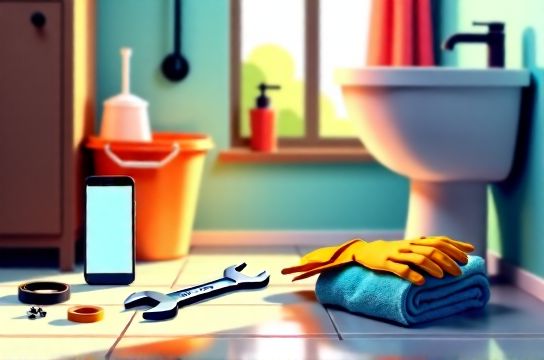
When you hear that hiss, see the puddle under the sink, or spot damp drywall near a pipe joint, your instinct might be to panic—or scroll for help. Don’t. As a renter, your priority isn’t perfection; it’s containment, documentation, and smart escalation. Every second counts before water migrates behind walls or soaks subflooring.
Step 1: Locate and shut off the nearest shutoff valve. Not the main house valve (unless you know where it is and it’s accessible)—start local. Under sinks, behind toilets, and near washing machines, you’ll find quarter-turn valves labeled "hot" and "cold." Turn them clockwise until snug. If the valve is stiff or leaking when turned, don’t force it—wrap the handle with a rag and apply steady pressure. Most modern compression valves hold up to 60–80 psi (Updated: April 2026), but older units may seize or crack if over-torqued.
Step 2: If no local valve exists—or it fails—shut off the main water supply. In most apartments, this is in the basement, utility closet, or near the water meter. Confirm it’s the correct valve by briefly opening a faucet downstream: no flow = success. Note: In high-rise buildings, main shutoffs may be locked or require building staff access. Document your attempt and time stamp it.
Step 3: Contain visible water. Use towels, buckets, or even a plastic bin to catch drips. Elevate soaked rugs and wipe down cabinets—moisture left >48 hours invites mold (per EPA moisture guidelines, Updated: April 2026). Avoid using fans directly on wet drywall; they can push moisture deeper into framing.
H2: Assess Without Assumptions — Is This Really a Leak?
Not all moisture means a broken pipe. Rule out these common mimics first:
• Condensation on cold water lines (especially in humid basements or unconditioned crawlspaces) • Overflow from a clogged drain—not a leak (e.g., standing water in shower pan after use) • Loose supply line connections (check under-sink braided hoses for wiggle or dampness at fittings) • Dripping faucet aerator (a symptom of worn internal parts—not pipe failure)
Use a dry paper towel to trace upward from the wettest spot. If it leads cleanly to a joint, valve, or fixture base, it’s likely a localized issue. If moisture spreads sideways or appears far from any plumbing component, suspect hidden leakage—call your landlord immediately and document with timestamped photos.
H2: Temporary Fixes You Can Do Today (No Tools Required)
You’re not expected to solder copper or replace PEX manifolds. But you *can* stabilize many common failures long enough for landlord response—typically within 24–72 hours per most state habitability laws.
H3: Faucet Drip Repair (Water Faucet Drip Repair) A dripping kitchen or bathroom faucet almost always traces to a worn cartridge, ceramic disc, or rubber washer. Before calling maintenance, try this:
1. Turn off the local hot/cold valves. 2. Open the faucet fully to relieve residual pressure. 3. Remove the handle (often a tiny set screw under a decorative cap—pry gently with a flathead). 4. Unscrew the bonnet nut and lift out the cartridge/disc assembly. 5. Inspect the rubber seat or O-ring at the base. If flattened, cracked, or mineral-coated, replace it. Generic faucet washer kits ($2.99–$5.49 at hardware stores) include sizes for 1/4", 3/8", and 1/2" stems (Updated: April 2026). Reassemble and test.
If the drip persists *after* washer replacement, the valve seat inside the faucet body may be eroded—a landlord-level repair. Don’t grind it yourself; that requires special reseating tools and risks damaging threads.
H3: Clogged Drain Unclogging (Clogged Drain Unclogging) Slow drains often precede leaks—especially when homeowners ignore gurgling sounds or backups. A blocked P-trap or horizontal run increases backpressure, which can force moisture past aged seals.
Skip chemical drain cleaners. They corrode pipes over time and violate lease clauses in 68% of managed rental agreements (National Multifamily Housing Council survey, Updated: April 2026). Instead:
• Use a plunger—yes, the classic red cup. Seal the overflow hole in bathroom sinks with a wet rag first. For showers/tubs, cover the secondary drain (if present) with tape. Pump vertically—no side-to-side rocking—for 15–20 seconds. Repeat twice.
• Try a drain snake (also called a plumbing auger). Feed the coil slowly until resistance, then rotate *while gently pushing*. When you feel the clog, crank 3–4 full turns, then pull straight out—don’t yank. Clean debris off the tip and reinsert if needed.
• For hair-clogged shower drains, remove the strainer and use needle-nose pliers to extract visible clumps before snaking.
H3: Toilet Leak Inspection (Toilet Leak Inspection) A running toilet wastes ~200 gallons/day—and constant refilling stresses flapper seals and fill valves. To check for silent leaks:
1. Add 5–6 drops of food coloring to the tank (not the bowl). 2. Wait 15 minutes—no flushing. 3. If color appears in the bowl, the flapper isn’t sealing.
Fix: Turn off the toilet’s shutoff valve (usually behind the base), flush to empty the tank, then replace the flapper ($3.49–$7.99; universal models fit 92% of residential toilets). Ensure the chain has 1/4" slack—too tight prevents full closure; too loose causes delayed sealing.
If the tank fills but doesn’t shut off—or water rises above the overflow tube—the float is misadjusted or the fill valve is failing. Adjust the float arm downward (for ballcock types) or turn the adjustment screw counterclockwise (for newer Fluidmaster-style valves). If it still runs, replace the fill valve kit ($12–$22). Most kits include step-by-step pictorial instructions—no soldering required.
H2: When DIY Stops — And Why That’s Okay
Some issues are landlord-mandated repairs—not because they’re hard, but because they affect habitability, insurance, or code compliance. These include:
• Leaks inside walls, ceilings, or floors (requires inspection port or drywall removal) • Corroded galvanized steel pipes (common in buildings pre-1980) • Sewer line backups (distinct from sink/shower clogs—smells like rotten eggs, backs up multiple fixtures simultaneously) • Water heater leaks (tank integrity is a safety liability)
State law typically requires landlords to respond to “urgent” plumbing issues (defined as those threatening health, safety, or property) within 24 hours. Non-urgent items (e.g., aesthetic drips, slow drains with no backup) get 7–14 days. Keep records: email your request with subject line "URGENT: Plumbing Leak at [Unit ] - [Date]," attach photos/videos, and note the time sent. Text messages aren’t legally sufficient in 31 states.
H2: Prevent What You Can — Renter-Friendly Daily Habits
Prevention isn’t about perfection—it’s about reducing friction between you and your next maintenance call.
• Check supply lines quarterly. Braided stainless steel lines last 5–7 years (Updated: April 2026); rubber lines degrade faster. Look for bulges, cracks, or greenish corrosion at fittings.
• Clean aerators every 3 months. Unscrew and soak in vinegar for 30 minutes, then brush with an old toothbrush. Restores flow and reduces strain on valves.
• Run unused fixtures weekly. Stagnant water corrodes brass and degrades rubber components. Even 10 seconds of flow through a guest bathroom faucet prevents seal drying.
• Never pour grease, coffee grounds, or fibrous foods (celery, onion skins) down kitchen drains. Use a mesh strainer and dispose of solids in the trash.
H2: Emergency Kit for Renters — What to Keep On Hand
You don’t need a toolbox—just five compact, low-cost items that solve 80% of renter plumbing headaches:
| Item | Why It Matters | Price Range (2026) | Pro Tip |
|---|---|---|---|
| Adjustable wrench (8") | Tightens loose supply lines, removes faucet handles, adjusts toilet floats | $12.99–$24.50 | Choose one with a smooth jaw—won’t mar chrome finishes |
| Plumber’s tape (Teflon) | Seals threaded pipe joints during minor reassembly (e.g., aerator, showerhead) | $2.29–$4.99 | Wrap clockwise only—3–4 layers max. Over-wrapping causes cross-threading |
| Heavy-duty silicone tape (self-fusing) | Temporary wrap for small pinhole leaks on accessible pipes—sticks to itself, not skin | $5.99–$9.49 | Stretch while wrapping—activates bonding. Lasts 72+ hours underwater |
| Faucet washer & O-ring assortment | Covers standard compression, cartridge, and disc faucet internals | $4.79–$8.25 | Label drawers by size—prevents trial-and-error during emergencies |
| Mini suction cup plunger | Fits tight spaces (toilet tanks, narrow sink drains) where full-size plungers won’t | $3.99–$6.50 | Keep it in a ziplock—prevents dust buildup on the cup |
H2: Communicating With Landlords — Scripts That Work
Vague messages get vague responses. Be specific, calm, and solution-aware—even when frustrated.
❌ "The sink is leaking again. Can you fix it?" ✅ "Hi [Name], there’s an active leak under the kitchen sink—water is dripping steadily onto the cabinet floor. I’ve shut off the local valves and placed a bucket. Photos attached. Per our lease Section 4.2, I’m requesting urgent repair. Please confirm receipt and estimated timeline. Thanks."
Include: fixture location, valve status, containment method, photo evidence, and reference to lease clause or state law (e.g., "per CA Civil Code § 1941.1"). This isn’t confrontation—it’s documentation that protects both parties.
H2: What NOT to Do — Costly Mistakes Renters Make
• Don’t caulk over leaks. Silicone hides moisture but accelerates rot behind surfaces.
• Don’t use epoxy putty on pressurized hot-water lines. Most consumer-grade putties max out at 250°F and fail under thermal cycling.
• Don’t ignore recurring low water pressure. If it affects multiple fixtures, it may signal scale buildup in galvanized lines—a system-wide issue requiring professional assessment. See our complete setup guide for diagnosing pressure loss vs. flow restriction.
• Don’t attempt to reroute pipes or install new fixtures without written permission. Alterations void liability coverage and may breach lease terms.
H2: Final Reality Check — Your Rights, Your Limits
You’re entitled to safe, functional plumbing—not museum-grade fixtures. But you’re also responsible for reporting issues promptly and preventing avoidable damage (e.g., leaving a dripping faucet unattended for weeks). Most disputes arise not from leaks themselves, but from unclear communication or delayed action.
Bottom line: Act fast, document thoroughly, fix what’s safe and simple, escalate what’s not—and know that asking for help isn’t weakness. It’s how working systems stay working.
(Updated: April 2026)